There is a specific kind of magic that happens when you stop trying to save your sourdough starter discard and actually use it for something delicious. For years, I treated my discard like a guilty secret. I’d stare at that jar in the back of the fridge, wondering if I should bake it into banana muffins or toss it in the compost. Then one rainy Sunday, I decided to stop overthinking it and just make breakfast.
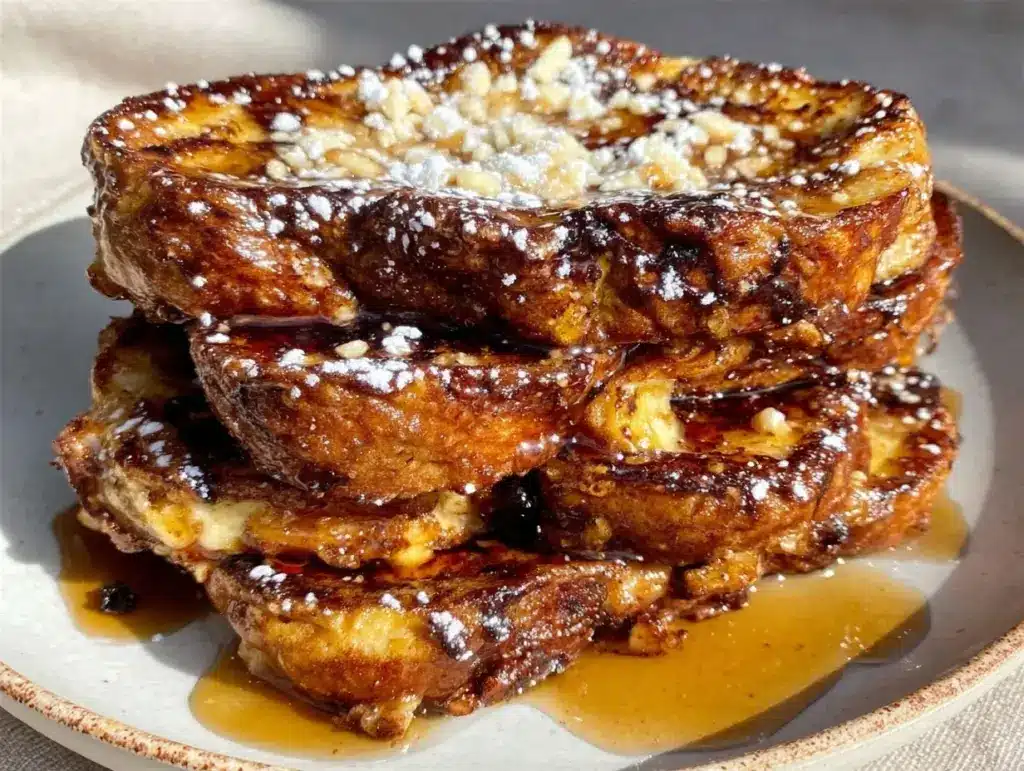
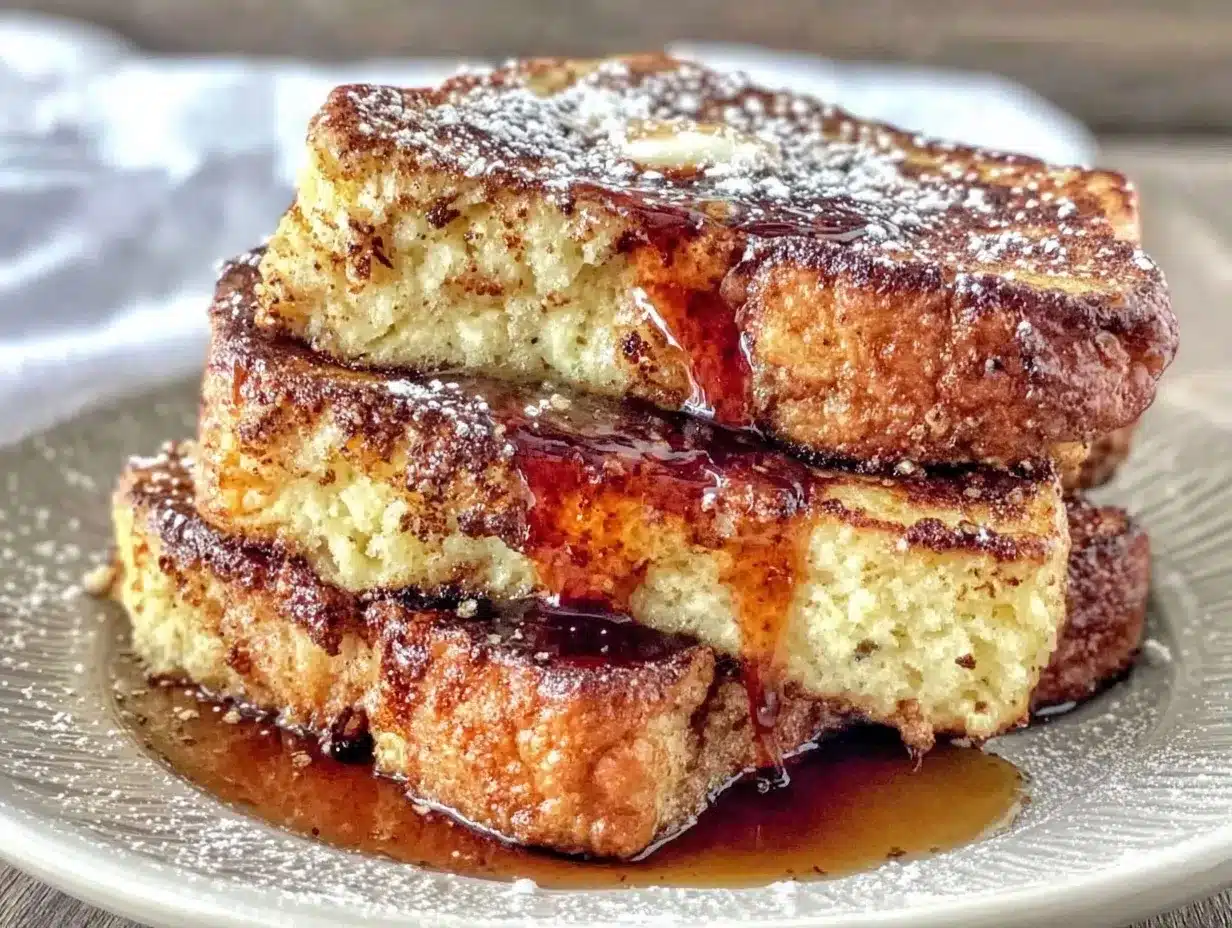
I wasn’t aiming for gourmet. I just wanted something warm, comforting, and easy. That morning, I threw together a few simple ingredients with my sourdough discard, some eggs, and a splash of milk. The result wasn’t just good—it was life-changing. The tang from the discard cut through the sweetness of the maple syrup perfectly, and the texture was impossibly creamy on the inside with a crisp, golden crust outside.
I’ve made this sourdough french toast with warm maple cinnamon syrup at least a dozen times since then. It’s become my go-to weekend breakfast, and honestly, it’s the easiest thing I cook all week. You really can’t mess this up. If you can whisk eggs and dip bread, you can master this recipe. It’s forgiving, it uses ingredients you already have, and it tastes like you spent hours in the kitchen (spoiler: it takes 15 minutes).
Why You’ll Love This Recipe
This isn’t just another breakfast recipe. It’s the one that makes people ask for the secret ingredient. Here’s why this sourdough french toast with warm maple cinnamon syrup has earned a permanent spot on my counter:
- Zero Waste Breakfast — I hate throwing away food. Using your sourdough discard here is the perfect way to use it up before it gets too tangy. It’s eco-friendly and delicious.
- Only 3 Core Ingredients — Seriously. Eggs, milk, and your discard. Plus the bread and syrup, but the batter is that simple. No fancy flours or weird pantry items.
- Texture Perfection — Sourdough discard adds a subtle tang that balances the sweet syrup, and it creates a custard-like interior that regular bread just can’t match.
- Beginner-Proof — You don’t need to be a baker. You don’t need to worry about proofing times or complex techniques. Just mix, dip, and cook.
- Weekend Vibes, Weekday Speed — It feels like a treat, but it’s fast enough for a lazy Saturday morning. No stress, just good food.
This is the recipe that makes you feel like a morning person, even when you’re not. It’s comforting, simple, and incredibly satisfying.
Ingredients You’ll Need
Here’s the beauty of this recipe: you probably have everything in your fridge right now. I’m not asking you to go to the store for anything obscure. Just grab these basics.
For the French Toast
Sourdough discard (1 cup / 240g) — This is the star. It needs to be un-fed sourdough discard, meaning it’s been sitting in the fridge. It should be bubbly but not necessarily active. If it’s very liquidy, that’s fine—it adds moisture. If it’s stiff, just mix it in well. I use the discard from my weekly feeding schedule.
Large eggs (3 large / about 150g) — Room temperature eggs work best, but straight from the fridge is totally fine. Don’t worry about precise temperatures. Just crack them into the bowl.
Whole milk (½ cup / 120ml) — I use whole milk for richness, but 2% works too. Avoid skim milk if you want that creamy texture. Oat milk or almond milk works in a pinch, but dairy gives the best flavor.
Vanilla extract (1 teaspoon / 5ml) — Pure vanilla makes a huge difference. It adds that classic breakfast aroma. Skip it if you’re in a rush, but don’t skip it if you want it to taste special.
Bread (8 slices / about 300g) — This is where you get creative. Thick-cut brioche is classic, but any sturdy bread works. I love using day-old sourdough loaf (not the discard!) because it soaks up the batter without falling apart. Challan, Texas toast, or even thick-cut white bread are great. Avoid soft, thin sandwich bread—it gets mushy too fast.
For the Warm Maple Cinnamon Syrup
Real maple syrup (½ cup / 120ml) — Not pancake syrup. Real maple syrup. It’s worth the extra few dollars. It has a depth of flavor that artificial syrup just can’t touch. I keep a bottle in my cupboard specifically for this.
Unsalted butter (2 tablespoons / 30g) — This helps emulsify the syrup and adds a silky texture. It also prevents the syrup from getting too sticky.
Cinnamon (½ teaspoon / 1g) — Ground cinnamon. If you have pumpkin pie spice, that works too, but cinnamon is the classic choice for a reason.
Pinch of salt — Just a tiny pinch to balance the sweetness. It sounds counterintuitive, but it makes the maple flavor pop.
Quick tip: If your sourdough discard is very cold, let it sit on the counter for 10 minutes while you preheat the pan. It mixes more easily that way.
Equipment Needed
You don’t need fancy gadgets for this. Here’s what I actually use:
Large mixing bowl — Any bowl that’s big enough to whisk the eggs and milk together comfortably. A wide bowl is better for dipping.
Whisk — A regular balloon whisk works fine. Fork works too if you’re being lazy, but a whisk makes the batter smoother.
Griddle or large skillet — A 12-inch non-stick skillet is my favorite. Cast iron is great if you like that crispy crust. A flat griddle is perfect if you’re feeding a crowd and need to cook multiple slices at once.
Small saucepan — For heating the syrup. Or just a microwave-safe mug if you’re keeping it simple.
Spatula — A thin, flexible spatula is best for flipping without breaking the toast. I use a metal one for durability.
Tongs — Helpful for handling thick slices of bread. Keeps your fingers safe from the hot pan.
How to Make It: Step-by-Step
Alright, let’s make this! I’m walking you through exactly how I do it, including the little tricks I’ve picked up over time.
Step 1: Make the Batter (3 minutes)
Grab your mixing bowl. Crack the eggs into it, then add the sourdough discard, milk, and vanilla extract. Whisk everything together until it’s smooth and uniform. It doesn’t need to be frothy—just well combined. The batter will be slightly thinner than you might expect, and that’s exactly what you want. It needs to soak into the bread, not just sit on top. Taste it—it should taste like sweetened, vanilla-infused egg batter. If it’s too thick, add a splash more milk.
Step 2: Heat the Pan (5 minutes)
While the batter mixes, heat your skillet or griddle over medium heat. This is crucial. If the pan is too hot, the outside burns before the inside cooks. If it’s too low, the bread gets soggy. Aim for medium—about 325°F if you have a thermometer. To test it, flick a few drops of water onto the surface. If they sizzle and dance around, it’s ready. Add a tiny knob of butter or a brush of oil. You don’t need much, just enough to prevent sticking.
Step 3: Dip the Bread (2 minutes)
This is the most important step for texture. Take a slice of bread and dip it into the batter. Let it soak for about 30 seconds on one side, then flip and soak for 30 seconds on the other. If your bread is very thick (like 1-inch brioche), you can go up to 45 seconds per side. If it’s thinner, stick to 20-30 seconds. You want the bread to be saturated but not falling apart. Lift it out and let the excess drip off for a few seconds. Don’t rush this—patience prevents mushy toast.
Step 4: Cook the French Toast (4-5 minutes per batch)
Place the soaked bread onto the hot skillet. Don’t crowd the pan—give each slice room to breathe. Cook for 3-4 minutes on the first side until you see a deep golden-brown crust forming. The edges should look crisp. Flip carefully with your spatula. Cook the second side for another 3-4 minutes. You’ll know it’s done when the inside is cooked through (no wet batter) and the outside is perfectly caramelized. Transfer to a plate and repeat with the remaining slices. If your pan cools down between batches, give it a minute to reheat.
Step 5: Warm the Syrup (2 minutes)
While the last batch cooks, grab your small saucepan. Combine the maple syrup, butter, cinnamon, and salt. Heat over low-medium heat, stirring occasionally, until the butter melts and the mixture is warm and fragrant. It shouldn’t boil—just get hot. If you don’t have a saucepan, microwave the syrup in a mug for 30-45 seconds. Stir well.
Step 6: Serve Immediately
Stack the warm french toast on plates. Drizzle generously with the warm maple cinnamon syrup. I usually add a dusting of powdered sugar if I’m feeling fancy, but it’s not necessary. Serve right away while it’s hot and crisp. The syrup will soak in slightly, creating that perfect contrast of crispy and soft.
Total Time: About 15-20 minutes (depending on how many slices you’re making).
Expert Tips & Tricks
Here’s everything I’ve learned from making this dozens of times. These tips will save you from my early mistakes.
Use Day-Old Bread — Fresh bread is too soft and absorbs too much batter, becoming soggy. Day-old bread, or bread that’s been left out overnight, has a drier crust that soaks up the custard beautifully without disintegrating. If you only have fresh bread, toast the slices lightly in the oven for 5 minutes first to dry them out.
Don’t Skip the Resting Time — After dipping, let the excess batter drip off. I used to rush this, and my toast was always wet on the bottom. Give it 10 seconds to let gravity do its work.
Medium Heat is Key — I know we all want to cook fast, but high heat is the enemy of french toast. It burns the sugar in the batter before the egg inside is cooked. Medium heat ensures even cooking and a beautiful golden color.
Warm Your Plates — This is a small detail that makes a big difference. Run your plates under hot water or put them in the oven for a minute before serving. Cold plates cool down the toast too quickly, and nobody likes cold french toast.
Keep the Syrup Warm — Syrup thickens as it cools. If you’re serving a crowd, keep the syrup in the saucepan on very low heat or in the microwave between batches. Warm syrup pours better and tastes better.
Common Mistake: Soggy Bottoms — If your bottoms are soggy, your pan wasn’t hot enough, or you used too much oil/butter. Use less fat in the pan—it should sizzle immediately when the bread hits it.
Common Mistake: Burnt Outside, Raw Inside — Heat was too high. Lower it next time. Also, if your slices are very thick, you might need to cover the pan with a lid for the last minute of cooking to steam the center.
Variations & Substitutions
Once you’ve nailed the basic version, here’s how you can mix it up. I’ve tried all of these, and they’re all winners.
Berry Burst Version — Add a handful of fresh blueberries or strawberries to the pan right after flipping the toast. Let them cook for a minute, then flip them onto the toast. The juices mix with the syrup for a natural berry sauce.
Banana Walnut — Add sliced bananas to the pan with the toast. Cook until caramelized. Top with chopped walnuts for crunch. It’s like a dessert for breakfast.
Chai Spiced — Swap the cinnamon for chai spice mix. It adds warm notes of cardamom, ginger, and cloves. Pairs amazingly with the maple syrup.
Gluten-Free — Use gluten-free bread. Look for a thick-cut, sturdy brand like Schar or Dave’s Killer Bread Gluten Free. Soak them slightly less time since GF bread can fall apart faster. The batter stays the same.
Dairy-Free — Swap the milk for oat milk or almond milk. Use coconut oil or vegan butter in the pan. The syrup is naturally dairy-free, but check your maple syrup label (some brands add butter flavor). Use pure maple syrup, and you’re good.
Egg-Free — This is trickier because eggs provide structure. You can try using a flax egg (1 tbsp ground flax + 3 tbsp water per egg) in the batter, but the texture will be denser. It works, but it’s not as fluffy.
Pro Trick: Make-Ahead Batter — You can mix the batter the night before and store it in the fridge. It actually thickens slightly overnight. Just give it a stir before dipping. This saves time on busy mornings.
Serving & Storage
How to Serve: I serve this straight from the skillet to the plate. It’s rustic and keeps it warm. Here are some ideas:
- Classic: Just the warm maple cinnamon syrup. Simple is best.
- With Fruit: Fresh berries, sliced bananas, or sautéed apples on the side.
- With Crunch: Chopped pecans or walnuts sprinkled on top.
- With Cream: A dollop of whipped cream or Greek yogurt for tang.
Side Dishes: I usually pair this with crispy bacon or sausage links. If I want something lighter, a simple green salad with lemon vinaigrette works well. For a sweet treat, I sometimes serve it with a small bowl of chocolate avocado mousse on the side for a decadent finish.
Storage: Leftover french toast can be stored in an airtight container in the fridge for up to 2 days. The syrup keeps for up to 1 week in the fridge.
Reheating: Reheat in a toaster or toaster oven for best results. This restores the crispiness. Microwave reheating makes it soft and chewy, which some people like, but it’s not ideal. For the syrup, just microwave it for 15-20 seconds to warm it up.
Freezing: You can freeze cooked french toast. Let it cool completely, then freeze in a single layer on a baking sheet before transferring to a bag. Reheat in the toaster from frozen. It’s not as good as fresh, but it works for busy mornings.
Nutrition Information
I’m not a nutritionist, but here’s the breakdown if you’re tracking. This is per serving (based on 2 servings, 4 slices each).
- Calories: 380
- Protein: 14g
- Carbs: 42g
- Fiber: 2g
- Sugar: 18g
- Fat: 16g
- Saturated Fat: 6g
- Cholesterol: 180mg
- Sodium: 320mg
What’s Good: Decent protein from eggs and sourdough. The sourdough process may improve nutrient absorption compared to regular bread.
What to Know: Higher in carbs and sugar from the bread and syrup. This is comfort food, so enjoy it mindfully. If you want to lighten it up, use less syrup and more fruit.
Final Thoughts
So that’s my sourdough french toast with warm maple cinnamon syrup. It’s simple, it’s forgiving, and it tastes incredible. I’ve made this recipe so many times that I could probably do it in my sleep (though I wouldn’t recommend trying that). It’s the perfect way to use up your sourdough discard without baking, and it’s honestly better than most restaurant versions.
Make it yours! Try different breads, add your favorite spices, or skip the syrup if you’re feeling adventurous. The best recipes are the ones you adapt to your tastes. If you make this, drop a comment and let me know how it turned out. I love hearing how recipes work in your kitchen.
Happy cooking! And I hope your kitchen smells as good as mine does right now.
Frequently Asked Questions
Can I use fresh sourdough starter instead of discard?
Yes, but the flavor will be different. Fresh starter is more active and less tangy. You might need to adjust the liquid in the batter slightly if the starter is very wet. Discard is preferred because it has developed that nice sour flavor over time.
Why did my french toast fall apart?
This usually happens if the bread was too fresh or if you soaked it too long. Use day-old, thick-cut bread, and limit soaking to 30 seconds per side. If your bread is very soft, try toasting it lightly first to firm it up.
Can I make the batter ahead of time?
Absolutely. Mix the batter, cover it, and refrigerate it overnight. It will thicken slightly in the fridge. Just give it a good stir before dipping the bread. This is great for saving time on weekend mornings.
What kind of bread is best for french toast?
Thick-cut brioche, challah, or sourdough loaf are the best. They have a sturdy structure that holds up to soaking. Avoid thin sandwich bread or soft rolls—they get too mushy. If you only have soft bread, use it quickly and don’t over-soak.
Can I double this recipe?
Yes! Just double the ingredients. If you’re cooking for a crowd, use a large griddle or cook in batches. Keep the cooked slices warm in a 200°F oven while you finish the rest.
Why is my syrup too thin?
Maple syrup is naturally thin. If you want a thicker sauce, add a teaspoon of cornstarch mixed with a little cold water to the syrup while heating it. It will thicken as it cools. Or just embrace the thin syrup—it’s classic!
Pin This Recipe!
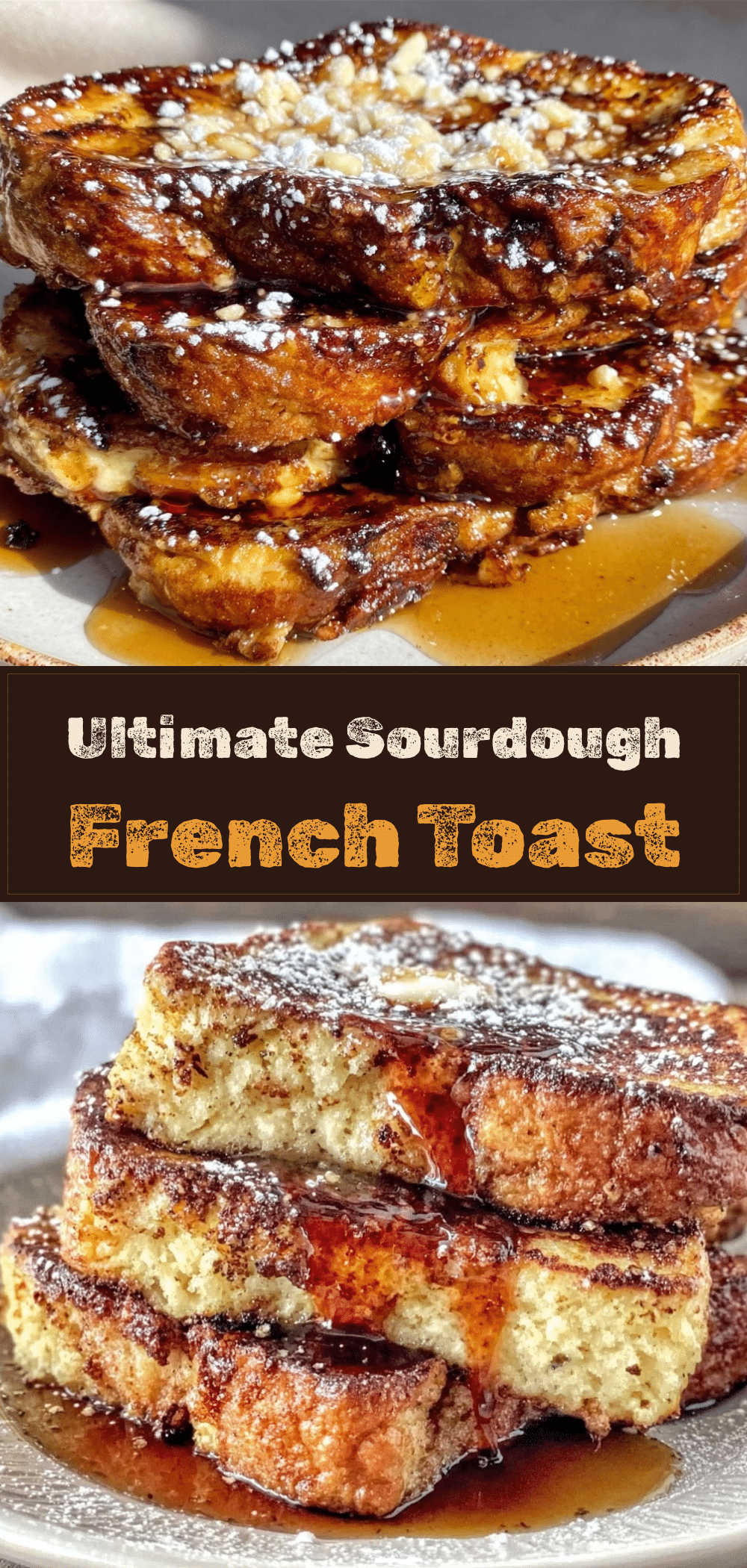

Sourdough French Toast: 3-Ingredient Easy Breakfast
- Total Time: 20 minutes
- Yield: 4 servings 1x
Description
A simple, forgiving breakfast recipe using sourdough discard, eggs, and milk to create creamy, custard-like french toast with a crisp golden crust, served with warm maple cinnamon syrup.
Ingredients
- 1 cup (240g) sourdough discard
- 3 large eggs
- 1/2 cup (120ml) whole milk
- 1 teaspoon vanilla extract
- 8 slices thick-cut bread (such as brioche, challah, or day-old sourdough)
- 1/2 cup (120ml) real maple syrup
- 2 tablespoons unsalted butter
- 1/2 teaspoon ground cinnamon
- Pinch of salt
Instructions
- In a large mixing bowl, whisk together the eggs, sourdough discard, milk, and vanilla extract until smooth and uniform.
- Heat a large skillet or griddle over medium heat (approx. 325°F). Add a small amount of butter or oil to prevent sticking.
- Dip each slice of bread into the batter, soaking for about 30 seconds per side. Let excess batter drip off.
- Place the soaked bread onto the hot skillet. Cook for 3-4 minutes on the first side until deep golden-brown and crisp.
- Flip the bread and cook for another 3-4 minutes on the second side until cooked through and caramelized.
- While the last batch cooks, combine maple syrup, butter, cinnamon, and salt in a small saucepan. Heat over low-medium heat until warm and fragrant, stirring occasionally.
- Serve the french toast immediately, drizzled generously with the warm maple cinnamon syrup.
Notes
Use day-old bread for best texture to prevent sogginess. Ensure the pan is at medium heat to avoid burning the outside before the inside cooks. The batter can be made ahead and refrigerated overnight.
- Prep Time: 5 minutes
- Cook Time: 15 minutes
- Category: Breakfast
- Cuisine: American
Nutrition
- Serving Size: 2 slices of french t
- Calories: 380
- Sugar: 18
- Sodium: 320
- Fat: 16
- Saturated Fat: 6
- Carbohydrates: 42
- Fiber: 2
- Protein: 14
Keywords: sourdough french toast, sourdough discard recipe, easy breakfast, 3 ingredient breakfast, maple cinnamon syrup, weekend brunch, zero waste cooking