I have a confession to make. For years, I avoided lemon desserts like the plague. Not because I hate lemons—far from it. I love the bright, zesty punch they bring to a dish. But every time I tried to make a lemon tart, it ended up in one of two disasters: either the filling was too runny and slid right off the crust, or it was so sweet it tasted like a candy bar had thrown up on a pastry shell. I was stuck in a cycle of frustration, convinced that homemade lemon curd was just too finicky for a home cook like me.
That changed last spring. I was hosting a small brunch for some friends who are diabetic, and I wanted to serve something that felt indulgent and celebratory without the sugar spike. I had tried a few store-bought “sugar-free” options, but they always had that weird, metallic aftertaste that made me wince. So, I decided to tackle it myself. I wanted a tart that was genuinely delicious, not just a sad compromise. I wanted the crust to be nutty and buttery, and the filling to be tart, creamy, and rich.
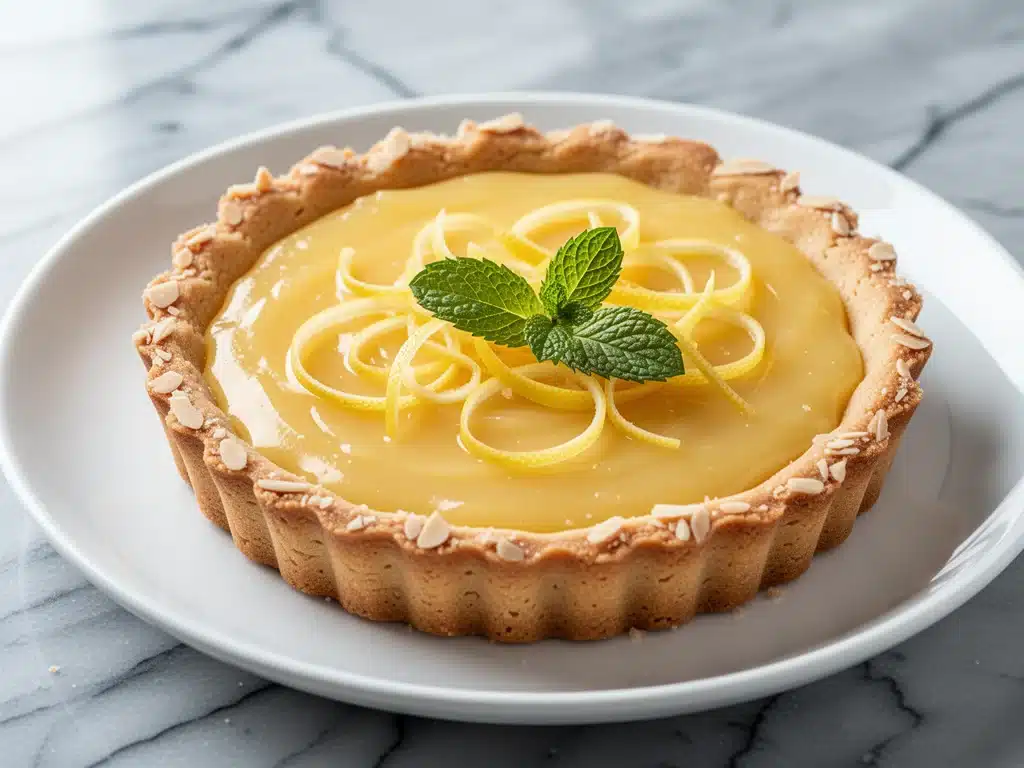
It took me three attempts to get it right. The first batch cracked because I overbaked it. The second batch had a crust that was too hard because I pressed it into the pan too tightly. But on the third try? Magic. The almond shortbread crust was crumbly and tender, melting in your mouth. The lemon curd was silky, bright, and perfectly balanced. My friends devoured it. One of them actually asked if I could make it for her birthday, which is the highest compliment a baker can receive.
That Sugar-Free Lemon Curd Tart with Almond Shortbread Crust became a staple. It’s become my go-to when I need to impress without stress, or when I just want a slice of something bright and refreshing on a lazy Sunday. It’s lighter than a traditional tart but still feels decadent. And the best part? It’s easier to make than most people think. If you can whisk eggs and press a crust, you can master this. I’ve made it at least a dozen times since that spring brunch, tweaking the lemon-to-sweetener ratio until it was absolute perfection. Now, I’m sharing the secrets I’ve learned so you can make this tart you’ll make on repeat.
Why You’ll Love This Sugar-Free Lemon Curd Tart
There are about ten reasons I keep coming back to this recipe, but here are the big ones that make it a true winner in my kitchen.
It’s Actually Sweet (Just Not With Sugar) — I’ve tested several sugar substitutes, and the blend I use here gives that clean, sweet finish without the weird aftertaste. It tastes like real lemon curd. I’ve had people eat two slices and ask if they’re “allowed” to have more because they don’t taste “diet.”
The Crust is a Game-Changer — Most sugar-free crusts rely on almond flour alone, which can be dry. By adding a little almond meal and butter, you get that classic shortbread texture. It’s buttery, nutty, and holds together perfectly without being tough. It’s the kind of crust you’d find in a fancy patisserie.
Light and Refreshing — After heavy holiday meals or rich dinners, this tart is the perfect palate cleanser. It’s not heavy like a cheesecake or dense like a brownie. It’s airy, bright, and makes you feel good after eating it.
Make-Ahead Friendly — This tart actually tastes better the next day. The flavors meld together, and the curd sets even firmer. I often make it the night before a dinner party, which saves me so much stress. It keeps in the fridge for up to four days.
Gluten-Free and Dairy-Optional — The almond crust is naturally gluten-free, which is a huge bonus for my gluten-sensitive friends. And if you want to go dairy-free, you can easily swap the butter for coconut oil. It’s versatile enough to fit almost any dietary need.
This tart has completely changed my dessert game. It’s proof that you don’t need refined sugar to make something that feels luxurious. It’s my answer to “what’s for dessert?” when I want something elegant but healthy. No complicated techniques, no weird ingredients, just reliable, delicious food that makes everyone happy.
Ingredients You’ll Need for the Sugar-Free Lemon Curd Tart
Here’s the best part: you probably have most of the base ingredients in your pantry. The almond shortbread crust is simple, and the lemon curd relies on fresh, bright flavors. I’m particular about three ingredients here, and I’ll tell you exactly why.
For the Almond Shortbread Crust:
Almond Flour (1 cup / 112g) — Make sure you use super-fine almond flour, not almond meal. It makes a huge difference in texture. I use Blisana or Bob’s Red Mill. You want it powdery, not chunky.
Unsalted Butter (4 tablespoons / 57g) — Cold butter works best for the shortbread texture. If you’re doing dairy-free, use high-quality coconut oil, but it will change the flavor slightly. I prefer butter for that classic shortbread taste.
Granulated Erythritol or Monk Fruit Blend (2 tablespoons / 24g) — I recommend a blend with a little inulin or maltodextrin to prevent crystallization. Pure erythritol can sometimes have a cooling effect. Swerve or Lakanto work well. Avoid pure stevia; it’s too potent and has a bitter aftertaste.
Pinch of Salt — Just a tiny pinch to bring out the almond flavor.
For the Sugar-Free Lemon Curd:
Fresh Lemons (4-5 medium) — You’ll need about ¾ cup of fresh lemon juice. Do not use bottled lemon juice. It tastes flat and metallic. Fresh is non-negotiable for this tart. Zest two lemons before juicing.
Eggs (3 large) — Room temperature eggs emulsify better. If you’re short on time, just put them in a bowl of warm water for 5 minutes.
Egg Yolks (2 large) — The extra yolks add richness and help set the curd. Don’t skip them. They’re what makes it creamy.
Granulated Erythritol or Monk Fruit Blend (½ cup / 100g) — You need a bit more sweetness in the curd to balance the tartness of the lemons. Adjust based on how sour your lemons are.
Unsalted Butter (4 tablespoons / 57g) — Cold, cubed butter is whisked in at the end to create that glossy, rich texture. It’s the secret to restaurant-quality curd.
Heavy Cream (2 tablespoons / 30ml) — Optional, but it adds a nice tang and helps stabilize the curd. If you want it lighter, you can skip this or use coconut cream.
For the Topping:
Whipped Cream — Homemade or store-bought. I like to whip my own with a little vanilla and a touch of sweetener.
Lemon Zest — Fresh zest from one lemon for garnish. It looks pretty and adds a burst of aroma.
Edible Flowers — Optional. I love adding a few pansies or violets for a fancy look, but it’s not necessary.
Personal Tips: I always buy my lemons when they’re heavy for their size—that means they’re juicy. If your lemons are dry, roll them on the counter before cutting to release the juices. Also, grate your lemon zest before you juice them, or you’ll get seeds in your juice.
Equipment Needed
You don’t need fancy equipment for this. Here’s what I actually use.
9-Inch Springform Pan — Essential for getting the tart out cleanly. I use a 9-inch pan with a removable bottom. Make sure it’s in good condition so the crust doesn’t leak.
Medium Saucepan — For cooking the curd. I prefer a heavy-bottomed pan to prevent scorching. A stainless steel one works great.
Whisk — You’ll be whisking a lot. A balloon whisk is best for incorporating air and preventing lumps.
Measuring Cups and Spoons — Standard stuff. Dollar store versions work fine.
Zester or Microplane — For the lemon zest. A microplane gives you the finest zest, which disperses better in the curd.
Strainer — Optional but recommended. Straining the curd removes any cooked egg bits, ensuring a silky smooth texture. I always do this.
Pie Weights or Dried Beans — For blind baking the crust. If you don’t have pie weights, just use dried kidney beans or rice.
Rolling Pin — Only if you’re rolling out the crust. You can also press it in by hand, but a rolling pin ensures even thickness.
Stand Mixer or Hand Mixer — For whipping the cream. If you’re doing it by hand, you’ll need strong arms!
Tool Tips: Don’t have a springform pan? You can use a regular tart pan with a removable bottom, or even a glass pie dish, but getting it out cleanly will be harder. I’m obsessed with my microplane—it’s like $10 and makes zesting effortless.
How to Make It: Step-by-Step
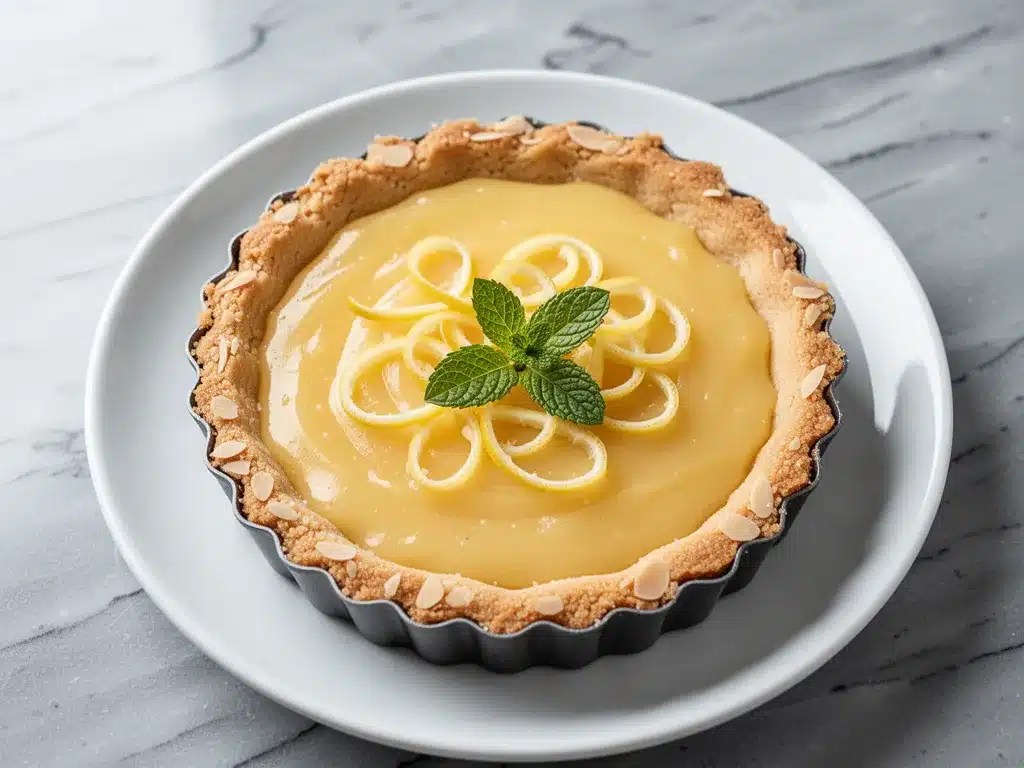
Alright, let’s make this! I’m walking you through exactly how I do it, including the little tricks I’ve picked up. This recipe has two main parts: the crust and the curd. The crust comes together in minutes, and the curd takes a little patience but is worth every second.
Step 1: Make the Almond Shortbread Crust (10 minutes)
Preheat your oven to 350°F (175°C). In a medium bowl, mix the almond flour, sweetener, and salt. Add the melted butter and stir until the mixture looks like wet sand. It should hold together when you pinch it. If it’s too dry, add a teaspoon more butter. If it’s too wet, add a sprinkle more almond flour.
Press the mixture firmly into the bottom and up the sides of your springform pan. Use the bottom of a measuring cup to pack it down evenly. You want it compact so it doesn’t crumble later. Don’t worry if it looks a little rough; it will bake up smooth.
Blind bake the crust for 12-15 minutes, or until the edges are lightly golden. You can use pie weights to keep it from puffing up, but it’s not strictly necessary for this dense crust. Let it cool completely on a wire rack while you make the curd. This step is crucial—if you pour warm curd into a warm crust, it might get soggy.
Step 2: Prepare the Lemon Curd (15 minutes active)
In a medium saucepan, whisk together the eggs, egg yolks, and sweetener. Whisk vigorously until the mixture is pale and smooth. Add the lemon juice and lemon zest. Whisk again to combine.
Place the saucepan over medium-low heat. This is where patience pays off. You need to cook the curd gently. Whisk constantly. Do not walk away. If you stop whisking, you’ll get scrambled eggs instead of curd. The mixture will start to thicken after about 5-7 minutes. It’s done when it coats the back of a spoon and leaves a clear path when you run your finger through it. It should look like thin pudding.
Remove the pan from the heat. Whisk in the cold, cubed butter until it’s completely melted and the curd is glossy. This step adds richness and helps set the texture.
Optional but recommended: Pour the curd through a fine-mesh strainer into a clean bowl. This catches any little bits of cooked egg and ensures a perfectly silky texture. Press it through with a spoon.
Step 3: Assemble and Chill (4+ hours)
Pour the warm curd into the cooled almond crust. Smooth the top with a spatula. Tap the pan gently on the counter to release any air bubbles.
Refrigerate for at least 4 hours, or overnight. The curd needs time to set completely. If you try to slice it too soon, it will be runny. Patience is key. I usually make it the night before I plan to serve it.
Step 4: Top and Serve
When you’re ready to serve, whip the heavy cream with a little vanilla and sweetener until soft peaks form. Dollop the whipped cream on top of the tart. Garnish with fresh lemon zest and edible flowers if you have them.
Run a thin knife around the edge of the springform pan before releasing the ring. Slice with a sharp knife, wiping the blade between cuts for clean slices. Serve immediately.
Total Time: About 1 hour active, plus 4+ hours chilling.
Expert Tips & Tricks
Here’s everything I’ve learned from making this dozens of times. These tips will save you from my mistakes.
Don’t Rush the Curd
The most common mistake is cooking the curd too fast. Low and slow is the only way. If you crank up the heat, the eggs will scramble. Keep the heat on medium-low and whisk constantly. It’s meditative, honestly.
Use Fresh Lemons
I can’t stress this enough. Bottled lemon juice has preservatives that change the flavor and texture. Fresh lemons give you that bright, clean taste that defines a good lemon curd. Juice them right before you use them.
Room Temperature Eggs
Room temperature eggs emulsify better with the butter. If you add cold butter to cold eggs, the curd might seize up. Let your eggs sit out for 20 minutes before starting.
Strain It
I know it’s an extra step, but straining the curd makes it restaurant-quality. It removes any tiny bits of cooked egg and ensures a velvety smooth texture. Trust me on this.
Cool the Crust Completely
If you pour warm curd into a warm crust, the crust will soften and get soggy. Let the crust cool completely on a wire rack before adding the curd. I usually bake the crust in the morning and make the curd in the afternoon.
Common Mistakes (and how to avoid them):
Mistake: Curd is too runny
Fix: You didn’t cook it long enough. Return it to low heat and cook for another 2-3 minutes, whisking constantly. It should thicken as it cools.
Mistake: Curd has lumps
Fix: Your heat was too high, or you didn’t whisk enough. Strain it to remove lumps. Next time, keep the heat lower and whisk more.
Mistake: Crust is crumbly
Fix: You didn’t press it down firmly enough. Pack it down tightly with the bottom of a measuring cup. Also, make sure your butter is melted and distributed evenly.
Variations & Substitutions
Once you’ve nailed the basic version, here’s how you can mix it up. I’ve tried all of these.
Coconut Version
Swap the almond flour for coconut flour (use ½ cup instead of 1 cup) and the butter for coconut oil. Add 1 teaspoon of coconut extract to the crust. It tastes like a Key Lime pie!
Blueberry Lemon
Add a layer of fresh blueberries on top of the set curd before adding the whipped cream. The tartness of the blueberries pairs beautifully with the lemon.
Dark Chocolate Drizzle
Melt ¼ cup of sugar-free dark chocolate and drizzle it over the top. It adds a rich contrast to the bright lemon.
Gluten-Free
This recipe is already gluten-free! Just make sure your almond flour and sweetener are certified gluten-free.
Dairy-Free
Use coconut oil instead of butter in both the crust and the curd. Use coconut cream instead of heavy cream. It’s creamy and rich, just with a slightly different flavor.
Different Sweeteners
You can use allulose, but it browns quickly. You can use monk fruit alone, but it’s very potent. A blend is usually best for baking.
Serving & Storage
How to Serve:
I usually serve this straight from the fridge. It’s best chilled. I like to pair it with a cup of green tea or black coffee. The bitterness of the tea balances the sweetness of the tart.
Side Dishes:
– Fresh berries (strawberries, raspberries)
– A light salad with a citrus vinaigrette
– Vanilla ice cream (if you’re not strictly sugar-free)
Storage Instructions:
Refrigerator:
Store in an airtight container or covered with plastic wrap for up to 4 days. The curd will continue to set in the fridge.
Freezing:
This tart does not freeze well. The curd can become watery when thawed. It’s best made fresh or stored in the fridge.
Pro tip: If you’re serving it at a party, take it out of the fridge 15 minutes before serving. It tastes better at a slightly cooler room temperature than straight from the fridge.
Nutrition Information
I’m not a nutritionist, but here’s the breakdown if you’re tracking. This is per slice (1/8 of the tart).
- Calories: 180
- Protein: 5g
- Carbs: 6g (2g fiber, 3g net carbs)
- Fat: 15g
- Sugar: 1g (from natural fruit sugars)
What’s Good:
– Low net carbs
– High in healthy fats from almonds
– Good source of protein
What to Know:
– Higher in fat due to butter and almonds
– Contains eggs and dairy
– Sweetener type affects net carb count slightly
My Take:
Look, this is a dessert. It has fat and calories. But it’s made with whole foods, no refined sugar, and it’s satisfying. A small slice is enough to satisfy a sweet tooth. When I want to make it lighter, I reduce the butter in the crust slightly. But usually? I just enjoy it in moderation.
Final Thoughts
So that’s my Sugar-Free Lemon Curd Tart with Almond Shortbread Crust! I’ve probably talked your ear off at this point, but when you make a recipe this often, you have a lot to say about it.
This tart has saved my dessert game more times than I can count. It’s my answer to “what’s for dessert?” when I want something elegant but healthy. My friends are happy, my family is happy, and I’m happy because I’m not stressed about cooking.
Make it yours! Try different toppings, swap in your favorite sweetener, adjust the lemon. The best recipes are the ones you adapt to your family’s tastes. If you make this, drop a comment and let me know what you think! I love hearing how recipes turn out in your kitchen. And if something doesn’t work, tell me that too—I’m here to help troubleshoot.
Happy cooking! And I hope your kitchen smells half as good as mine does right now.
Frequently Asked Questions
Q: Can I use bottled lemon juice?
A: I really don’t recommend it. Bottled lemon juice has preservatives and a flat taste. Fresh lemons give you that bright, clean flavor that defines a good lemon curd. It’s worth the extra 5 minutes to juice them fresh.
Q: Why did my curd get grainy?
A: The heat was too high, or you didn’t whisk enough. The eggs cooked too fast and scrambled. Next time, keep the heat on medium-low and whisk constantly. If it’s already grainy, you can try blending it with an immersion blender, but straining is better.
Q: Can I make this ahead?
A: Yes! This tart actually tastes better the next day. Make it up to 2 days ahead and store in the fridge. It keeps well for up to 4 days.
Q: Can I freeze this tart?
A: No, I don’t recommend it. The curd can become watery when thawed. It’s best made fresh or stored in the fridge.
Q: What sweetener do you recommend?
A: I recommend a blend of erythritol and monk fruit, like Swerve or Lakanto. Pure erythritol can have a cooling effect, and pure monk fruit is very potent. A blend gives the most natural taste.
Q: Can I use almond meal instead of almond flour?
A: You can, but the texture will be coarser. Almond flour is super-fine and gives a smoother crust. Almond meal will make it more crumbly and nutty. It still tastes good, just different.
Q: How do I get clean slices?
A: Use a sharp knife and wipe the blade between each cut. Dip the knife in hot water and dry it before each cut for the cleanest slices. This works especially well with the curd.
Pin This Recipe!
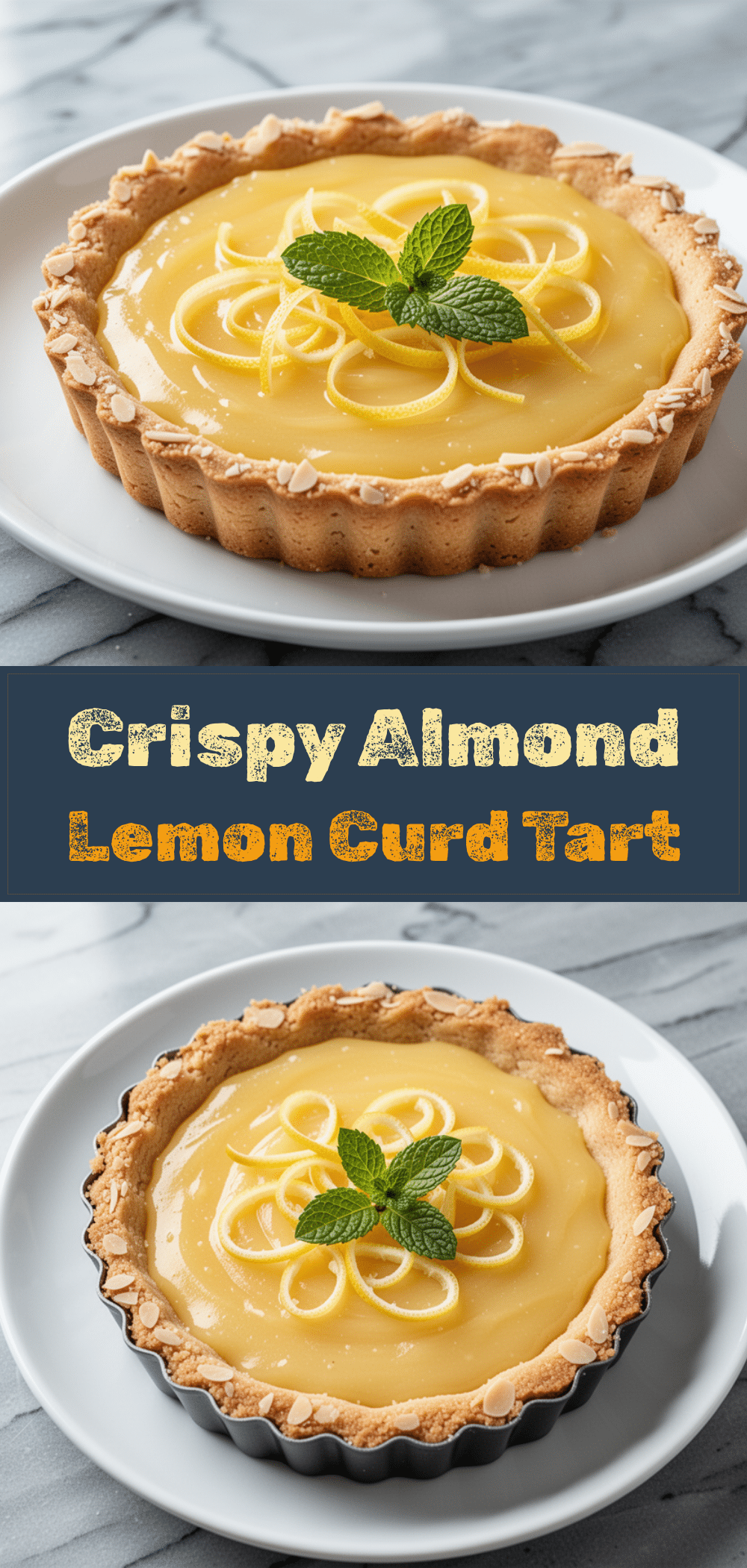
Sugar-Free Lemon Curd Tart: 5-Step Easy Almond Shortbread
- Total Time: 4 hours 40 minutes
- Yield: 8 servings 1x
Description
A delicious, gluten-free lemon tart featuring a buttery almond shortbread crust and a silky, sugar-free lemon curd filling. It is make-ahead friendly and perfect for those avoiding refined sugar.
Ingredients
- 1 cup (112g) super-fine almond flour
- 4 tablespoons (57g) unsalted butter, melted
- 2 tablespoons (24g) granulated erythritol or monk fruit blend
- Pinch of salt
- 4–5 medium fresh lemons (for ¾ cup juice and zest)
- 3 large eggs, room temperature
- 2 large egg yolks
- ½ cup (100g) granulated erythritol or monk fruit blend
- 4 tablespoons (57g) unsalted butter, cold and cubed
- 2 tablespoons (30ml) heavy cream (optional)
- Whipped cream for topping
- Lemon zest for garnish
- Edible flowers for garnish (optional)
Instructions
- Preheat oven to 350°F (175°C).
- In a medium bowl, mix almond flour, sweetener, and salt. Add melted butter and stir until the mixture resembles wet sand.
- Press the mixture firmly into the bottom and up the sides of a 9-inch springform pan. Use the bottom of a measuring cup to pack it down evenly.
- Blind bake the crust for 12-15 minutes until edges are lightly golden. Let cool completely on a wire rack.
- In a medium saucepan, whisk eggs, egg yolks, and sweetener until pale and smooth.
- Add lemon juice and zest, whisking to combine.
- Place saucepan over medium-low heat. Whisk constantly for 5-7 minutes until the mixture thickens and coats the back of a spoon.
- Remove from heat and whisk in cold, cubed butter until melted and glossy.
- Optional: Strain the curd through a fine-mesh strainer to remove any cooked egg bits.
- Pour warm curd into the cooled crust and smooth the top.
- Refrigerate for at least 4 hours or overnight until set.
- Top with whipped cream, lemon zest, and edible flowers before serving.
Notes
Use fresh lemons only; bottled juice affects flavor. Ensure the crust is completely cool before adding curd to prevent sogginess. Cook curd on medium-low heat while whisking constantly to avoid scrambling eggs. Straining the curd ensures a silky texture. This tart keeps in the fridge for up to 4 days but does not freeze well.
- Prep Time: 25 minutes
- Cook Time: 15 minutes
- Category: Dessert
- Cuisine: American
Nutrition
- Serving Size: 1 slice (1/8 of the
- Calories: 180
- Sugar: 1
- Sodium: 45
- Fat: 15
- Saturated Fat: 6
- Carbohydrates: 6
- Fiber: 2
- Protein: 5
Keywords: sugar-free, lemon curd, almond shortbread, gluten-free, keto dessert, diabetic friendly, make-ahead dessert