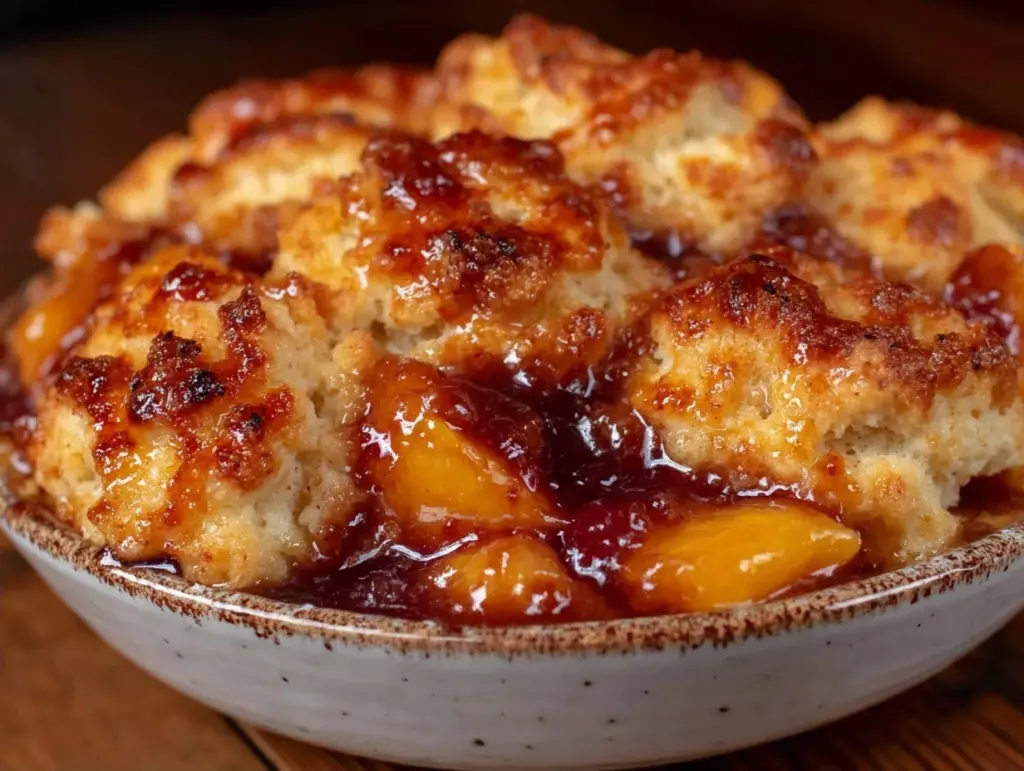
My grandmother’s kitchen in Georgia didn’t just smell like sugar and spices; it smelled like summer trapped in a jar. I can still picture her standing by the cast-iron skillet, the one so blackened it looked like it had survived a war, dropping spoonfuls of thick, lemony biscuit dough onto a bubbling bed of peaches. She never measured anything. “A cup of this, a handful of that,” she’d say, waving her hands like she was conducting an invisible orchestra. I used to think that was just her way of being mysterious. Now that I’m the one holding the spoon, I realize it was actually about feeling the dough.
I spent three summers trying to replicate that exact peach cobbler. I bought expensive cast iron skillets, I sourced heirloom peaches, and I even tried using a food processor for the dough (big mistake—see below). The problem wasn’t the ingredients. It was the texture. My biscuit topping was always either a hard, flat rock or a soggy, bread-like mess. It wasn’t until I stopped trying to be fancy and focused on one single, non-negotiable technique that everything clicked.
This old fashioned peach cobbler with a buttery biscuit topping is the recipe I make when I want to feel like I’m on vacation, even if I’m just in my apartment kitchen on a random Tuesday. It’s rustic, it’s messy, and it’s incredibly forgiving. But it’s also the one dessert where I get a little bit obsessive about one specific step. If you nail that step, you get those shaggy, flaky, golden-brown biscuits that crackle when you scoop into them. If you don’t? Well, let’s just say my neighbors might have tasted my failures before they tasted the successes.
Here’s the thing about cobbler: it’s supposed to be imperfect. It’s not a pie with its perfect lattice or a cake with its even crumb. It’s a fruit filling that bubbles over the edges, meeting a topping that’s half-crust, half-scone, and entirely delicious. This recipe relies on fresh or frozen peaches, simple pantry staples, and that one secret to biscuit success I’m about to share. It’s the kind of dessert that tastes like it took all day, but honestly? You can have it in the oven in under an hour. And trust me, once you taste the contrast between the hot, syrupy peaches and the cool, creamy vanilla ice cream, you’ll understand why I keep making this on repeat.
Why You’ll Love This Peach Cobbler
There are about ten reasons I keep coming back to this peach cobbler, but let’s be real—you don’t need another complicated dessert that requires twelve bowls and a degree in chemistry. Here are the big ones:
The One-Trick Wonder — I’ve simplified the biscuit topping to use just five ingredients. No yeast, no rising time, no complicated laminating. Just cold butter, cold liquid, and a gentle hand. It’s stupid simple, but the result is restaurant-quality flakiness.
Frozen Peaches Are Your Best Friend — I know, I know. “Fresh is best!” I used to say that too. But here’s the secret: frozen peaches break down slightly more during baking, creating a thicker, more intense syrup. Plus, they’re available year-round and usually cheaper. This cobbler works perfectly with either, so you’re never stuck waiting for peak season.
Cast Iron Magic — Cooking this in a skillet (cast iron or otherwise) creates that crispy, caramelized edge around the biscuits that you just can’t get in a glass baking dish. The heat radiates from the sides, cooking the bottom of the biscuits while the top browns. It’s a game-changer for texture.
Leftovers Actually Taste Better — I don’t know why, but cobbler gets richer the next day. The biscuit topping absorbs the peach juices and turns into something like a sweet, peachy bread pudding. I deliberately make a second one on Sunday so I have lunch sorted for Monday.
Zero Stress — You don’t need to make a crust. You don’t need to worry about blind baking. You just dump the peaches, mix the dough, drop it on top, and bake. It’s the perfect dessert for when you’re tired, when you have guests, or when you just need a hug in food form.
This is my go-to when I need a dessert that feels homemade but doesn’t require me to stand over the counter for two hours. It’s reliable, it’s comforting, and it makes your house smell like a bakery from the moment you open the oven door.
Ingredients You’ll Need
This looks like a short list, and that’s the beauty of it. You probably have most of this already in your pantry and freezer. The magic here isn’t in exotic ingredients; it’s in the ratio and the temperature.
For the Peach Filling:
Peaches (6 cups, sliced / about 1.5 kg) — I use a mix of fresh and frozen. If using fresh, peel them first (score an X on the bottom, boil for 30 seconds, peel). If using frozen, no need to thaw—just use them straight from the bag. Frozen peaches actually release more juice, which is what we want for the syrup.
Granulated Sugar (¾ cup / 150g) — Peaches vary in sweetness, so taste yours first. If they’re tart, bump this up to 1 cup. If they’re super sweet, ½ cup might do. I usually start with ¾ cup and adjust later.
Lemon Juice (2 tablespoons / 30ml) — This isn’t just for flavor. The acid brightens up the heavy sweetness of the peaches and prevents them from turning brown while you’re prepping. It’s crucial for that fresh taste.
Cornstarch (2 tablespoons / 16g) — This is the thickener. Peaches get watery. Cornstarch ensures the bottom of your cobbler isn’t a soup. Don’t skip this, or you’ll have a mess on your hands.
Cinnamon (1 teaspoon / 2g) — Just one teaspoon. Enough to add warmth, not enough to make it taste like pumpkin pie. If you like spice, add a pinch of nutmeg or allspice, but keep it subtle.
Butter (2 tablespoons / 28g, cubed) — Dotting the top of the peach filling with cold butter before adding the biscuits adds richness and helps the topping brown.
For the Buttery Biscuit Topping:
All-Purpose Flour (2 cups / 250g) — Standard white flour. Cake flour makes it too tender; bread flour makes it too chewy. We want somewhere in the middle—sturdy but flaky.
Baking Powder (1 tablespoon / 12g) — This is your leavener. Make sure it’s fresh! Old baking powder = flat biscuits. If yours is more than 6 months old, buy a new can. It’s cheap insurance.
Baking Soda (½ teaspoon / 3g) — This reacts with the buttermilk to create lift and browning. It also adds a slight tang that balances the sweetness.
Salt (1 teaspoon / 6g) — Essential for flavor. Don’t use less. The salt makes the sweetness pop.
Cold Unsalted Butter (½ cup / 113g, cubed) — This is the most important ingredient in the topping. It must be cold. If it’s warm, it melts into the flour before it hits the oven, and you lose those flaky layers. Keep it in the fridge until the second you need it.
Buttermilk (¾ cup / 180ml, cold) — The acid in buttermilk tenderizes the gluten and reacts with the baking soda. If you don’t have buttermilk, mix ¾ cup milk with 1 tablespoon lemon juice or white vinegar. Let it sit for 5 minutes to curdle. It won’t be exactly the same, but it works.
Vanilla Extract (1 teaspoon / 5ml) — Just a splash to round out the flavors. Optional, but I always add it.
Equipment Needed
You don’t need fancy gadgets for this. In fact, over-complicating it is how you ruin the biscuits. Here’s what I actually use:
9-Inch Cast Iron Skillet — This is my preferred vessel. It holds heat incredibly well, which gives the biscuits a crispy bottom. If you don’t have cast iron, a 9-inch glass pie dish or a metal cake pan works, but the crust won’t be as crisp. I use a Lodge skillet that’s seen better days—it’s seasoned perfectly and non-stick.
Large Mixing Bowl — For the peach filling. Something with a spout helps if you want to pour the mixture into the skillet easily.
Medium Mixing Bowl — For the biscuit dough. Again, a spout is nice, but not required.
Fork or Pastry Cutter — To cut the butter into the flour. I use a fork because I like to feel the texture change. A pastry cutter works too, but be careful not to over-process.
Spatula — For folding the dough. This is crucial for gentle mixing.
Measuring Cups and Spoons — Standard stuff. For the flour, I spoon it into the cup and level it off. Don’t scoop and pack, or you’ll use too much flour and get dense biscuits.
Oven Mitts — Because cast iron gets hotter than the sun. I learned this the hard way when I burned my knuckles on a skillet that was just “warm” to the touch.
How to Make It: Step-by-Step
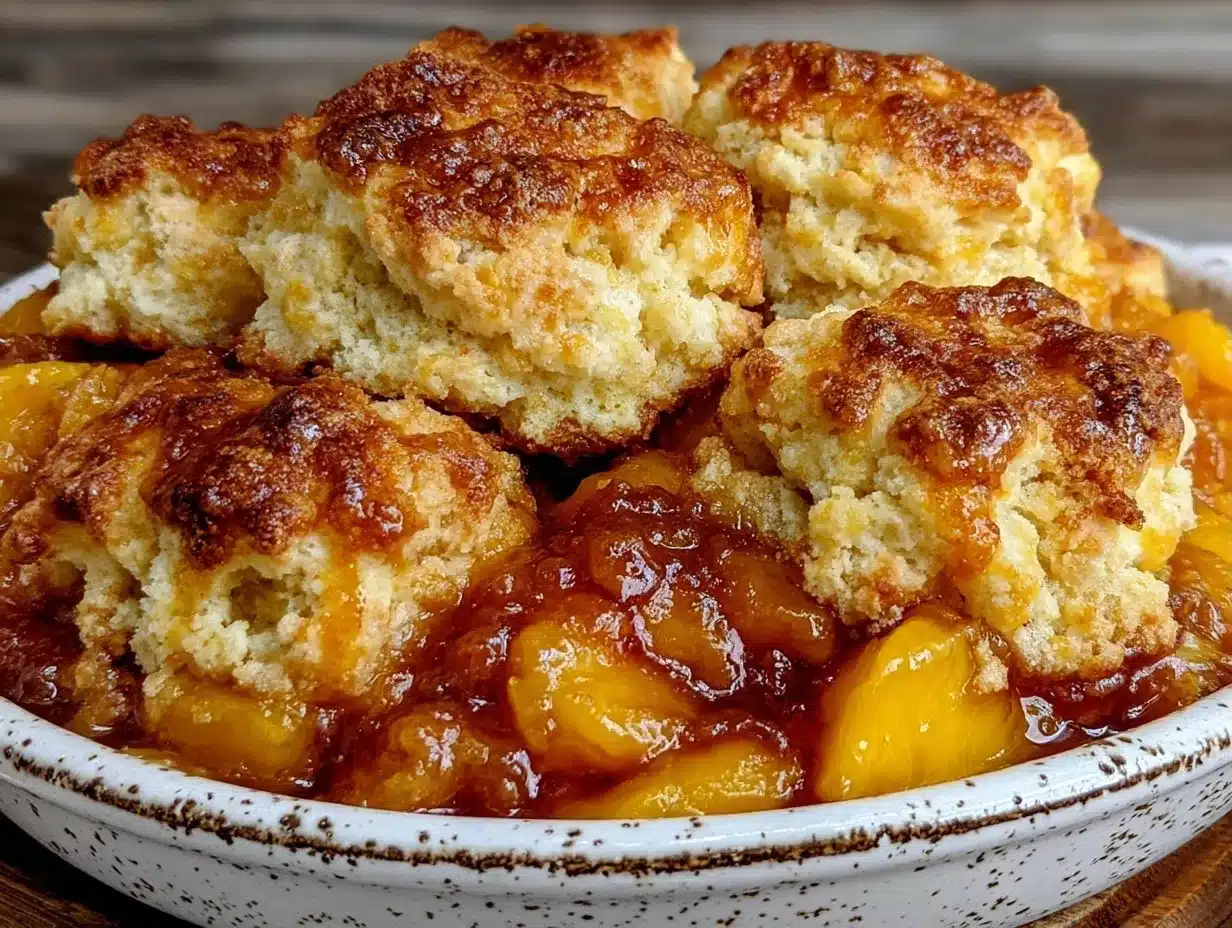
Alright, let’s make this! I’m walking you through exactly how I do it, including the little tricks I’ve picked up over the years. The key here is to keep things cold and gentle.
Step 1: Prep Your Oven and Skillet (5 minutes)
Preheat your oven to 375°F (190°C). If you’re using a cast iron skillet, you can put it in the oven while it preheats. This is optional, but it helps the bottom of the biscuits start cooking immediately when they hit the pan. If you’re using a glass dish, don’t put it in the oven yet—it might shatter from thermal shock.
Step 2: Make the Peach Filling (10 minutes)
In your large bowl, combine the sliced peaches, sugar, lemon juice, cornstarch, and cinnamon. Toss gently until the peaches are evenly coated. The cornstarch will turn cloudy at first—that’s normal. Pour the mixture into your skillet. It should look like a mountain of peaches. Dot the top with the 2 tablespoons of cubed butter. This will melt into the fruit as it bakes, adding richness.
Step 3: Make the Biscuit Dough (The Critical Step) (10 minutes)
In your medium bowl, whisk together the flour, baking powder, baking soda, and salt. Now, add the cold, cubed butter. Here is the trick: use your fork to press and cut the butter into the flour. You’re not trying to make a fine meal. You’re looking for pea-sized chunks of butter. Some pieces should still be the size of small almonds. Those chunks of cold butter are what create steam in the oven, lifting the biscuits and making them flaky. If the butter is too cold and hard to cut, let the bowl sit for 2 minutes. If it’s too soft, put it in the freezer for 5 minutes.
Once the butter is incorporated, pour in the cold buttermilk and vanilla. Use a spatula to fold the mixture together. Stop mixing as soon as the flour disappears. The dough should look shaggy, lumpy, and messy. Do not knead it. Do not try to make it smooth. Over-mixing develops gluten, and gluten makes biscuits tough, not tender. If you want soft, pillowy biscuits, you need to be lazy here.
Step 4: Drop the Dough (5 minutes)
Take large spoonfuls of the shaggy dough and drop them onto the peaches. You don’t need to make perfect circles. Just dump them in. They’ll spread and merge as they bake, which is exactly what you want for that rustic, homemade look. If you have any scraps, just drop them in too. It’s called “cobbler” for a reason—it’s supposed to look like a crooked cottage.
Step 5: Bake Until Golden (45-55 minutes)
Place the skillet in the preheated oven. Bake for 45-55 minutes. You’ll know it’s done when the biscuit topping is deep golden brown and the peach filling is bubbling vigorously around the edges. If the top is browning too fast but the filling isn’t bubbling, tent a piece of aluminum foil loosely over the top and continue baking.
Step 6: Cool and Serve (15 minutes)
Remove from the oven and let it cool for at least 15 minutes. I know this is hard, but the filling is liquid lava right out of the oven. If you cut into it immediately, it will be soupy. Letting it rest allows the cornstarch to set and the juices to thicken. Serve warm, ideally with a scoop of vanilla ice cream or a dollop of whipped cream.
Expert Tips & Tricks
Here’s everything I’ve learned from making this dozens of times. These tips will save you from my mistakes.
The Cold Butter Rule
I cannot stress this enough. Your butter must be cold. If you’re in a warm kitchen, keep your butter in the fridge until the last second. Some bakers even freeze their butter for 10 minutes before cubing. The goal is to have distinct chunks of butter in the dough. When those chunks hit the hot oven, they melt and create pockets of steam. Those steam pockets push the dough up, creating layers. If the butter melts before it hits the oven, you get a dense, bread-like texture. No layers, no flake.
Don’t Overmix the Dough
I see people (myself included, early on) trying to make the dough look neat. Stop it. Shaggy is good. Lumpy is good. If your dough looks like a smooth ball, you’ve mixed it too much. The goal is to hydrate the flour, not develop structure. Think of it like making scones: rough handling equals tough biscuits.
The Bubbling Test
How do you know if the filling is done? Look for bubbles. Big, thick, slow bubbles breaking the surface. If it’s just simmering or the liquid is clear, it needs more time. The cornstarch needs to reach its boiling point to thicken properly. If you pull it out too early, you’ll have runny peaches.
Cast Iron Care
Acidic fruits like peaches can sometimes react with unseasoned cast iron, leaving a metallic taste. If your skillet isn’t well-seasoned, line the bottom with parchment paper before adding the peaches. It makes cleanup easier too, though you lose that crispy bottom. I prefer the crispy bottom, so I make sure my skillet is well-seasoned.
Freezing Leftovers
Yes, you can freeze cobbler! Let it cool completely, then wrap it tightly in plastic wrap and foil. It will keep for up to 3 months. To reheat, thaw in the fridge overnight, then bake at 350°F for 20-30 minutes until warm. The texture of the biscuit might be slightly softer, but it’s still delicious.
Variations & Substitutions
Once you’ve nailed the basic version, here’s how you can mix it up. I’ve tried all of these, and they all work.
Berry Cobbler
Swap the peaches for 6 cups of mixed berries (strawberries, blueberries, raspberries). Berries release more water, so add an extra tablespoon of cornstarch. You might also want to add a teaspoon of almond extract to the dough for a nice flavor pairing.
Apple Cinnamon Cobbler
Use 6 cups of peeled, sliced apples (Granny Smith or Honeycrisp). Toss with the sugar and spices as usual. Apples take longer to cook, so you might need to bake for an extra 10-15 minutes. Add a tablespoon of lemon juice to prevent browning.
Ginger Peach Cobbler
Add 1 teaspoon of ground ginger and ½ teaspoon of ground cardamom to the peach filling. It adds a warm, spicy kick that complements the sweetness of the peaches beautifully. This is my favorite variation in the fall.
Gluten-Free Option
Use a 1:1 gluten-free flour blend that includes xanthan gum. The texture might be slightly more cake-like, but it still works. Make sure your baking powder is certified gluten-free.
Dairy-Free Option
Use vegan butter (keep it cold!) and oat milk or soy milk mixed with lemon juice for the buttermilk. The result is still tasty, though the biscuits won’t be as flaky because dairy fats behave differently. Still worth it if you have allergies.
Lemon Blueberry Swap
If you want to try something lighter, swap half the peaches for blueberries and add the zest of one lemon to the filling. The citrus cuts through the sweetness perfectly.
Serving & Storage
How to Serve:
I usually serve this straight from the skillet at the dinner table—it looks rustic and stays warm. But here are other ways I’ve enjoyed it:
Side Dishes:
- Vanilla Bean Ice Cream — The classic pairing. The cold cream contrasts with the hot cobbler.
- Whipped Cream — If you want something lighter than ice cream.
- Cream Cheese Frosting — For a denser, richer experience.
- Simple Green Salad — If you’re serving this as part of a larger meal, a light salad balances the sweetness.
Toppings Bar:
When I have guests, I put out: extra cinnamon sugar, chopped pecans, and a small bowl of extra vanilla ice cream. Everyone customizes their bowl.
Storage Instructions:
Refrigerator:
Store in an airtight container for up to 4 days. The biscuit topping will soften as it absorbs the peach juices, which is actually preferable for some people. It becomes more like a cake.
Reheating:
Best method: Preheat oven to 350°F. Place cobbler in an oven-safe dish and bake for 15-20 minutes until warmed through. This restores the crispness of the topping.
Microwave method: Heat in 30-second intervals. It will get soft quickly, so be careful not to overheat.
Freezing:
As mentioned above, freeze for up to 3 months. Thaw in the fridge overnight before reheating.
Nutrition Information
I’m not a nutritionist, but here’s the breakdown if you’re tracking. This is a rich dessert, so portion control is key.
Per Serving (based on 8 servings):
- Calories: 380
- Protein: 5g
- Carbs: 62g
- Fiber: 3g
- Sugar: 38g
- Fat: 12g
- Saturated Fat: 7g
- Cholesterol: 30mg
- Sodium: 320mg
What’s Good:
- Peaches provide vitamin C and fiber.
- It’s a single-serving dessert, so you control the portion.
What to Know:
- High in sugar from the peaches and biscuit topping.
- Contains gluten and dairy.
My Take:
Look, this is comfort food with flour and sugar. It’s not a diet recipe. But it’s way better than store-bought, costs less, and I know exactly what’s in it. When I want to make it lighter, I use less sugar in the filling and serve a smaller portion with a dollop of Greek yogurt instead of ice cream. But usually? I just enjoy it and move on.
Final Thoughts
So that’s my go-to old fashioned peach cobbler! I’ve probably talked your ear off at this point, but when you make a recipe this often, you have a lot to say about it.
This has saved dessert nights more times than I can count. It’s my answer to “what’s for dessert” when I’m tired, don’t want to bake a complex cake, and still want something that feels special. My family is happy, my guests are happy, and I’m happy because I’m not stressed about cooking.
Make it yours! Try different fruits, swap in your favorite spices, or adjust the sugar to your taste. The best recipes are the ones you adapt to your family’s tastes. If you make this, drop a comment and let me know what you think! I love hearing how recipes turn out in your kitchen. And if something doesn’t work, tell me that too—I’m here to help troubleshoot.
Happy baking! And I hope your kitchen smells half as good as mine does right now.
Frequently Asked Questions
Can I use canned peaches instead of fresh or frozen?
Yes, you can, but there’s a catch. Canned peaches are usually packed in heavy syrup and are much softer. If you use canned, drain them well—maybe even pat them dry with a paper towel. You’ll also need to reduce the sugar in the recipe by about half, since the peaches are already sweet. And skip the cornstarch, or use only 1 tablespoon, because canned peaches don’t release as much water. The texture will be softer, but it still tastes good.
Why did my biscuit topping turn out dense and bread-like?
This almost always happens for one of two reasons: the butter was too warm, or you overmixed the dough. If the butter melted before it hit the oven, you lost the steam pockets that create flakiness. If you mixed the dough until it was smooth, you developed gluten, which makes it chewy. Next time, keep the butter cold and stop mixing as soon as the flour disappears. It should look messy!
Can I make this ahead for a dinner party?
Sort of. You can prep the peach filling and the biscuit dough separately and store them in the fridge for up to 24 hours. When you’re ready to bake, let the dough sit out for 10 minutes (so the butter doesn’t shock the oven), then assemble and bake as directed. However, the biscuits will rise slightly differently if they’re cold. For best results, bake it fresh. But if you’re short on time, this method works in a pinch.
Why did my filling turn out watery?
Usually, this means you didn’t use enough cornstarch, or you didn’t bake it long enough. Peaches release a lot of water. If you used frozen peaches, they release even more. Make sure you’re using at least 2 tablespoons of cornstarch for 6 cups of peaches. Also, ensure the filling is bubbling vigorously for the last 10 minutes of baking. If it’s still watery after baking, you can mix 1 teaspoon of cornstarch with 1 tablespoon of cold water and stir it into the hot filling, then bake for 5 more minutes.
Can I freeze the unbaked cobbler?
Yes! Assemble the cobbler in the skillet, cover tightly with plastic wrap and foil, and freeze for up to 3 months. When you’re ready to bake, let it thaw in the fridge overnight. Then bake as directed, but add 10-15 minutes to the baking time since the filling starts cold. This is great for meal prepping dessert!
What’s the best way to reheat leftovers?
The oven is best. Preheat to 350°F and bake for 15-20 minutes. This restores the crispness of the topping. The microwave works too, but it will make the biscuits soft and chewy. If you use the microwave, heat in 30-second intervals and stop as soon as it’s warm.
Can I add nuts to the cobbler?
Absolutely! Toasted pecans or walnuts are delicious in peach cobbler. Sprinkle ½ cup of chopped, toasted nuts over the peach filling before adding the biscuit dough. It adds a nice crunch and pairs beautifully with the cinnamon. I also love adding a sprinkle of coarse sugar on top of the biscuits before baking for extra crunch.
Is buttermilk necessary?
It’s not strictly necessary, but it makes a huge difference. The acid in buttermilk tenderizes the gluten and reacts with the baking soda to create lift. If you use regular milk, the biscuits will be denser and less tangy. If you don’t have buttermilk, make a substitute by adding 1 tablespoon of lemon juice or white vinegar to 1 cup of milk. Let it sit for 5 minutes until it curdles. It won’t be exactly the same, but it’s close enough.
Pin This Recipe!
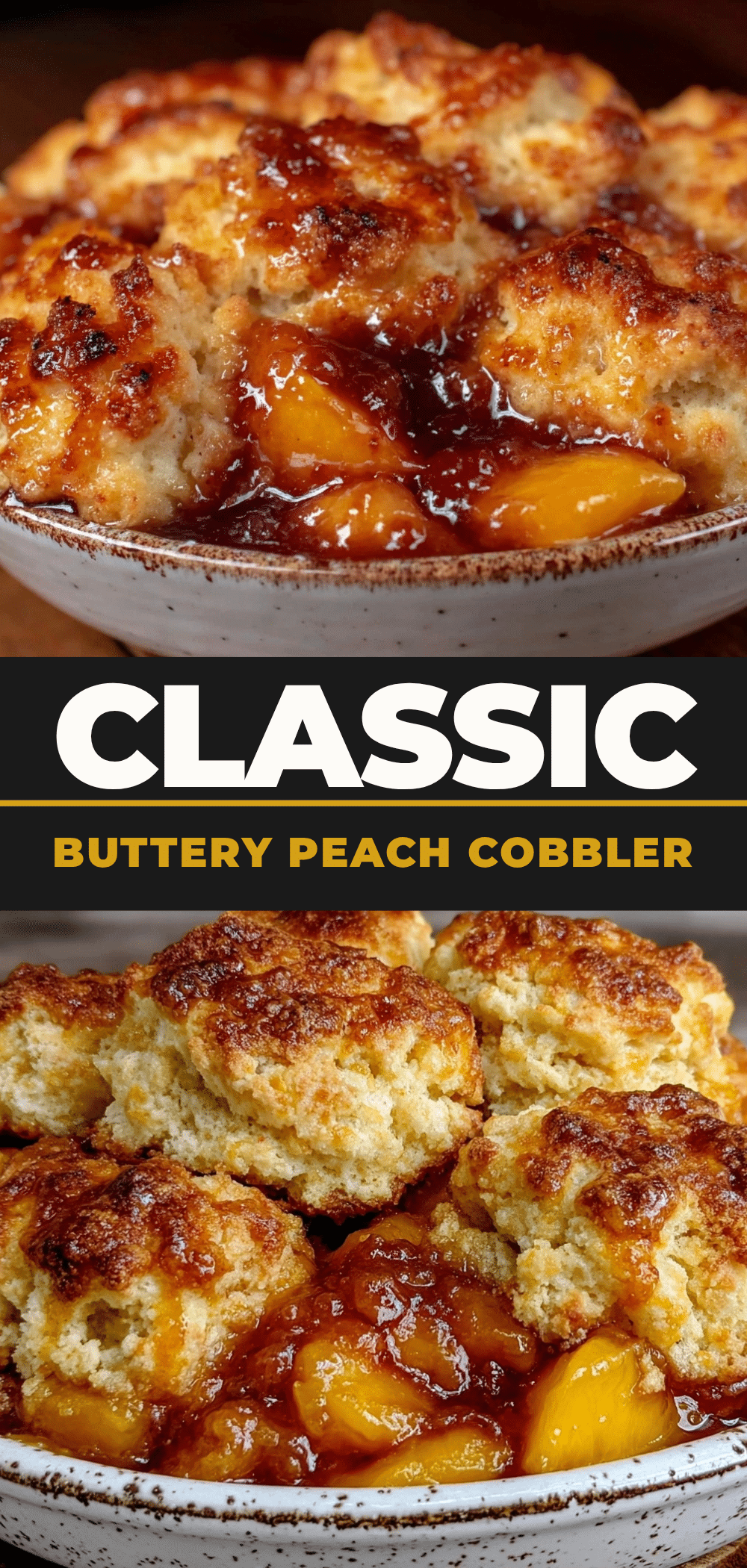
Old Fashioned Peach Cobbler: 1 Secret for Flaky Biscuits
- Total Time: 1 hour 5 minutes
- Yield: 8 servings 1x
Description
A rustic, comforting dessert featuring a bubbling peach filling topped with shaggy, flaky buttermilk biscuits. This recipe uses simple pantry staples and a specific technique for cold butter to ensure perfect texture.
Ingredients
- 6 cups sliced peaches (fresh or frozen)
- 3/4 cup granulated sugar
- 2 tablespoons lemon juice
- 2 tablespoons cornstarch
- 1 teaspoon cinnamon
- 2 tablespoons cold unsalted butter, cubed (for filling)
- 2 cups all-purpose flour
- 1 tablespoon baking powder
- 1/2 teaspoon baking soda
- 1 teaspoon salt
- 1/2 cup cold unsalted butter, cubed (for biscuits)
- 3/4 cup cold buttermilk
- 1 teaspoon vanilla extract
Instructions
- Preheat oven to 375°F (190°C). If using cast iron, place skillet in oven to preheat.
- In a large bowl, combine sliced peaches, sugar, lemon juice, cornstarch, and cinnamon. Toss to coat evenly.
- Pour peach mixture into the skillet and dot the top with 2 tablespoons of cubed cold butter.
- In a medium bowl, whisk together flour, baking powder, baking soda, and salt.
- Add 1/2 cup of cold cubed butter to the flour mixture. Use a fork or pastry cutter to cut butter into flour until pea-sized chunks remain.
- Pour in cold buttermilk and vanilla extract. Fold gently with a spatula until flour just disappears; do not overmix. Dough should be shaggy and lumpy.
- Drop large spoonfuls of biscuit dough onto the peach filling.
- Bake for 45-55 minutes until topping is golden brown and filling is bubbling vigorously.
- Cool for at least 15 minutes before serving to allow filling to thicken.
- Serve warm with vanilla ice cream or whipped cream.
Notes
Keep all butter and buttermilk very cold to ensure flaky biscuits. Do not overmix the dough. If using fresh peaches, peel them first. Frozen peaches do not need thawing and create a thicker syrup. If the top browns too quickly, tent with foil.
- Prep Time: 20 minutes
- Cook Time: 45-55 minutes
- Category: Dessert
- Cuisine: American
Nutrition
- Serving Size: 1 slice
- Calories: 380
- Sugar: 38
- Sodium: 320
- Fat: 12
- Saturated Fat: 7
- Carbohydrates: 62
- Fiber: 3
- Protein: 5
Keywords: peach cobbler, biscuit topping, cast iron dessert, southern dessert, easy cobbler, flaky biscuits, summer dessert