It was 6:30 AM on a Tuesday, the kind of morning where the coffee hasn’t kicked in yet and I’m already running late. I grabbed my usual carton of eggs, cracked two into the pan, and watched them turn into rubbery, dry discs within thirty seconds. Again. I was staring at a plate of sad, overcooked eggs, thinking about how I’d probably just skip breakfast and survive on caffeine until lunch. It wasn’t fueling me; it was just another chore I was failing at.
Then I remembered a tip from a nutritionist friend who swore by cottage cheese for protein. “Just add it to the eggs,” she’d said, like it was the simplest hack in the world. I was skeptical. Cottage cheese in eggs? It sounded like a texture disaster waiting to happen. But desperate times call for desperate measures, so I dumped a quarter cup of that curdy white stuff into my pan alongside the eggs. I stirred, I panicked, I waited for the curds to separate into a weird soup.
They didn’t. Instead, something magical happened. The eggs didn’t just cook; they puffed up. They turned into the cloudiest, most impossibly soft scrambled eggs I had ever seen. And the texture? Silky. Like, seriously, silky. No dry edges, no rubbery bits. Just tender, fluffy clouds of protein. I took a bite and nearly cried. This was the breakfast I’d been missing for years. I’ve made these fluffy cottage cheese scrambled eggs every morning since, and honestly, my mornings have been infinitely better for it.
What started as a lazy Tuesday hack has become my non-negotiable morning ritual. And the best part? The fresh chives. There is nothing quite like the sharp, green bite of fresh chives cutting through the rich, creamy eggs. It’s a flavor combination that feels fancy but takes less time to make than it does to brew a cup of coffee. If you’re tired of dry breakfasts and want something that actually tastes good while keeping you full, this is the game-changer you’ve been looking for.
Why You’ll Love This Recipe
I know, I know. “Cottage cheese in eggs?” I get it. It sounds weird until you taste it. But once you’ve had these fluffy cottage cheese scrambled eggs, you’ll never go back to plain scrambled eggs. Here’s why this recipe has completely taken over my morning routine:
- Insane Fluffiness — Seriously, it’s like cooking with air. The cottage cheese breaks up the egg proteins so they don’t tighten up and get rubbery. I’ve tried this with low-fat and full-fat, and full-fat wins every time for that rich, custard-like texture.
- High Protein, Low Effort — You’re getting about 20 grams of protein in under five minutes. That’s a lot of fuel for almost zero work. I make this when I’m rushing to get the kids out the door, and I know they’re starting the day strong.
- Zero Dry Eggs — The biggest enemy of scrambled eggs is overcooking. With this method, the eggs stay moist even if you take them off the heat a minute too late. The cottage cheese acts like a buffer, keeping everything tender.
- Perfect with Seasonal Herbs — This is where the seasonality comes in. Right now, chives are at their absolute peak. They’re tender, bright, and have that perfect onion-y snap. Using fresh chives transforms this from a simple scramble into something that feels like a proper brunch dish.
- Budget-Friendly — Eggs and cottage cheese are two of the cheapest proteins in the grocery store. You’re not spending a fortune on fancy ingredients to get a restaurant-quality breakfast. It’s just smart, simple cooking.
This isn’t just a quick fix; it’s a better way to start the day. It’s creamy, it’s filling, and it tastes like you actually cared about your breakfast. Which, let’s be honest, is exactly what I feel like when I’m eating these while the house is still quiet.
Ingredients You’ll Need
Here’s the thing about this recipe: it’s incredibly simple, but the quality of your ingredients matters. Since there are only five main components, each one needs to shine. I shop the farmers market when I can, especially for the herbs, because that freshness makes all the difference. Here is exactly what you need to make this work.
For the Eggs
Eggs (4 large) — I use large, pasture-raised eggs whenever possible. The yolks are a deeper orange, and the flavor is richer. If you can’t find pasture-raised, free-range is a great second choice. Avoid the cheap white eggs if you want that buttery taste. Cracking them into a bowl first ensures you don’t get any shell pieces in the pan.
Cottage cheese (½ cup / 115g) — This is the secret weapon. Use small-curd cottage cheese. Large curds don’t mix as smoothly and can leave big chunks in your scramble. Full-fat (4% milk fat) is essential here. Low-fat versions can make the eggs watery and less creamy. I buy the tubs from the dairy aisle, not the small cups—they’re cheaper and usually fresher.
Butter (1 tablespoon) — Unsalted butter gives you control over the salt level. I like to use a good European-style butter if I have it, because the higher fat content adds a nutty richness. But regular salted butter works fine too; just reduce the added salt.
Salt and Black Pepper — Kosher salt is my go-to because it’s easy to pinch and distribute evenly. Freshly cracked black pepper adds a nice heat. Don’t skip the pepper; it balances the mildness of the cottage cheese.
For the Garnish
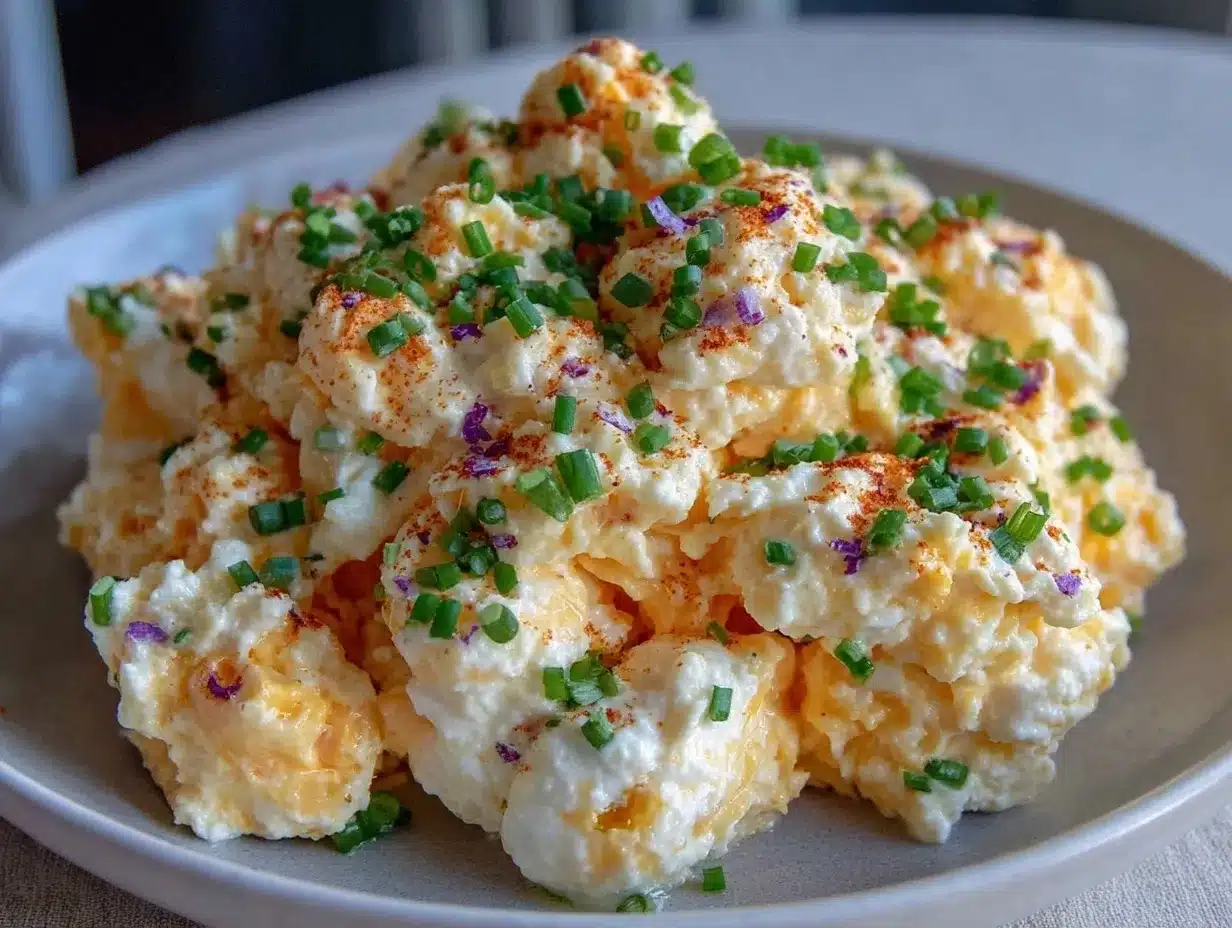
Fresh Chives (2 tablespoons, chopped) — This is where the seasonality hook comes in. Right now, chives are popping up everywhere. They’re delicate, green, and have a mild onion flavor that doesn’t overpower the eggs. If you can’t find fresh chives, green onions (scallions) work, but chop them finer. Dried chives? Skip them. They turn slimmy and lose their punch. Fresh is non-negotiable for this texture.
Optional: Crumbled Feta or Goat Cheese — If you want to lean into the creamy, tangy vibe, sprinkle a little extra cheese on top at the end. It adds a nice crumble contrast to the soft eggs.
Substitutions and Notes
No cottage cheese? You can use ricotta cheese, but the texture will be denser. Cream cheese is another option, but it melts differently and might make the eggs heavier. Stick to cottage cheese for the fluffiness.
Vegetarian? This recipe is naturally vegetarian. If you want to add protein without meat, this is your best bet.
Equipment Needed
You don’t need fancy gadgets for this. I keep it simple so I can grab it and go in the morning.
Non-stick skillet (8 or 10-inch) — A good non-stick pan is crucial. Eggs love a slick surface. I use a ceramic-coated pan that’s about eight inches wide. It keeps the eggs in a nice, thick layer so they cook evenly. If you only have stainless steel, you’ll need to be very generous with the butter to prevent sticking.
Silicone spatula — This is your best friend. You need something flexible to scrape the bottom of the pan and fold the eggs gently. A wooden spoon works, but a spatula gives you better control over the texture.
Whisk or fork — I prefer a fork for these eggs. A whisk can sometimes incorporate too much air, making the eggs too puffy and then deflating them. A fork gently breaks up the yolks and whites without over-aerating. Just beat them until no streaks remain.
Bowl for mixing — Crack your eggs into a bowl first. It’s easier to whisk them with the cottage cheese in the bowl than in the pan, and you avoid shell pieces.
How to Make It: Step-by-Step
Alright, let’s get cooking. This takes less time than it takes to brew coffee, so don’t stress. I’m walking you through exactly how I do it to ensure those cloud-like eggs.
Step 1: Prep the Eggs and Cottage Cheese
Crack the four eggs into a medium bowl. Add the ½ cup of cottage cheese. Now, here’s the trick: don’t just dump it in. Use your fork to gently mash the cottage cheese curds into the eggs. You want them to break down and blend in, not leave big chunks. Whisk everything together until it’s a uniform, slightly lumpy yellow mixture. The lumps are good—they create the fluffy texture. Season lightly with a pinch of salt and pepper.
Step 2: Heat the Pan
Place your non-stick skillet over medium-low heat. Add the tablespoon of butter. Let it melt and foam, but don’t let it brown. You want the butter to be hot and shimmering, not smoking. If the pan is too hot, the eggs will seize up and get rubbery immediately. Low and slow is the mantra here.
Step 3: Cook the Eggs
Pour the egg and cottage cheese mixture into the center of the pan. Let it sit for about 10 seconds. Then, using your silicone spatula, gently push the eggs from the edges toward the center. You want to create soft folds, not chop them up. Keep doing this, slowly moving the eggs around the pan. It should look like soft curds forming, not a dry scramble. This takes about 2-3 minutes.
Step 4: Remove and Rest
Here’s the most important step: take the pan off the heat when the eggs look almost done. They should still look slightly wet and glossy. The residual heat will finish cooking them. If you wait until they look perfect in the pan, they’ll be overdone on the plate. This is the “carryover cooking” magic.
Step 5: Garnish and Serve
Slide the eggs onto a plate. Immediately sprinkle the chopped fresh chives on top. The heat from the eggs will wilt the chives just enough to release their aroma without cooking them away. Add a final crack of black pepper and serve immediately. These eggs don’t wait.
Total Time: 5 minutes (3 minutes active, 2 minutes cooking)
Expert Tips & Tricks
I’ve made these eggs dozens of times, and I’ve learned a few things the hard way. Here’s how to guarantee success every single morning.
- Low Heat is Key — I cannot stress this enough. Medium-high heat is the enemy of fluffy eggs. If you rush the heat, you get rubber. Keep it on medium-low. It’s worth the extra minute.
- Don’t Over-Whisk — When you mix the eggs and cottage cheese, stop when it’s mostly combined. Over-whisking can make the eggs tough. Gentle is better.
- Remove Before Done — Eggs continue to cook after they leave the pan. Aim for “slightly underdone” in the pan. They will finish on the plate.
- Chive Timing — Add the chives after plating, not in the pan. Cooking chives in the pan makes them dark and bitter. Fresh, raw chives on top give you that bright, fresh pop.
- Room Temperature Eggs — If you have time, let your eggs sit out for 15 minutes before cooking. Cold eggs hitting a warm pan can cook unevenly. It’s not a dealbreaker, but it helps.
Variations & Substitutions
Once you’ve mastered the basic version, here’s how you can mix it up. I love experimenting with what’s fresh in the garden or market.
Herb Variations
Dill and Lemon — Swap chives for fresh dill and add a teaspoon of lemon zest. This is lighter and brighter, perfect for spring.
Parsley and Garlic — Use fresh flat-leaf parsley and a tiny pinch of garlic powder. It’s more savory and earthy.
Protein Add-ins
Bacon Bits — Crumbled crispy bacon adds a smoky crunch. I usually cook the bacon first and use the fat to cook the eggs.
Smoked Salmon — Flake some smoked salmon on top after plating. It’s elegant and adds a nice saltiness.
Dietary Modifications
Lower Fat — You can use low-fat cottage cheese, but the texture won’t be as rich. You might need to add a teaspoon of olive oil to the pan for moisture.
Egg-Free — This recipe relies on eggs, so it’s not easily made vegan. However, you can use a tofu scramble with silken tofu and nutritional yeast for a similar high-protein, soft texture.
Serving & Storage
How to Serve: I serve these straight from the skillet for a rustic look. They pair beautifully with honey cornbread muffins for a hearty breakfast, or alongside a simple arugula salad for a light lunch. For a weekend brunch, try them with loaded veggie breakfast quiche on the side.
Storage: Leftovers can be stored in an airtight container in the fridge for up to 2 days. The texture will change slightly as they cool, becoming softer.
Reheating: Reheat gently in the microwave with a splash of milk or water to restore moisture. Or, reheat in a skillet over low heat with a pat of butter. Avoid high heat, or they’ll get rubbery again.
Freezing: I don’t recommend freezing these eggs. The cottage cheese can separate and become grainy when thawed. It’s best enjoyed fresh.
Nutrition Information
I’m not a nutritionist, but here’s the breakdown if you’re tracking. This is per serving (1/2 of the recipe).
- Calories: 320
- Protein: 22g
- Carbs: 4g
- Fat: 24g
- Fiber: 1g
This is a high-protein, low-carb breakfast. The cottage cheese adds significant protein without adding many carbs. It’s a great way to start the day if you’re watching your sugar intake or looking for sustained energy.
Final Thoughts
So, there you have it. The fluffy cottage cheese scrambled eggs that changed my mornings. It’s simple, it’s creamy, and it’s packed with protein. I love that it uses ingredients I already have, but it tastes like something I’d order at a fancy cafe. And with the fresh chives, it feels seasonal and special, even on a busy Tuesday.
Make it while the chives are at their best. That fresh, green flavor is fleeting, and you’ll want to capture it now. If you try this, let me know how it goes! I love hearing about your kitchen experiments. Happy cooking!
Frequently Asked Questions
Can I use large-curd cottage cheese?
You can, but the texture won’t be as smooth. Large curds can leave big chunks in your eggs. If you only have large curds, mash them well with your fork before adding the eggs. Small-curd is definitely preferred for the fluffiest result.
Why are my eggs still watery?
If they’re too watery, you might have cooked them on too low a heat for too long, or you didn’t let the moisture evaporate. Cottage cheese has water content. Make sure you cook them until they look set but still glossy. If they’re still too wet, keep stirring on low heat for another minute.
Can I add vegetables?
Absolutely! Sautéed spinach, diced tomatoes, or mushrooms work great. Just cook the vegetables in the pan first, remove them, then cook the eggs, and fold the veggies back in at the end.
Is cottage cheese noticeable in the taste?
Not really. It adds creaminess and protein, but it doesn’t taste like cheesy eggs. It’s mild and blends in with the egg flavor. If you’re sensitive to dairy, you might notice a slight tang, but most people can’t tell.
Can I make this ahead of time?
It’s best made fresh. Eggs don’t reheat well, especially with cottage cheese. If you need to prep ahead, you can mix the eggs and cottage cheese in the bowl and keep it in the fridge for up to 4 hours. Just cook when you’re ready to eat.
Pin This Recipe!


Fluffy Cottage Cheese Scrambled Eggs with Fresh Chives
- Total Time: 5 minutes
- Yield: 2 servings 1x
Description
A high-protein, low-effort breakfast hack that uses cottage cheese to create incredibly soft, silky, and fluffy scrambled eggs without the dryness of traditional methods.
Ingredients
- 4 large eggs
- 1/2 cup (115g) small-curd cottage cheese (full-fat recommended)
- 1 tablespoon unsalted butter
- Kosher salt and freshly cracked black pepper
- 2 tablespoons fresh chives, chopped
- Optional: Crumbled feta or goat cheese for garnish
Instructions
- Crack the eggs into a medium bowl and add the cottage cheese. Use a fork to gently mash the curds into the eggs until blended into a slightly lumpy mixture. Season lightly with salt and pepper.
- Place a non-stick skillet over medium-low heat and add the butter. Let it melt and foam without browning.
- Pour the egg mixture into the center of the pan and let it sit for 10 seconds. Gently push the eggs from the edges toward the center with a silicone spatula to create soft folds.
- Continue cooking gently for 2-3 minutes until soft curds form. Remove the pan from the heat when the eggs look slightly wet and glossy, as residual heat will finish cooking them.
- Slide the eggs onto a plate and immediately sprinkle with chopped fresh chives. Add a final crack of black pepper and serve immediately.
Notes
Use small-curd cottage cheese for a smoother texture. Cook on medium-low heat to prevent rubbery eggs. Remove from heat while slightly underdone to avoid overcooking. Fresh chives should be added after plating to maintain their bright flavor and color.
- Prep Time: 2 minutes
- Cook Time: 3 minutes
- Category: Breakfast
- Cuisine: American
Nutrition
- Serving Size: 1/2 of the recipe
- Calories: 320
- Sugar: 2
- Sodium: 350
- Fat: 24
- Saturated Fat: 12
- Carbohydrates: 4
- Fiber: 1
- Protein: 22
Keywords: cottage cheese eggs, fluffy scrambled eggs, high protein breakfast, quick breakfast, healthy eggs, chive eggs