I have a confession to make. For years, I thought ricotta cheese belonged exclusively in lasagna or maybe stuffed into manicotti shells. It wasn’t until a rainy Sunday morning in Chicago, when I was desperate for something warm and comforting but didn’t want heavy, greasy diner food, that I stumbled onto this recipe by accident. I had a container of ricotta in the fridge that was about to expire, and a lemon that needed using up. I threw them into the batter on a whim, expecting a dense, weird lump of cheese pancakes.
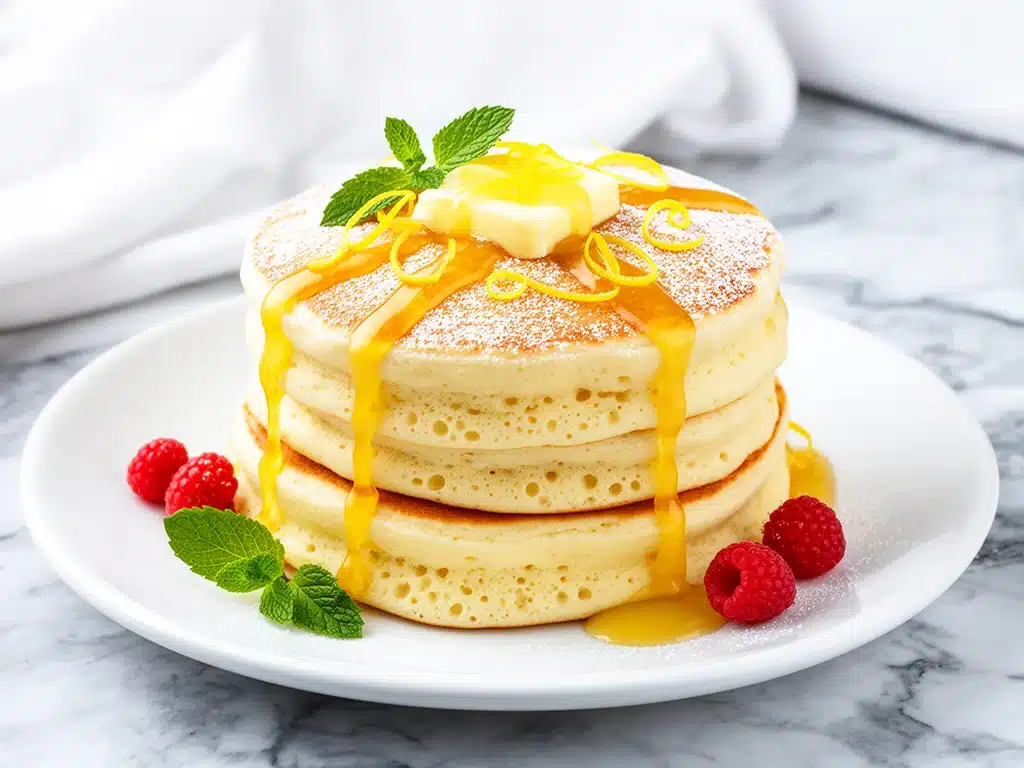
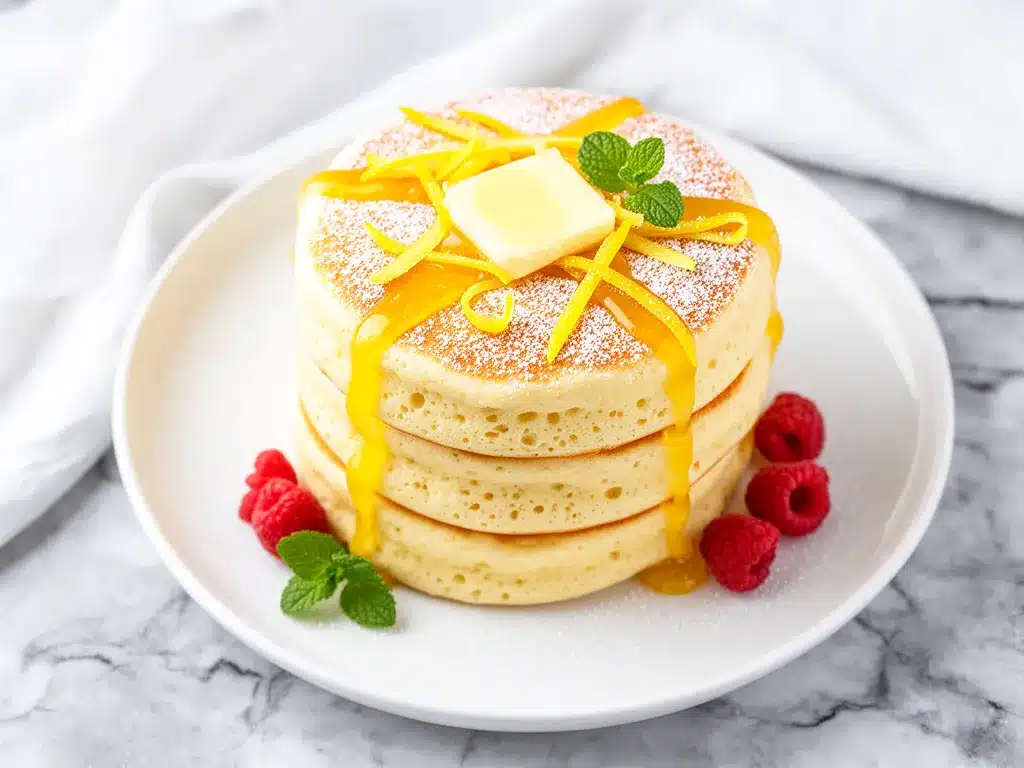
Instead, I got clouds. Literally clouds. They were impossibly fluffy, tangy, and bright, with a texture that felt like eating a soft pillow dipped in sunshine. My husband took one bite, paused, and asked if I had ordered takeout from an Italian restaurant. When I told him it was just eggs, flour, and ricotta, he didn’t believe me. That was five years ago. Since then, these fluffy lemon ricotta pancakes have become the undisputed king of our weekend breakfasts.
There is something magical about the combination of creamy ricotta and zesty lemon juice. The ricotta adds a richness and tenderness that regular milk or buttermilk just can’t achieve, while the lemon cuts through that richness so the pancakes never feel heavy or greasy. I’ve tested this recipe at least fifteen times, tweaking the flour-to-cheese ratio, the resting time, and the cooking temperature, until I landed on the perfect balance. And I’m telling you, this is the only way to make them.
What I love most about these lemon ricotta pancakes is how versatile they are. They work for a lazy weekend brunch with mimosas, a quick weekday breakfast if you prep the night before, or even a dessert if you drizzle them with honey. They impress every time, whether you’re feeding a crowd of hungry teenagers or just treating yourself to something special. Once you try these, you’ll never go back to flat, rubbery store-bought mixes again.
Why You’ll Love This Recipe
So, why are these pancakes taking over my kitchen (and hopefully yours)? There are a few specific reasons that keep me coming back to this batter, week after week.
Incredibly Fluffy Texture — The secret is the ricotta. Unlike regular milk, ricotta adds protein and fat in a way that creates tiny air pockets when cooked, resulting in a pancake that is light, airy, and tender. I’ve had people tell me they’ve never had pancakes this soft. It’s a game-changer.
Bright, Not Overpowering Flavor — A lot of lemon pancakes can be too sour or taste like cleaning products because they rely solely on zest. By using both fresh lemon juice and zest, plus the mild tang of the ricotta, you get a sophisticated citrus flavor that is balanced and delicious. It’s not just “lemon”; it’s complex.
Super Fast and Simple — You probably have most of these ingredients in your pantry and fridge right now. It takes about 20 minutes from start to finish. I can have a stack of these on the table before the coffee finishes brewing. No fancy equipment, no hard-to-find ingredients.
Make-Ahead Friendly — I love that the batter can sit in the fridge overnight. If you’re like me and hit snooze three times on Sundays, you can mix this up Saturday night, sleep in, and have breakfast ready in minutes. The pancakes actually taste better after resting because the flour hydrates fully.
Impress Without the Stress — These look elegant when stacked high and drizzled with syrup, but they’re humble, home-cooked food. My in-laws, who usually complain about “weird” breakfast foods, devour these. They’re the perfect bridge between comfort food and something a bit more refined.
Ingredients You’ll Need
Here’s the thing about this recipe: it’s not complicated, but the quality of your ingredients matters. You don’t need anything exotic, but using the right type of ricotta and fresh lemons will make a huge difference in the final texture and flavor.
The Wet Stuff
Ricotta Cheese (1 cup / 240g) — This is the star. Use whole milk ricotta for the best flavor and texture. Low-fat ricotta will make the pancakes denser and less rich. I buy the tubs, not the jars, because the texture is often smoother. If you can find fresh, local ricotta, even better. Drain any excess liquid if it’s very watery.
Eggs (2 large) — Room temperature eggs incorporate better into the batter. If you’re in a rush, just drop them in a bowl of warm water for 5 minutes. Don’t skip this; cold eggs can shock the batter.
Milk (½ cup / 120ml) — Whole milk is best for richness, but 2% works too. I avoid skim milk because it makes the pancakes a bit dry. If you’re dairy-free, you can use oat milk, but the texture won’t be quite as creamy.
Vanilla Extract (1 teaspoon) — Just a splash to round out the flavors. It doesn’t make them taste like vanilla; it just makes the lemon pop more. Pure vanilla is worth the extra dollar.
The Dry Stuff
All-Purpose Flour (1 cup / 125g) — Don’t use cake flour or bread flour. All-purpose is the sweet spot. Sift it if you have clumps, but don’t over-mix it later. I measure by spooning it into the cup and leveling it off, rather than scooping directly, which packs it down.
Baking Powder (1 ½ teaspoons) — This is what makes them rise. Make sure it’s fresh! If your baking powder is older than 6 months, your pancakes will be flat. I keep a fresh tin specifically for pancakes.
Baking Soda (½ teaspoon) — This reacts with the lemon juice and ricotta’s acidity to create lift. It’s crucial for that fluffy texture.
Salt (½ teaspoon) — Enhances all the flavors. Don’t skip it, even if you’re watching sodium.
The Flavor Boosters
Fresh Lemons (2 medium) — You’ll need the zest of both and the juice of one. Use organic lemons if you can, since we’re using the zest. The zest contains the essential oils that give the bright lemon flavor. Bottled lemon juice is a no-go; it tastes artificial.
Butter (2 tablespoons, melted) — Adds richness and helps with browning. Let it cool slightly before adding so it doesn’t cook the eggs.
Equipment Needed
You don’t need a fancy pancake station, but having the right tools makes life easier.
Medium Mixing Bowl — For the dry ingredients. A wide bowl is easier to whisk in.
Large Mixing Bowl — For combining wet and dry. Make sure it’s big enough to fold without spilling.
Whisk — Essential for breaking up lumps in the ricotta. If your ricotta is grainy, whisk it into the milk first until smooth.
Non-Stick Skillet or Griddle — This is non-negotiable. Pancakes stick to everything else. I use a 10-inch non-stick skillet. A cast iron skillet works too, but you need to season it well and use more butter.
Spatula — A thin, flexible silicone spatula is best for flipping. It slides under the pancake easily without tearing it.
Measuring Cups and Spoons — Accuracy matters with baking. If you don’t have a set, use a kitchen scale for the flour.
How to Make Fluffy Lemon Ricotta Pancakes
Alright, let’s get cooking. This process is straightforward, but there are a few key steps to ensure those pancakes stay fluffy and don’t turn into rubber discs.
Step 1: Prep Your Ingredients (5 minutes)
Get everything ready before you start mixing. Zest your lemons and juice them. Melt the butter and let it cool. Separate your bowls. This is the “mise en place” step. Once you start mixing, things move fast, and you don’t want to be scrambling for a lemon while the batter sits.
Step 2: Mix the Dry Ingredients (2 minutes)
In your medium bowl, whisk together the flour, baking powder, baking soda, and salt. Whisking aerates the flour, which helps with lift. Make sure there are no clumps of baking powder, or you’ll get bitter bites in your pancakes.
Step 3: Combine the Wet Ingredients (3 minutes)
In the large bowl, whisk the ricotta cheese and milk until smooth. This is crucial. If you leave lumps of ricotta, your pancakes will be uneven. Add the eggs, vanilla, melted butter, lemon juice, and lemon zest. Whisk until everything is well combined and the mixture looks creamy and uniform.
Step 4: Fold the Batter Together (2 minutes)
Pour the dry ingredients into the wet ingredients. Here is the most important part: do not overmix. Use a spatula to gently fold the flour into the wet mixture. Stop as soon as you no longer see streaks of dry flour. The batter should be thick and lumpy. If you mix until smooth, you’ll develop gluten, and your pancakes will be tough. Lumpy batter = fluffy pancakes.
Step 5: Rest the Batter (10 minutes)
Let the batter sit for at least 10 minutes. This allows the baking powder to activate and the flour to hydrate. You’ll see tiny bubbles form on the surface. If you can, let it rest longer, up to 30 minutes, for even better results. If you’re meal prepping, cover the bowl and put it in the fridge now.
Step 6: Cook the Pancakes (15 minutes)
Heat your skillet over medium-low heat. This is key. If the pan is too hot, the outside burns before the inside cooks. Test it by sprinkling a few drops of water; they should sizzle and evaporate. Lightly grease the pan with butter or oil.
Pour about ¼ cup of batter for each pancake. Don’t crowd the pan. Cook for 2-3 minutes until the edges look set and bubbles form on the surface, pop, and leave holes. This is your cue to flip. Flip gently and cook for another 1-2 minutes on the other side until golden brown.
Step 7: Serve Immediately
Stack the pancakes on a plate and keep them warm in a 200°F oven while you cook the rest. Serve with extra lemon wedges, maple syrup, and maybe some fresh berries. The contrast of the warm, tangy pancakes and cool berries is amazing.
Expert Tips for Perfect Pancakes
After making these dozens of times, I’ve learned a few tricks that separate good pancakes from great ones.
Control Your Heat — Medium-low is your friend. High heat is the enemy of fluffy pancakes. If you see the edges browning too fast, turn the heat down. It’s better to cook them slowly and get a tender interior than to rush and get a burnt exterior.
Don’t Press the Pancakes — When you flip them, don’t press down with the spatula. You’re squeezing out the air bubbles you worked so hard to create. Let them breathe.
Wipe the Pan Between Pancakes — Butter burns quickly. Use a paper towel to wipe out the pan and add a fresh small knob of butter for each pancake. This prevents sticking and gives a consistent golden color.
Use a Ladle — For uniform pancakes, use a ladle or a ¼ cup measure. This ensures they all cook at the same rate and look pretty when stacked.
Keep Them Warm — Place cooked pancakes on a wire rack in a low oven. Don’t stack them hot on a plate, or they’ll steam and get soggy. A wire rack keeps the bottoms crisp.
Variations and Substitutions
Once you master the base recipe, you can play around with flavors. These pancakes are a blank canvas.
Berry Lemon Ricotta Pancakes — Fold in ½ cup of fresh blueberries or raspberries into the batter right before cooking. The berries burst and create little pockets of juice. I love this version in the summer.
Lemon Poppy Seed — Add 1 tablespoon of poppy seeds to the dry ingredients. It adds a nice crunch and looks beautiful. It’s a classic combination for a reason.
Gluten-Free Option — Use a 1:1 gluten-free flour blend. Make sure it contains xanthan gum, or add ½ teaspoon. The texture might be slightly denser, but they still taste great.
Dairy-Free — Swap the ricotta for a dairy-free ricotta alternative (like almond-based) and use oat milk and coconut oil instead of butter. It’s not exactly the same, but it’s surprisingly close.
Chocolate Chip — Skip the lemon zest and add ½ cup of chocolate chips. It’s like a dessert pancake. Add a splash of orange zest instead for a different twist.
Serving and Storage
These pancakes are best served fresh and hot, but leftovers happen, and I’ve figured out the best way to handle them.
How to Store
Store leftover pancakes in an airtight container in the fridge for up to 3 days. Do not freeze them raw. Cooked pancakes freeze well, but the texture changes slightly. If you freeze them, thaw them in the toaster for the best results.
Reheating
The microwave makes them rubbery. Avoid it if you can. Instead, reheat them in a toaster or a skillet over low heat with a splash of water and a lid to steam them slightly. This restores the fluffiness. I usually toast them for 30 seconds on each side.
What to Serve With
Classic maple syrup is obvious, but try honey with a drizzle of balsamic glaze for a sophisticated twist. Fresh whipped cream is luxurious. Or keep it light with a dollop of Greek yogurt and fresh fruit. I also love a sprinkle of powdered sugar for a pretty presentation.
Nutrition Information
I’m not a nutritionist, but here’s a rough estimate per pancake (based on 8 pancakes, with 1 tbsp butter per pancake for cooking):
- Calories: 220
- Protein: 8g
- Carbs: 28g
- Fat: 9g
- Fiber: 1g
- Sugar: 4g
The ricotta adds protein, making these more filling than standard pancakes. If you’re watching calories, you can reduce the butter used for cooking by using a non-stick spray.
Frequently Asked Questions
Can I make the batter ahead of time?
Yes! In fact, it’s recommended. Cover the bowl and refrigerate for up to 24 hours. The pancakes might spread a bit more, so you may need to adjust the pan size slightly. Let the batter come to room temperature for 15 minutes before cooking.
Why are my pancakes dense?
This usually happens if you overmix the batter or use old baking powder. Make sure your leavening agents are fresh, and fold the batter gently. Also, ensure your ricotta is smooth before mixing.
Can I use cottage cheese instead of ricotta?
You can, but the texture will be different. Cottage cheese is wetter and has a different curd structure. You’ll need to blend it first to make it smooth, and the pancakes will be less fluffy. Ricotta is best for that light, airy texture.
Do I need to drain the ricotta?
If your ricotta is very watery, yes. Drain it in a fine-mesh sieve for 10 minutes. If it’s thick and creamy, you can skip this step. Too much liquid will make the batter runny.
Can I freeze the cooked pancakes?
Absolutely. Let them cool completely, then layer them with parchment paper in an airtight container. Freeze for up to 2 months. Reheat in the toaster.
Final Thoughts
These fluffy lemon ricotta pancakes are more than just breakfast; they’re a mood. They’re for slow mornings, for special occasions, or just for when you need a little comfort in a bowl. I hope they become a staple in your kitchen too. They’re easy, forgiving, and delicious. So grab your whisk, zest those lemons, and enjoy the best pancakes you’ll ever make.
If you try this recipe, I’d love to hear how it turns out! Drop a comment below with your tips or variations. Happy cooking!
Pin This Recipe!
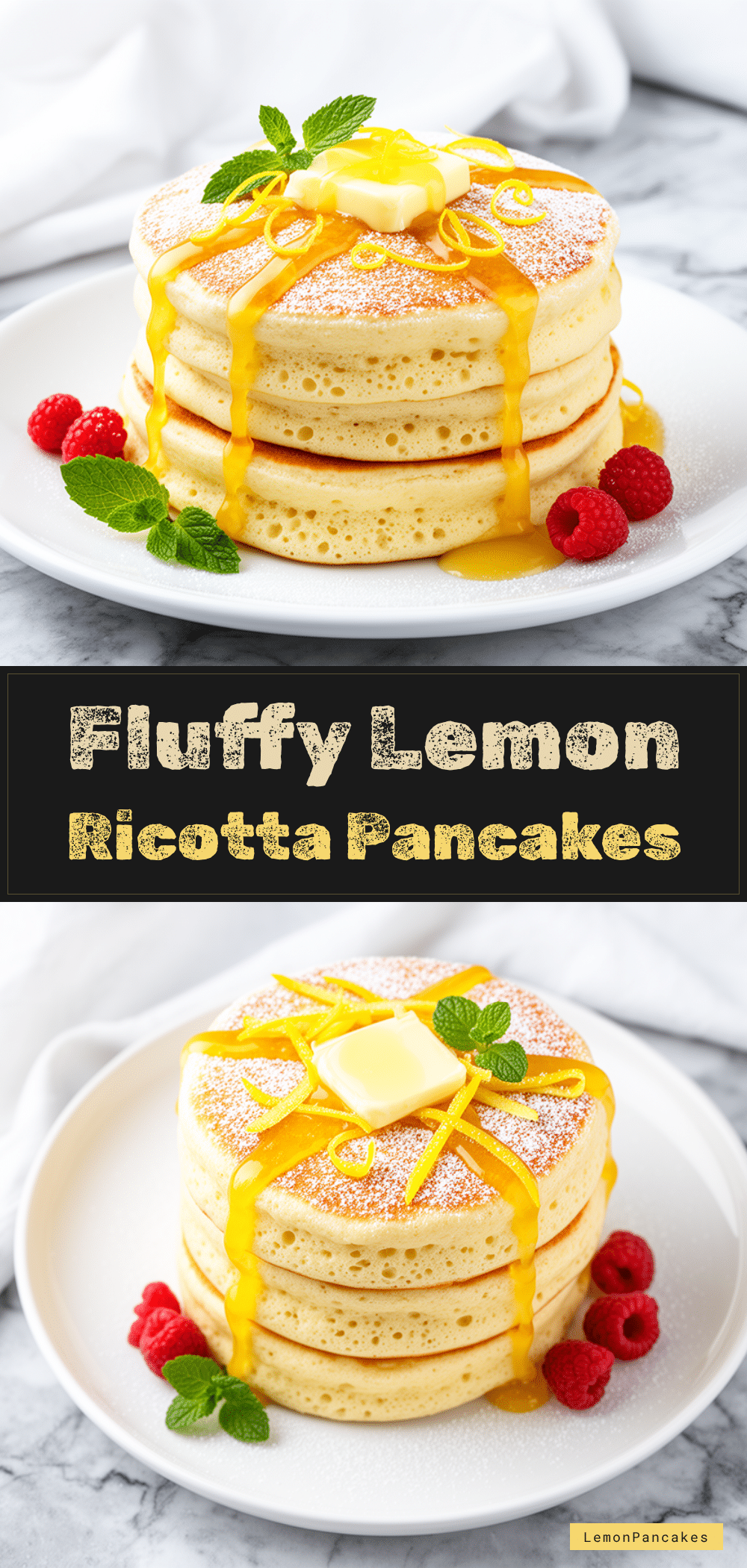
Fluffy Lemon Ricotta Pancakes
- Total Time: 30 minutes
- Yield: 8 servings 1x
Description
Impossibly fluffy, tangy, and bright pancakes made with creamy ricotta and fresh lemon. These are light, airy, and perfect for a weekend breakfast or brunch.
Ingredients
- 1 cup (240g) whole milk ricotta cheese
- 2 large eggs, room temperature
- ½ cup (120ml) whole milk
- 1 teaspoon vanilla extract
- 1 cup (125g) all-purpose flour
- 1 ½ teaspoons baking powder
- ½ teaspoon baking soda
- ½ teaspoon salt
- Zest of 2 medium lemons
- Juice of 1 medium lemon
- 2 tablespoons butter, melted and cooled
Instructions
- Prep ingredients: Zest and juice lemons, melt butter, and set out bowls.
- In a medium bowl, whisk together flour, baking powder, baking soda, and salt.
- In a large bowl, whisk ricotta and milk until smooth. Add eggs, vanilla, melted butter, lemon juice, and lemon zest. Whisk until uniform.
- Pour dry ingredients into wet ingredients. Gently fold with a spatula until just combined; batter should remain thick and lumpy. Do not overmix.
- Let batter rest for at least 10 minutes (up to 30 minutes) to allow flour to hydrate and baking powder to activate.
- Heat a non-stick skillet or griddle over medium-low heat. Lightly grease with butter or oil.
- Pour about ¼ cup of batter per pancake. Cook for 2-3 minutes until edges are set and bubbles form and pop. Flip gently and cook for another 1-2 minutes until golden brown.
- Serve immediately with maple syrup, fresh berries, or lemon wedges.
Notes
Use whole milk ricotta for best texture. Ensure baking powder is fresh for proper rise. Do not overmix the batter to avoid tough pancakes. Keep cooked pancakes warm in a 200°F oven on a wire rack to maintain crispness.
- Prep Time: 15 minutes
- Cook Time: 15 minutes
- Category: Breakfast
- Cuisine: American
Nutrition
- Serving Size: 1 pancake
- Calories: 220
- Sugar: 4
- Sodium: 350
- Fat: 9
- Saturated Fat: 4
- Carbohydrates: 28
- Fiber: 1
- Protein: 8
Keywords: lemon ricotta pancakes, fluffy pancakes, breakfast recipe, weekend brunch, ricotta cheese recipes, easy pancakes