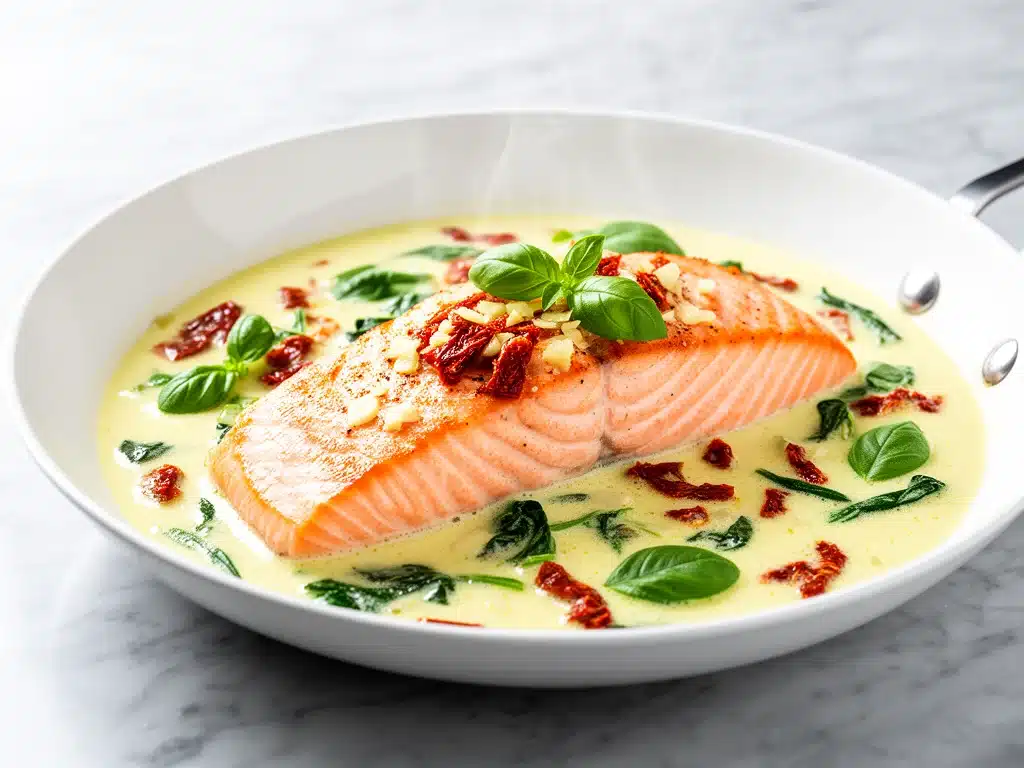
Last Tuesday, I came home from work feeling like my battery had hit 1% and my stomach was hitting 0%. I opened the fridge, stared at a sad-looking lemon, a piece of salmon that was slightly too thick, and a handful of spinach that was clinging to the crisper drawer like it was afraid to leave. I didn’t have the energy to chop, sauté, bake, and wash three different pans. I just wanted dinner to be done. So, I threw everything into my biggest skillet and hoped for the best.
Twenty minutes later, the kitchen smelled like a fancy Italian restaurant, not a tired apartment. The salmon was flaky, the sauce was velvety, and I hadn’t touched a single dirty pan except the one I cooked it in. That was the moment I fell in love with the one-pan creamy Tuscan salmon recipe. It’s not just about saving time (though it absolutely saves time); it’s about the fact that it tastes like you tried, even when you’re running on fumes.
I’ve made this creamy Tuscan salmon one pan at least fifteen times since that night. Some weeks I add sun-dried tomatoes because I’m feeling fancy. Other weeks, I skip them and just let the garlic and spinach shine. But the core recipe? It’s consistent. It’s reliable. It’s the kind of dinner that makes your family look up from their phones and actually ask, “What’s in this?” Spoiler alert: It’s simple, it’s healthy, and it’s ridiculously easy.
Why You’ll Love This One-Pan Creamy Tuscan Salmon Recipe
Look, I get it. You’re busy. You have a life outside the kitchen. You don’t need another recipe that requires a trip to the store for seven obscure ingredients or a day to marinate. This one-pan creamy Tuscan salmon is different. Here’s why it’s become a staple in my weekly rotation:
- It’s Actually One Pan — Seriously. One skillet. I know how good that sounds because I usually end up with a sink full of dishes by 8 PM. With this recipe, you cook the salmon, make the sauce, and serve it all in the same vessel. Cleanup takes less time than the cooking.
- 20 Minutes Flat — From the moment you turn on the stove to the moment you’re eating, it’s twenty minutes. That includes searing the fish, sautéing the aromatics, and simmering the sauce. It’s fast enough for a Tuesday, but impressive enough for a Thursday night guest.
- Pantry-Friendly Ingredients — You probably have most of this already. Salmon, garlic, spinach, heavy cream, parmesan, sun-dried tomatoes. If you don’t have salmon, you can swap it, but I think you’ll find yourself buying it regularly because it cooks so quickly.
- Restaurant Quality, Home Cook Price — A dish like this at a restaurant will run you $25-$30. Making it at home costs maybe $12 for the salmon and the rest is pantry staples. The flavor profile—creamy, garlicky, with a hint of sun-dried tomato tang—is exactly what you’re paying extra for elsewhere.
- Healthy Without Being Sad — Salmon is packed with omega-3s. The spinach adds vitamins. The sauce is rich, yes, but you’re not drowning it in breading or deep-frying it. It feels indulgent, but it’s genuinely good for you.
This recipe is my go-to when I want to feel like a good cook without actually doing the work of a good cook. It’s foolproof, it’s delicious, and it leaves you with more energy to actually enjoy your evening.
Ingredients You’ll Need for Creamy Tuscan Salmon
Here’s the best part: this recipe doesn’t ask for anything weird. No fancy sauces you’ve never heard of, no hard-to-find herbs. Just real, good ingredients that come together to make something magical. I’m particular about a few things here, so pay attention to the notes.
For the Salmon
Salmon fillets (4 pieces, about 6oz each) — I use wild-caught sockeye or atlantic salmon. Wild is firmer and has a better texture for searing. If you’re on a budget, farmed atlantic is fine, just make sure it’s fresh. The skin should look shiny, not dull. Pat it dry before cooking—this is non-negotiable for a good sear.
Sea salt and black pepper — To taste. I use kosher salt for the fish because it’s less salty by volume. Freshly cracked black pepper adds a nice bite.
Smoked paprika (1 teaspoon) — This is my secret weapon. It adds a subtle depth and a beautiful color that regular paprika doesn’t have. It mimics that grilled flavor even if you’re just using a skillet.
Butter (2 tablespoons) — For searing. I use unsalted butter so I can control the salt. Olive oil works too, but butter gives that rich, savory base for the sauce.
For the Creamy Tuscan Sauce
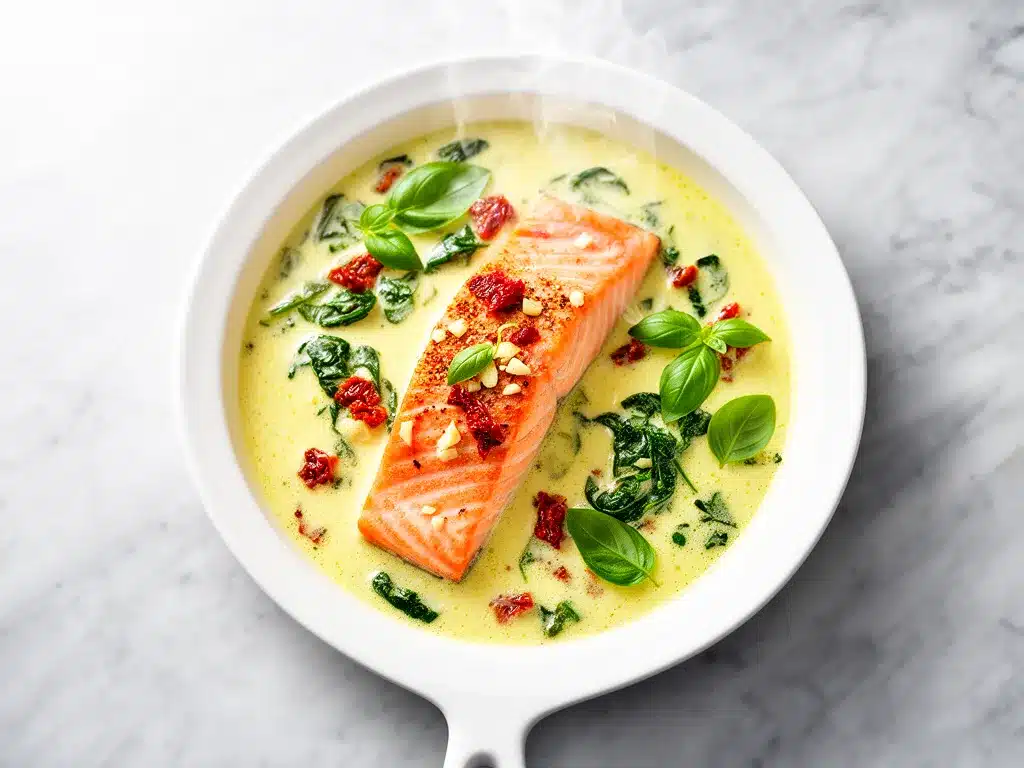
Garlic (4 cloves, minced) — Yes, four cloves. Don’t be shy. Fresh garlic is essential. Jarred garlic has a metallic taste that clashes with the delicate cream sauce. Mince it finely so it disperses evenly.
Chicken broth (½ cup) — Use low-sodium broth. Since we’re adding parmesan and salted butter later, you don’t want to start with a salty base. Vegetable broth works for a vegetarian version, but chicken adds more body.
Heavy cream (1 cup) — Full-fat only. Half-and-half will curdle or separate. You want that luxurious, thick sauce that coats the back of a spoon. If you’re watching calories, you can try light cream, but the texture changes significantly.
Sun-dried tomatoes (½ cup, chopped) — These are packed in oil, and I include that oil in the sauce. It adds an incredible umami punch. If you use oil-packed, drain them slightly but save a tablespoon of the oil. If you only have vinegar-packed, they’ll be tangier but still delicious.
Spinach (3 cups, fresh) — I use baby spinach because it’s tender and wilts quickly. If you have frozen spinach, you can use it, but you must thaw and squeeze out ALL the water first. Watery spinach ruins the sauce consistency.
Parmesan cheese (½ cup, freshly grated) — Buy a wedge of parmesan and grate it yourself. Pre-grated cheese has cellulose in it to prevent clumping, and that stops it from melting smoothly. Freshly grated parmesan melts into the cream like butter.
Red pepper flakes (½ teaspoon) — Optional, but I love the slight kick. It balances the richness of the cream. Adjust to your heat tolerance.
For Garnish
Fresh basil — Chopped. Adds a fresh, herbal note that cuts through the heavy sauce.
Extra parmesan — For serving.
Equipment Needed
You don’t need a fancy kitchen for this. Here’s what I actually use, and what you can swap.
Large Skillet (12-inch) — This is the star of the show. I use a stainless steel skillet because it gives a great sear on the salmon. Cast iron works too, but it’s heavy. Non-stick is fine if you’re worried about sticking, but you won’t get that golden crust on the fish. Just make sure it’s big enough to hold all four fillets in a single layer.
Spatula — A thin, flexible metal spatula is best for flipping the salmon without breaking it. I’ve ruined fillets with thick spatulas before. Learn from my mistake.
Wooden Spoon or Silicone Spatula — For stirring the sauce. You’ll be stirring constantly as the cream reduces.
Cutting Board and Knife — For chopping the sun-dried tomatoes and mincing the garlic. Sharp knife helps. Dull knives make you cry (from frustration, not onions).
Measuring Cups and Spoons — Standard stuff. I measure my heavy cream and broth to ensure the sauce thickens correctly.
How to Make It: Step-by-Step
Alright, let’s get cooking. This is straightforward, but there are a few tricks to keep the salmon perfect and the sauce silky.
Step 1: Prep the Salmon (5 minutes)
Take your salmon fillets out of the fridge. Let them sit for 5-10 minutes while you prep other ingredients. Cold fish hits the pan unevenly. Pat them completely dry with paper towels. This is crucial. If the salmon is wet, it steams instead of sears. Season both sides generously with salt, pepper, and smoked paprika. Set aside on a plate.
Step 2: Sear the Salmon (4-5 minutes)
Heat your large skillet over medium-high heat. Add the butter (and a splash of olive oil if you’re worried about burning). Once the butter foams, place the salmon fillets skin-side down (if skin-on) or presentation-side down. Do not move them! Let them sear for 3-4 minutes. You want a golden crust. If you try to flip them too early, they’ll stick and fall apart. Flip them carefully and cook for another 1-2 minutes on the other side. The fish should be opaque and flake easily with a fork. Remove the salmon from the pan and set it aside on a plate. Don’t worry if it’s not 100% cooked through yet; it will finish cooking in the sauce.
Step 3: Build the Flavor Base (2 minutes)
Reduce the heat to medium. In the same pan with the leftover butter and fish juices, add the minced garlic and red pepper flakes. Sauté for just 30-60 seconds. Watch it closely. Garlic burns fast. Once it smells fragrant, add the sun-dried tomatoes and cook for another 30 seconds to warm them up.
Step 4: Make the Sauce (3-4 minutes)
Pour in the chicken broth to deglaze the pan. Scrape up any browned bits from the bottom of the skillet—that’s flavor gold. Let the broth simmer for 1 minute to reduce slightly. Then, pour in the heavy cream. Stir to combine. Let the cream simmer gently for 2-3 minutes. It should start to thicken. Don’t boil it vigorously, or it might break.
Step 5: Add the Greens and Cheese (2 minutes)
Stir in the fresh spinach. It will wilt down quickly—just 30 seconds is enough. Once the spinach is wilted, reduce the heat to low. Sprinkle the grated parmesan cheese over the sauce. Stir gently until the cheese melts and the sauce is smooth and creamy. Taste the sauce. Add more salt or pepper if needed. Remember, the salmon already has salt, so be careful.
Step 6: Combine and Serve (1 minute)
Return the salmon fillets to the pan, nestling them into the sauce. Spoon some of the creamy Tuscan sauce over the top of each fillet. Let them sit in the warm sauce for 1-2 minutes to finish cooking and absorb the flavor. Serve immediately, garnished with fresh basil and extra parmesan.
Total Time: 20 minutes (5 minutes prep, 15 minutes cooking)
Expert Tips & Tricks for Success
Here’s everything I’ve learned from making this dozens of times. These tips will save you from my mistakes.
Don’t Overcook the Salmon
The biggest mistake people make is cooking the salmon all the way through in the pan. Pull it out when it’s still slightly translucent in the center. It will finish cooking in the hot sauce. Overcooked salmon is dry and rubbery. You want it buttery and tender.
Scrape the Pan
When you add the broth after removing the fish, use your spatula to scrape up all those browned bits. That’s called fond, and it’s where all the flavor is. If you skip this, your sauce will be flat.
Control the Heat for Cream
When you add the heavy cream, keep the heat at medium-low. If it boils too hard, the sauce can separate and look grainy. Gentle simmering keeps it smooth and glossy.
Use Fresh Herbs
I know dried basil is easier, but fresh basil added at the end makes this recipe. The heat of the dish releases the oils in the basil, making the whole dish smell incredible. Dried basil turns bitter when heated. Add it only at the very end.
Save the Sun-Dried Tomato Oil
If your sun-dried tomatoes are packed in oil, don’t throw that oil away. It’s liquid gold. Add a teaspoon to the pan when you sauté the garlic for an extra punch of flavor.
Variations & Substitutions
Once you’ve nailed the basic version, here’s how you can mix it up. I’ve tried all of these.
Shrimp Tuscan Salmon
Swap the salmon for large shrimp. Shrimp cooks much faster—just 2-3 minutes per side. Remove them when pink, make the sauce, and toss them back in at the end. It’s even faster.
Chicken Version
Use chicken breasts or thighs. Sear them like the salmon, remove, make the sauce, and return the chicken. Chicken takes longer to cook, so you might need to simmer it in the sauce for 5-7 minutes to ensure it’s done.
White Fish Option
If salmon isn’t your thing, use cod, halibut, or tilapia. White fish is milder and flakier. Adjust cooking time to 3-4 minutes total. It works beautifully with the creamy sauce.
Lighter Version
Use half-and-half instead of heavy cream, and reduce the parmesan to ¼ cup. It’s thinner but still tasty. I make this when I’m trying to be “healthy,” but I’ll admit, the heavy cream version is the one I crave.
Vegan Version
Swap salmon for firm tofu (press and sear it). Use coconut cream instead of dairy cream, and nutritional yeast instead of parmesan. Use vegetable broth. It’s different, but it’s still creamy and delicious. My lactose-intolerant friends love this swap.
Serving & Storage
How to Serve:
I usually serve this straight from the skillet at the dinner table—it looks rustic and stays warm. But here are other ways I’ve enjoyed it:
- Pasta — Toss it with angel hair or linguine. The sauce clings perfectly to thin pasta. This is my favorite way to stretch the meal for more people.
- Over Rice or Quinoa — Spoon the salmon and sauce over a bed of fluffy rice or quinoa. Great for meal prep.
- With Crusty Bread — Dip the bread into the sauce. I won’t judge you if you eat all the sauce with bread.
- With Roasted Veggies — Serve with asparagus or broccoli on the side for a complete, low-carb meal.
Storage Instructions:
Refrigerator:
Store leftovers in an airtight container for up to 3 days. The sauce will thicken in the fridge—totally normal.
Reheating:
Best method: Add to a skillet with a splash of milk or cream over low heat. Stir gently until heated through. The extra liquid brings back the creamy texture.
Microwave method: Heat in 30-second intervals, stirring between. Add a splash of milk if it’s too thick.
Never works: Trying to reheat in the pot you cooked it in. It always burns on the bottom. Ask me how I know.
Freezing:
Honestly, this doesn’t freeze well because of the dairy. The sauce separates when thawed. Make it fresh or store in the fridge for up to 3 days.
Nutrition Information
I’m not a nutritionist, but here’s the breakdown if you’re tracking. This is per serving (based on 4 servings).
- Calories: 450
- Protein: 35g
- Carbs: 8g
- Fiber: 2g
- Sugar: 3g
- Fat: 30g
- Saturated Fat: 15g
- Cholesterol: 110mg
- Sodium: 600mg
- Calcium: 200mg
What’s Good: High protein, rich in omega-3s, good source of calcium.
What to Know: Higher in calories from cream and cheese. Moderate sodium.
My Take: Look, this is comfort food with cream and cheese. It’s not a diet recipe. But it’s way better than takeout, costs less, and I know exactly what’s in it. When I want to make it lighter, I use the half-and-half version and load up on vegetables. But usually? I just eat a reasonable portion and enjoy it.
Final Thoughts
So that’s my go-to creamy Tuscan salmon one pan! I’ve probably talked your ear off at this point, but when you make a recipe this often, you have a lot to say about it. This has saved weeknight dinners more times than I can count. It’s my answer to “what’s for dinner” when I’m tired, don’t want takeout, and still want something that tastes really good. My kids are happy, my husband’s happy, and I’m happy because I’m not stressed about cooking.
Make it yours! Try different add-ins, swap in your favorite vegetables, adjust the garlic (though more is always better in my opinion). The best recipes are the ones you adapt to your family’s tastes.
If you make this, drop a comment and let me know what you think! I love hearing how recipes turn out in your kitchen. And if something doesn’t work, tell me that too—I’m here to help troubleshoot.
Happy cooking! And I hope your kitchen smells half as good as mine does right now.
Frequently Asked Questions
Q: Can I use frozen salmon?
A: You can, but you must thaw it completely and pat it very dry first. Frozen salmon releases more water, which can make the searing harder. If you’re in a rush, thaw it in a bowl of cold water for 20 minutes. Fresh salmon is always better for searing.
Q: Why did my sauce break or look grainy?
A: The heat was likely too high when you added the cheese or cream. Dairy separates when boiled aggressively. Always keep the heat at medium-low when adding cream and cheese. If it’s already grainy, try whisking in a splash of warm cream—it sometimes saves it.
Q: Can I make this ahead for a dinner party?
A: Sort of. You can prep the ingredients (chop tomatoes, mince garlic, measure cream) ahead of time. But cook the salmon and sauce fresh right before serving. Reheated salmon can become rubbery. I do the prep ahead, then cook for 20 minutes when guests arrive.
Q: Why did my salmon stick to the pan?
A: The pan wasn’t hot enough when you added the fish, or the salmon was wet. Make sure your pan is hot before adding butter, and pat the salmon bone-dry. Also, don’t try to flip it too early. If it’s searing properly, it will release from the pan naturally.
Q: Can I use coconut milk instead of heavy cream?
A: Yes, for a dairy-free version. Use full-fat canned coconut milk. It will be thinner and have a coconut flavor, but it works. Add a tablespoon of cornstarch slurry if you want it thicker.
Q: How do I reheat leftovers without it getting dry?
A: Add a splash of milk or cream to a skillet, add your leftover salmon, and heat gently over low heat, stirring frequently. The extra liquid brings back the creamy texture. Microwave sort of works but tends to dry it out. If you do microwave, definitely add a splash of milk first and heat in short bursts, stirring between.
Q: Can I double this recipe?
A: Absolutely! Double everything and use your biggest skillet. The cooking times stay the same. I do this when I’m meal-prepping or feeding a crowd. Just make sure your skillet is big enough for all the salmon in a single layer.
Pin This Recipe!
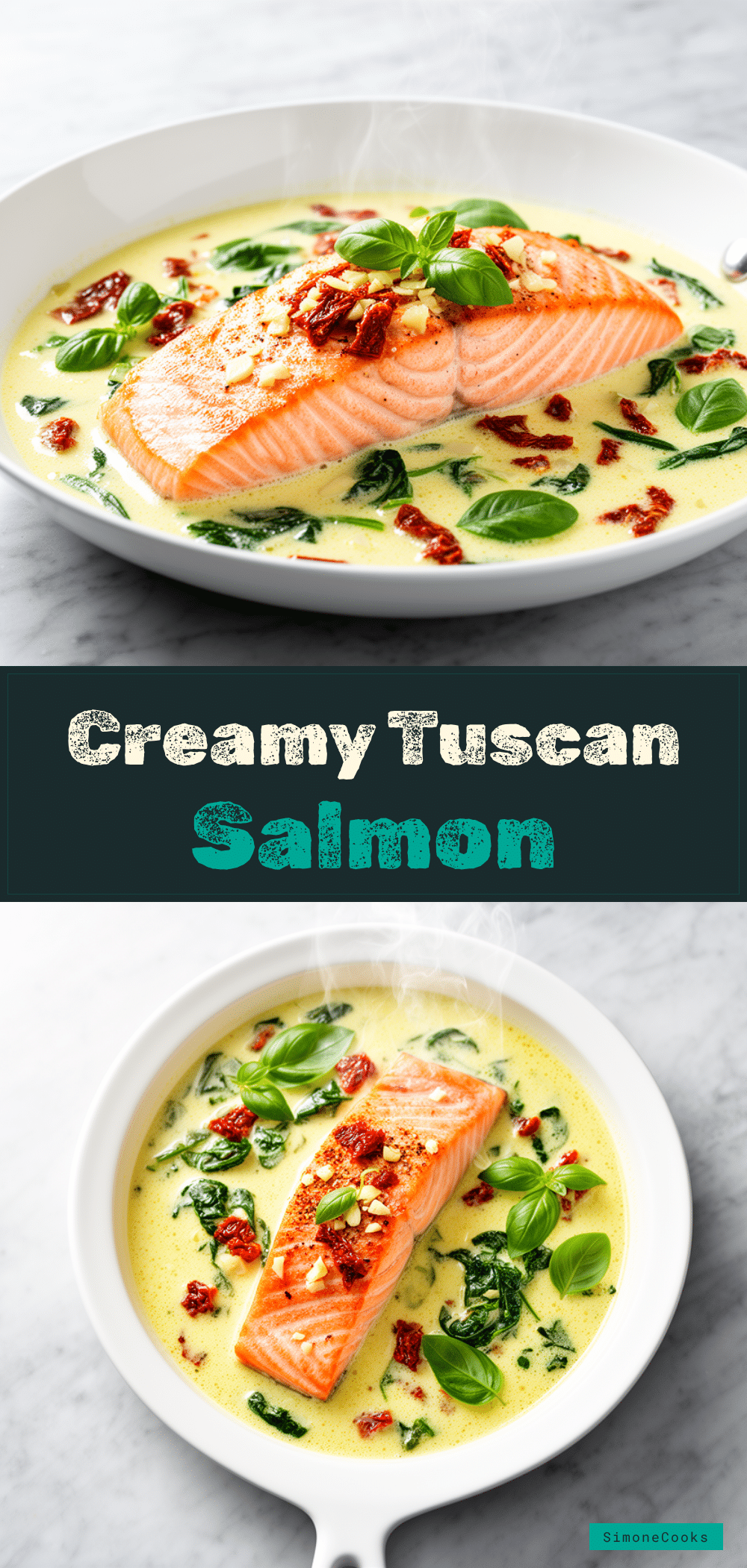

Creamy Tuscan Salmon One Pan: Easy 20-Minute Dinner
- Total Time: 20 minutes
- Yield: 4 servings 1x
Description
A quick, one-pan dinner featuring seared salmon fillets in a velvety sauce made with garlic, spinach, sun-dried tomatoes, and parmesan cheese. Ready in just 20 minutes with minimal cleanup.
Ingredients
- 4 salmon fillets (about 6oz each)
- Sea salt and black pepper (to taste)
- 1 teaspoon smoked paprika
- 2 tablespoons butter
- 4 cloves garlic, minced
- ½ cup chicken broth (low-sodium)
- 1 cup heavy cream (full-fat)
- ½ cup sun-dried tomatoes, chopped (packed in oil)
- 3 cups fresh baby spinach
- ½ cup freshly grated parmesan cheese
- ½ teaspoon red pepper flakes (optional)
- Fresh basil, chopped (for garnish)
- Extra parmesan (for serving)
Instructions
- Pat salmon fillets dry and season both sides with salt, pepper, and smoked paprika. Let sit for 5-10 minutes.
- Heat a large skillet over medium-high heat. Add butter (and a splash of olive oil if needed). Once foaming, place salmon skin-side down. Sear for 3-4 minutes without moving until golden crust forms.
- Flip salmon and cook for another 1-2 minutes until opaque. Remove salmon from pan and set aside on a plate.
- Reduce heat to medium. Add minced garlic and red pepper flakes to the pan. Sauté for 30-60 seconds until fragrant.
- Add sun-dried tomatoes and cook for 30 seconds.
- Pour in chicken broth to deglaze the pan, scraping up browned bits. Simmer for 1 minute.
- Add heavy cream and simmer gently for 2-3 minutes until slightly thickened. Do not boil vigorously.
- Stir in fresh spinach and cook for 30 seconds until wilted.
- Reduce heat to low. Sprinkle in parmesan cheese and stir until melted and smooth. Taste and adjust seasoning.
- Return salmon to the pan, nestling into the sauce. Spoon sauce over fish and let sit for 1-2 minutes to finish cooking.
- Serve immediately, garnished with fresh basil and extra parmesan.
Notes
Do not overcook the salmon; pull it out when slightly translucent as it will finish cooking in the sauce. Scrape the pan fond for flavor. Keep heat low when adding cream to prevent separation. Fresh basil should be added at the end to prevent bitterness. This recipe does not freeze well due to the dairy sauce.
- Prep Time: 5 minutes
- Cook Time: 15 minutes
- Category: Main Course
- Cuisine: Italian
Nutrition
- Serving Size: 1 fillet with sauce
- Calories: 450
- Sugar: 3
- Sodium: 600
- Fat: 30
- Saturated Fat: 15
- Carbohydrates: 8
- Fiber: 2
- Protein: 35
Keywords: Tuscan salmon, one pan dinner, creamy salmon, quick dinner, healthy seafood, garlic spinach sauce, weeknight meals