Last November, I was having one of those evenings where I came home exhausted, my brain completely fried from a week of back-to-back meetings. I opened the fridge, saw a sad, wilting bag of carrots, a couple of bruised beets, and a parsnip hiding in the crisper drawer that looked like it had given up on life. I wanted comfort food. I wanted something warm and cozy. But I also wanted to eat something that wasn’t just carbs and cheese. That night, I threw those sad veggies on a baking sheet, drizzled them with maple syrup and Dijon mustard, and hit the oven.
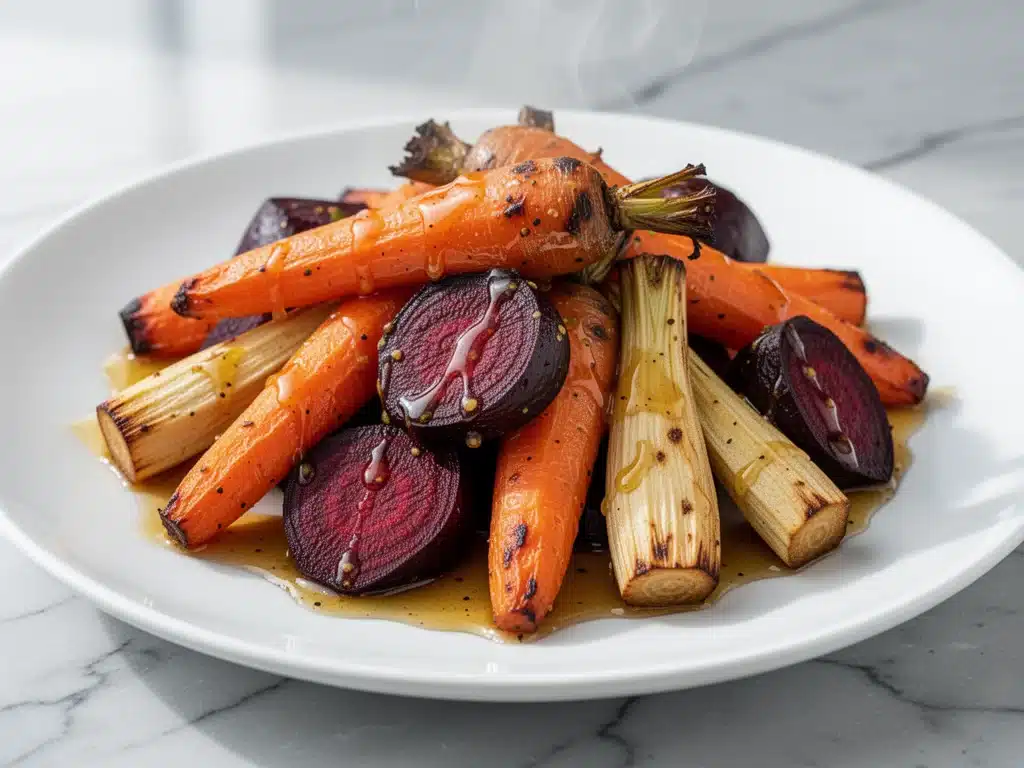
Twenty minutes later, the smell of caramelized onions and roasted earth filled the house. When I took the sheet out, the carrots were glazed and tender, the beets had softened into sweet pillows, and the parsnips had crispy, golden edges. I ate it straight from the pan, standing over my stove in my pajamas, and realized something: I had been doing root vegetables wrong my entire life. I’d been boiling them to mush or roasting them blandly with just salt and pepper. But that maple Dijon glaze? It changed everything. It turned humble, dirt-covered roots into something that tasted like a fancy dinner party dish, but with the effort level of boiling water.
That single night sparked a new routine. Now, whenever fall hits and the days get shorter, this is my go-to side dish. It’s Fall Maple Dijon Roasted Root Vegetables, and it’s the perfect companion to almost any weeknight protein. Whether you’re making a simple roast chicken, some autumn maple bourbon glazed salmon, or just eating a big salad, these veggies bring the warmth and sweetness that the season craves. I’ve made them for dinner parties (they look stunning on a platter) and for Tuesday nights when I just want to get dinner on the table without thinking. They are sweet, tangy, savory, and incredibly easy.
If you’ve ever stared at a pile of root vegetables and thought, “I don’t really feel like chopping all that,” trust me. The prep takes five minutes. The rest is just waiting for the oven to do its magic. This recipe has saved me from takeout so many times. It’s proof that you don’t need fancy techniques or expensive ingredients to make something delicious. You just need the right flavor combination and a little patience.
Why You’ll Love This Recipe
There are a million ways to cook vegetables, but this maple Dijon method is the one I keep coming back to. Here’s why it has earned a permanent spot in my weekly rotation:
- Zero Stress Prep — Seriously, if you can peel a carrot, you can make this. I chop everything into rough, uniform chunks and toss them in a bowl. No fancy knife skills required. I’ve done this while watching TV, and the results are perfect.
- The Flavor Combo is Obsessive — Sweet maple, tangy Dijon, earthy thyme, and salty pepper. It’s the perfect balance. It’s not just “sweet” and it’s not just “savory.” It’s both. My kids, who usually pick out their onions, ask for seconds of these.
- Uses What’s in Season — Root vegetables are cheap in the fall. You can buy a huge bag of mixed roots for under $10. It feels like eating fancy, but it’s actually budget-friendly.
- Hands-Off Cooking — Once you toss the veggies in the oven, you’re done. No standing over the stove stirring. No splattering oil. You can clean the kitchen, help with homework, or just sit down for 30 minutes.
- Leftovers Taste Amazing — I know, I know, leftovers of roasted veggies? Really? But these reheat beautifully. They’re still slightly crisp on the edges and tender inside. I eat them cold for lunch the next day, and they’re surprisingly good.
This is the kind of recipe that makes you feel like a good cook without actually working hard. It’s reliable, delicious, and fits perfectly into the cozy vibe of autumn. Plus, it pairs beautifully with heartier dishes. If you’re looking for other easy fall sides, these veggies go great with my fall brown butter sage gnocchi or even a simple roasted red pepper and smoked gouda soup.
Ingredients You’ll Need
Here’s the best part: you probably have most of this already. This isn’t a recipe that requires a trip to three different specialty stores. It’s pantry-friendly and seasonal.
For the Vegetables
Mixed Root Vegetables (3-4 pounds total) — This is the star. I use a mix of carrots, parsnips, beets, and sweet potatoes. You can also add rutabaga or turnips if you like. For beets, I prefer using pre-cooked vacuum-sealed bags (the little cubes or halves) to avoid the mess of peeling raw beets, but fresh raw beets work too if you cube them small. Carrots should be peeled and cut into 1-inch chunks. Parsnips need peeling too—their skin is tough. Sweet potatoes can be left with the skin on if you scrub them well.
Maple Syrup (3 tablespoons) — Use real maple syrup, not pancake syrup. The grade doesn’t matter much for cooking, but Grade B (or Dark) has a stronger, more robust flavor that stands up to the vegetables. I always keep a bottle in the cupboard.
Dijon Mustard (2 tablespoons) — This provides the tangy kick that cuts through the sweetness. Maille is my favorite, but any good Dijon works. Don’t use yellow mustard; it’s too sharp and vinegary. Don’t use spicy brown mustard either; it’s too chunky and overpowering.
Extra Virgin Olive Oil (2 tablespoons) — Just enough to help the veggies roast and crisp up. You don’t need a ton of oil for this recipe. If you want to be lighter, you can use less, but the oil helps the glaze stick.
Garlic (3 cloves, minced) — Fresh garlic is essential here. Mince it finely so it doesn’t burn in the oven. If you’re lazy, you can use garlic powder, but fresh tastes so much better. I mince it right into the bowl with the veggies.
Dried Thyme (1 teaspoon) — Thyme and root vegetables are best friends. If you have a thyme plant, fresh is amazing. Strip the leaves off the stems. If you’re using dried, just sprinkle it in. It adds that earthy, woodsy flavor that screams “fall.”
Salt and Black Pepper — Use kosher salt or sea salt. Be generous with the salt; root vegetables need it to bring out their natural sweetness. Freshly cracked black pepper adds a nice heat.
Optional Add-Ins
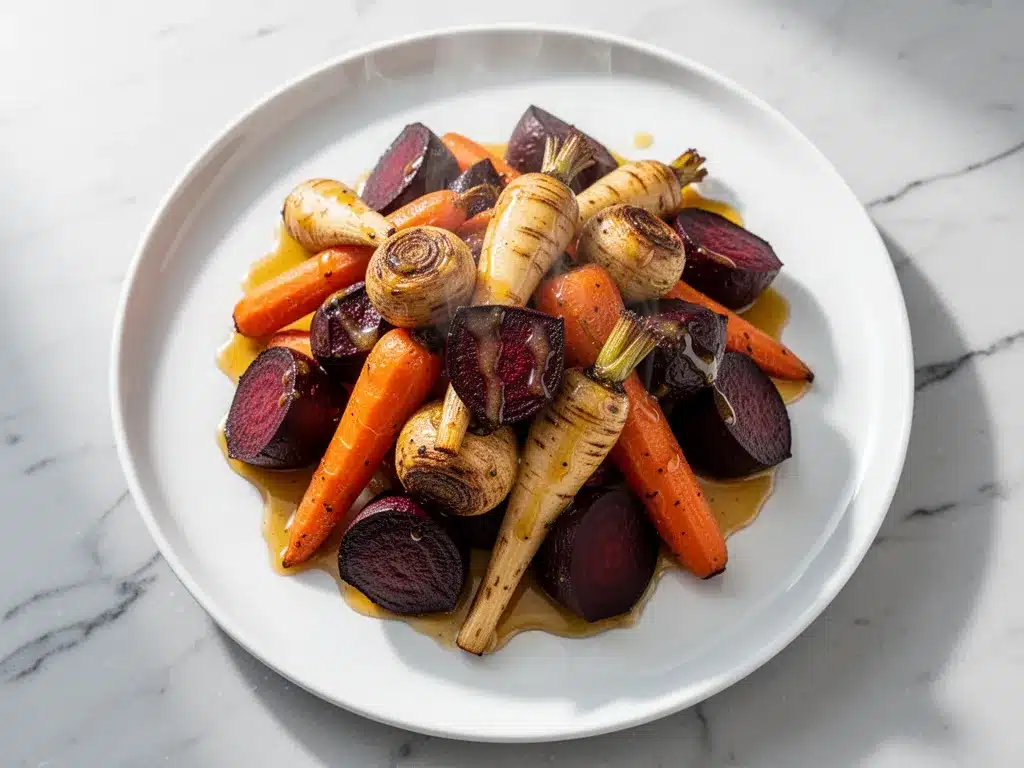
Chopped Walnuts or Pecans — Sprinkle these on in the last 5 minutes of roasting for crunch. It adds a nice texture contrast.
Fresh Parsley — Chopped parsley sprinkled on right before serving adds a pop of color and freshness. It brightens up the deep orange and purple colors.
Balsamic Glaze — A drizzle of balsamic glaze at the end adds a fancy finish. It’s not necessary, but it looks pretty on Instagram.
Equipment Needed
You don’t need fancy equipment for this. Here’s what I actually use.
Large Rimmed Baking Sheet — I use a half-sheet pan (13×18 inches). It’s important to use a sheet pan with a rim so the maple syrup doesn’t drip into your oven and burn. I line mine with parchment paper for easy cleanup. Seriously, parchment paper is a game-changer. The glaze sticks to it, not the pan.
Large Mixing Bowl — Something big enough to toss all the vegetables and the glaze together. I use a stainless steel bowl.
Sharp Chef’s Knife — For chopping the carrots, parsnips, and sweet potatoes. A dull knife makes this job harder and more dangerous.
Peeler — For the carrots and parsnips. I use a Y-peeler; it’s faster and safer than a knife.
Small Whisk or Fork — To mix the maple syrup, Dijon, and olive oil into a glaze. You don’t need a fancy whisk; a fork works fine.
Measuring Spoons — For the syrup and mustard. I eyeball the oil, but the syrup and mustard should be measured for the right balance.
How to Make It: Step-by-Step
Alright, let’s make this! I’m walking you through exactly how I do it, including the little tricks I’ve picked up.
Step 1: Prep Your Oven and Pan (5 minutes)
Preheat your oven to 400°F (200°C). This is a hot enough temperature to roast the vegetables until they’re tender but also caramelize the sugars in the maple syrup. Line your baking sheet with parchment paper. I know it’s an extra step, but washing a sticky pan later is not fun.
Step 2: Chop the Vegetables (10 minutes)
Peel your carrots and parsnips. Cut them into 1-inch chunks. If your carrots are long, cut them in half first, then into rounds or chunks. Peel the sweet potatoes and cut them into similar-sized chunks. If you’re using raw beets, peel them and cut them into small cubes (about ½ inch) so they cook at the same rate as the carrots. If you’re using pre-cooked beets, just rinse them and leave them whole or halved. The key is uniform size. If some pieces are huge and others are tiny, the tiny ones will burn before the big ones are done.
Step 3: Make the Glaze (2 minutes)
In a small bowl, whisk together the maple syrup, Dijon mustard, olive oil, minced garlic, dried thyme, salt, and pepper. It should look like a thick, golden sauce. Taste it—it should be sweet but with a noticeable tang. If it’s too sweet, add a pinch more salt or a splash of vinegar. If it’s too tangy, add a little more syrup.
Step 4: Toss the Veggies (3 minutes)
Put all the chopped vegetables in your large mixing bowl. Pour the glaze over them. Toss everything together with your hands or a large spoon until every piece is coated. You want a thin, even layer of glaze on each vegetable. Don’t worry if it looks wet; the oven will evaporate the excess moisture.
Step 5: Roast (30-40 minutes)
Spread the vegetables in a single layer on the prepared baking sheet. Do not crowd them! If the veggies are piled on top of each other, they’ll steam instead of roast. They need space to caramelize. I usually need two baking sheets if I’m making a large batch. Roast in the preheated oven for 25 minutes. Then, take the pan out and flip the vegetables over with a spatula. This ensures even browning. Roast for another 15-20 minutes, until the vegetables are tender when pierced with a fork and the edges are crispy and brown.
Step 6: Serve
Remove from the oven. Taste and adjust salt if needed. Sprinkle with fresh parsley or nuts if using. Serve immediately while hot. The glaze will have thickened and stuck to the veggies, creating little crispy bits of deliciousness.
Expert Tips & Tricks
Here’s everything I’ve learned from making this dozens of times. These tips will save you from my mistakes.
- Don’t Skip the Parchment Paper — Maple syrup burns. If it drips onto your pan, it turns into black caramel that is impossible to scrub off. Parchment paper saves your sanity.
- Uniform Cuts are Key — I can’t stress this enough. If you have huge chunks of sweet potato and tiny pieces of carrot, you’ll have mushy carrots and hard potatoes. Aim for 1-inch pieces for everything.
- Don’t Crowd the Pan — This is the #1 reason roasted veggies fail. They need air circulation. If your pan is packed, they’ll steam. Use two pans if you have to. It’s worth it.
- Flip Halfway Through — The top side of the veggies will brown faster. Flipping them ensures even cooking and prevents burning on one side.
- Use Real Maple Syrup — I’ve tried pancake syrup before to save money. It’s a mistake. It’s just corn syrup with flavoring. Real maple syrup has a depth and complexity that makes the dish taste expensive.
- Beet Juice is Messy — If you use raw beets, they will bleed color onto everything. That’s why I suggest using pre-cooked beets for weeknight ease. If you must use raw, be aware that your cutting board and knife will turn pink. Just embrace it.
Variations & Substitutions
Once you’ve nailed the basic version, here’s how you can mix it up. I’ve tried all of these.
Protein-Packed
Add canned chickpeas or white beans to the pan in the last 15 minutes. They’ll get crispy and add protein. This makes the dish more filling. I do this when I’m eating vegetarian.
Spicy Kick
Add ½ teaspoon of cayenne pepper or red pepper flakes to the glaze. The heat pairs surprisingly well with the sweet maple. It’s a nice contrast.
Herb Swap
Instead of thyme, use rosemary. Rosemary is stronger, so use less (½ teaspoon). It gives a piney, woody flavor that’s great with root vegetables.
Gluten-Free
This recipe is naturally gluten-free, as long as you check your Dijon mustard and maple syrup labels (some brands add thickeners). Most are GF, but always double-check.
Dairy-Free
This recipe is naturally dairy-free. It’s perfect for vegans or those with lactose intolerance.
Other Root Veggies
Rutabaga and turnips work well. Cube them like the parsnips. They have a slightly peppery flavor that adds variety.
Serving & Storage
How to Serve: I usually serve these straight from the pan at the dinner table. They look rustic and stay warm. They go great with roast chicken, grilled salmon, or a simple green salad. If you’re making a bigger meal, they pair well with my autumn maple bourbon glazed salmon for a full fall feast.
Side Dishes: Garlic bread, a crusty baguette, or some fall cranberry pecan sourdough focaccia are perfect for dipping into any leftover glaze.
Refrigerator: Store leftovers in an airtight container for up to 4 days. The veggies will soften a bit in the fridge, which is normal.
Reheating: The best way to reheat is in the oven at 350°F for 10-15 minutes. This restores the crispiness. Microwave reheating makes them soft and soggy, which I don’t recommend. If you must use the microwave, do it in short bursts and let them sit to steam back to life.
Freezing: I don’t recommend freezing these. The texture of root vegetables changes when frozen and thawed. They become watery and mushy. It’s better to make a fresh batch.
Nutrition Information
I’m not a nutritionist, but here’s the breakdown if you’re tracking. This is per serving (based on 6 servings).
- Calories: 180
- Protein: 3g
- Carbs: 35g
- Fiber: 6g
- Sugar: 18g (from natural sugars in veggies and maple syrup)
- Fat: 5g
What’s Good: High in fiber and vitamins from the root vegetables. Good source of potassium. Low in fat if you don’t add extra oil.
What to Know: The sugar content is higher due to the maple syrup, but it’s natural sugar. If you’re watching sugar intake, reduce the syrup to 1 tablespoon and add a bit more mustard for flavor.
Final Thoughts
So that’s my go-to Fall Maple Dijon Roasted Root Vegetables! I’ve probably talked your ear off at this point, but when you make a recipe this often, you have a lot to say about it. This dish has saved weeknight dinners more times than I can count. It’s my answer to “what’s for dinner” when I’m tired, don’t want takeout, and still want something that tastes really good. My kids are happy, my husband’s happy, and I’m happy because I’m not stressed about cooking.
Make it yours! Try different add-ins, swap in your favorite vegetables, adjust the garlic (though more is always better in my opinion). The best recipes are the ones you adapt to your family’s tastes. If you make this, drop a comment and let me know what you think! I love hearing how recipes turn out in your kitchen. And if something doesn’t work, tell me that too—I’m here to help troubleshoot.
Happy cooking! And I hope your kitchen smells half as good as mine does right now.
Frequently Asked Questions
Can I use frozen root vegetables?
You can, but I don’t recommend it. Frozen vegetables release a lot of water and end up mushy. Fresh vegetables roast much better. If you must use frozen, thaw them first and pat them very dry before tossing with the glaze. But fresh is always best.
Why did my veggies burn?
Usually, this means the oven was too hot, or the veggies were crowded. Maple syrup burns easily at high temperatures. If you notice browning too fast, cover the pan with foil. Also, make sure you’re using a rimmed sheet pan so the syrup doesn’t drip and burn on the bottom of the oven.
Can I make this ahead for a dinner party?
Sort of. You can prep the vegetables and mix the glaze ahead of time. Store them separately in the fridge. When you’re ready to cook, just toss and roast. But for best texture, roast them fresh before serving. They lose their crispiness if made too far in advance.
Why did my sauce get watery?
This happens if you don’t use enough oil or if the veggies are too wet. Make sure you pat the vegetables dry after washing them. Also, ensure your oven is fully preheated. If the oven isn’t hot enough, the veggies will steam instead of roast, and the glaze won’t thicken.
Can I use honey instead of maple syrup?
You can, but the flavor will be different. Honey is sweeter and less complex than maple syrup. It works, but it won’t have that distinct fall flavor. I recommend sticking with maple syrup for the best results.
How do I reheat leftovers without them getting dry?
Reheat in the oven at 350°F for 10-15 minutes. This restores the crispiness. Microwave reheating makes them soft and soggy. If you must use the microwave, add a splash of water and heat in short bursts.
Can I double this recipe?
Absolutely! Just make sure you use two baking sheets and don’t crowd them. You may need to rotate the pans halfway through cooking for even browning. The cooking time stays the same.
Pin This Recipe!
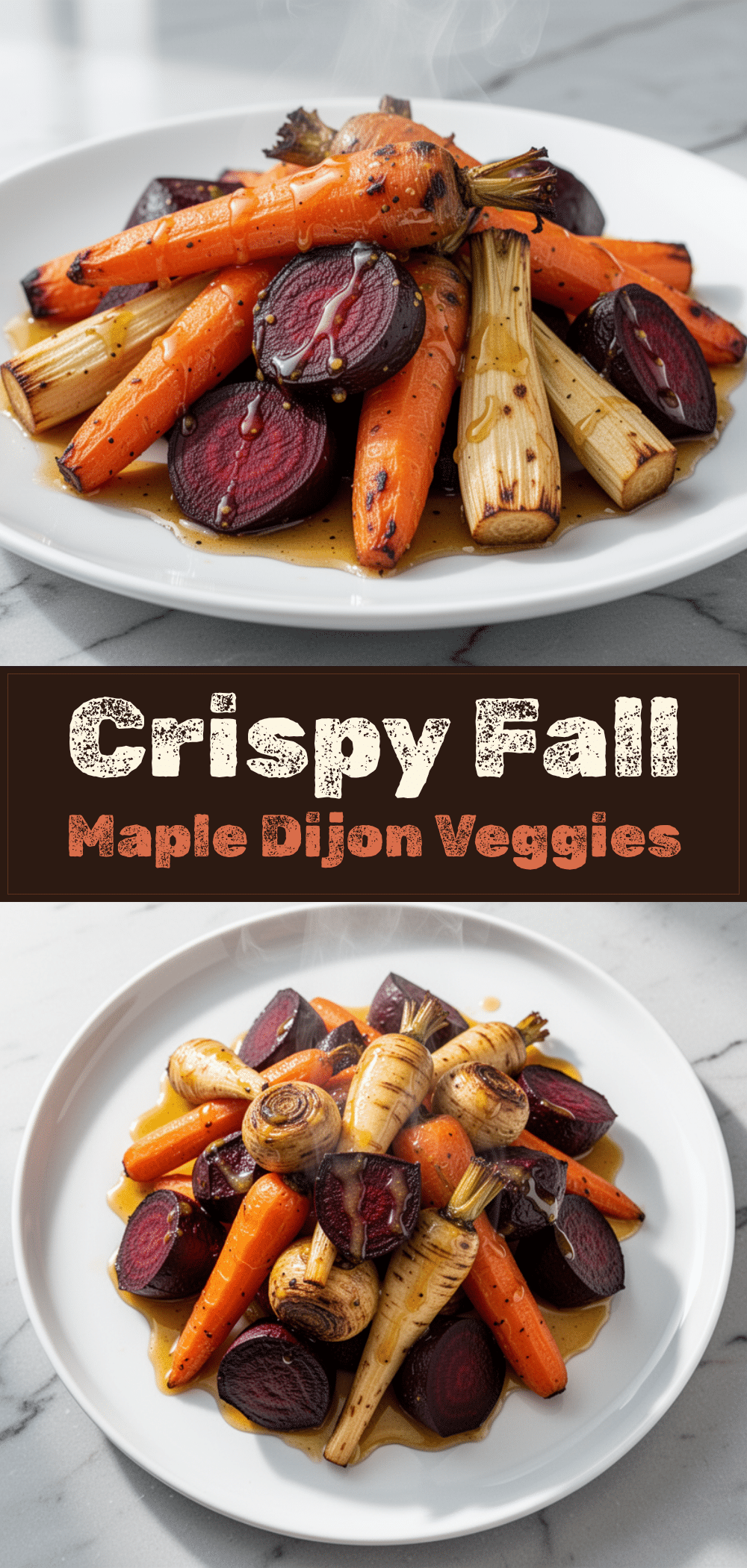
Fall Maple Dijon Roasted Root Vegetables
- Total Time: 55 minutes
- Yield: 6 servings 1x
Description
A cozy, easy-to-make side dish featuring roasted root vegetables glazed with maple syrup, Dijon mustard, and thyme. Perfect for weeknight dinners or dinner parties.
Ingredients
- 3–4 pounds mixed root vegetables (carrots, parsnips, beets, sweet potatoes, rutabaga, or turnips)
- 3 tablespoons real maple syrup
- 2 tablespoons Dijon mustard
- 2 tablespoons extra virgin olive oil
- 3 cloves garlic, minced
- 1 teaspoon dried thyme
- Salt and black pepper to taste
- Optional: Chopped walnuts or pecans
- Optional: Fresh parsley, chopped
- Optional: Balsamic glaze
Instructions
- Preheat oven to 400°F (200°C). Line a large rimmed baking sheet with parchment paper.
- Peel carrots and parsnips. Cut carrots, parsnips, and sweet potatoes into 1-inch chunks. If using raw beets, peel and cube into ½-inch pieces; if using pre-cooked beets, rinse and leave whole or halved.
- In a small bowl, whisk together maple syrup, Dijon mustard, olive oil, minced garlic, dried thyme, salt, and pepper to create a glaze.
- Place chopped vegetables in a large mixing bowl. Pour the glaze over the vegetables and toss until evenly coated.
- Spread vegetables in a single layer on the prepared baking sheet, ensuring they are not crowded.
- Roast for 25 minutes, then remove from oven and flip vegetables. Roast for another 15-20 minutes until tender and edges are crispy.
- Remove from oven, taste and adjust salt if needed. Sprinkle with optional nuts or parsley and serve immediately.
Notes
Use real maple syrup, not pancake syrup, for the best flavor. Ensure vegetables are cut into uniform 1-inch pieces for even cooking. Do not crowd the pan, or the vegetables will steam instead of roast. If using raw beets, be aware they may bleed color. For leftovers, reheat in the oven at 350°F to restore crispiness; avoid microwaving.
- Prep Time: 15 minutes
- Cook Time: 40 minutes
- Category: Side Dish
- Cuisine: American
Nutrition
- Serving Size: Approximately 1 cup
- Calories: 180
- Sugar: 18
- Sodium: 250
- Fat: 5
- Saturated Fat: 0.5
- Carbohydrates: 35
- Fiber: 6
- Protein: 3
Keywords: roasted root vegetables, maple Dijon, fall recipes, healthy side dish, vegetarian, gluten-free, dairy-free, easy dinner, meal prep