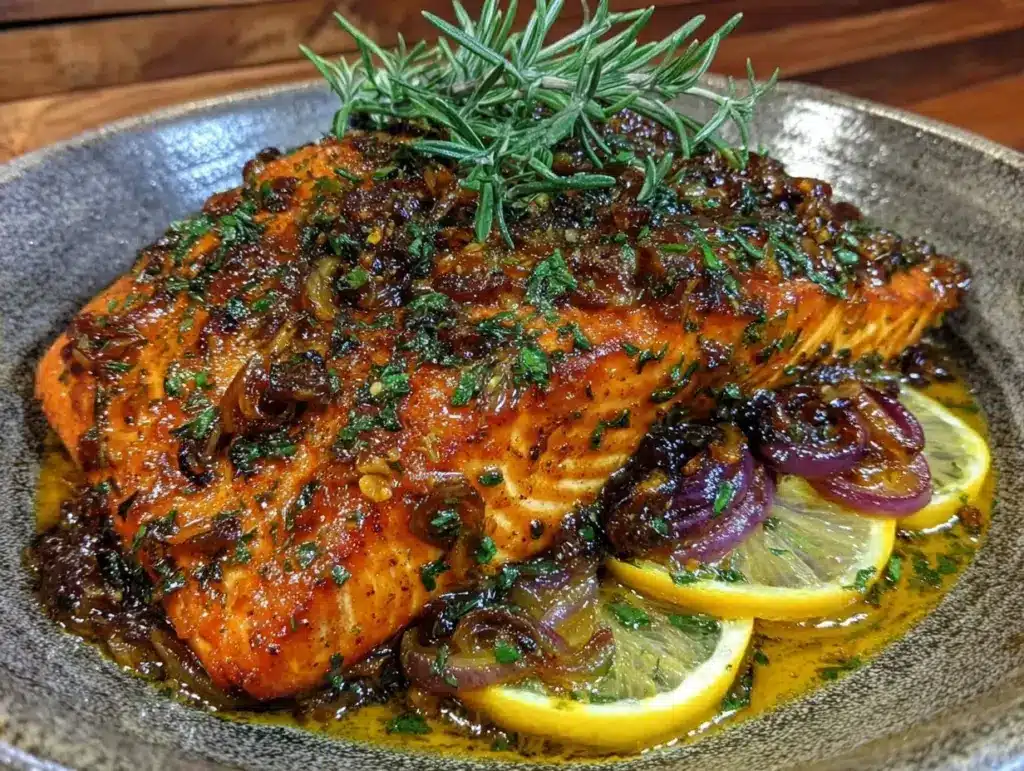
I have a confession. For years, I was terrified of cooking salmon. Not because I didn’t like it—I love the taste—but because I was convinced I would inevitably turn it into a dry, rubbery puck. I’d overcook it by thirty seconds, panic, and then order pizza. It was a cycle I broke last summer when I stumbled onto this Mediterranean salmon recipe. I was trying to make something that felt fancy enough for a dinner party but stupidly simple enough to throw together on a Tuesday.
This Mediterranean salmon with garlic lemon herb sauce is that recipe. It’s not about complicated techniques or hard-to-find ingredients. It’s about one thing: flavor. The combination of bright lemon, pungent garlic, and fresh herbs creates a sauce that feels like a vacation on a plate. I’ve made this so many times that my family now asks for it when they’re stressed. There’s something about the smell of garlic and lemon hitting the hot pan that just resets everyone’s mood.
Here’s the thing about salmon—it’s forgiving. You really can’t mess this up if you follow the basic steps. I’ve tested this method with different types of salmon, from wild-caught Alaskan to farmed Atlantic, and it works every single time. The sauce comes together in the same pan you cook the fish in, which means less cleanup and more flavor. If you’re looking for a weeknight dinner that tastes like it came from a high-end restaurant but takes less time than a takeout order, this is it. Once you try this 5-ingredient garlic lemon herb sauce, you’ll never go back to boring baked salmon again.
Why You’ll Love This Recipe
This dish has completely changed how I think about weeknight protein. I used to think healthy dinners meant bland chicken breasts or complicated grain bowls. This recipe proved me wrong. It’s rich, it’s savory, it’s tangy, and it’s ready in under 20 minutes. Here’s why it’s earned a permanent spot in my rotation:
- Five Ingredients, Maximum Flavor — Seriously, five. Salmon, lemon, garlic, olive oil, and fresh herbs. That’s it. No fancy pastes or obscure spices. The simplicity is the point. I’ve tried adding ten other things, and it always tastes better when you let the salmon shine.
- One-Pan Wonder — I hate doing dishes. This recipe uses just one skillet. You sear the salmon, remove it, make the sauce in the same pan, and pour it over. Cleanup takes 30 seconds. This makes it perfect for lazy nights when I don’t want to think about scrubbing pots.
- Beginner-Proof — If you can chop garlic and squeeze a lemon, you can make this. I’ve walked my teenage nephew through it, and he didn’t burn a single fillet. The visual cues (golden crust, opaque fish) make it easy to know when it’s done.
- Restaurant Quality at Home — The garlic lemon herb sauce is the star. It’s emulsified, creamy (without cream), and packed with flavor. I’ve served this to friends who are serious foodies, and they always ask for the recipe. It feels luxurious but costs a fraction of what you’d pay at a restaurant.
- Healthy and Satisfying — Salmon is packed with omega-3s, and the lemon-herb sauce adds vitamins without heavy calories. It’s a meal that makes you feel good, not sluggish. It’s the kind of dinner that leaves you energized for the rest of the evening.
This is my go-to when I want to feel like a good cook without the stress. It’s reliable, delicious, and makes everyone at the table happy. No complicated techniques, no weird ingredients, just solid, tasty food.
Ingredients You’ll Need
Here’s the best part: you probably have most of this already in your kitchen. This Mediterranean salmon with garlic lemon herb sauce relies on fresh, high-quality ingredients because there’s nowhere to hide. If your garlic is old or your lemons are dry, it will show. Here’s what you need and why I’m picky about each one.
For the Salmon
Salmon fillets (4 fillets, about 6 oz each / 170g each) — I prefer skin-on fillets because the skin crisps up and protects the flesh from drying out. But skinless works too, you just need to be careful not to overcook it. Look for fillets that are uniform in thickness so they cook evenly. I buy wild-caught Alaskan when it’s in season, but farmed Atlantic is fine too. Just make sure it’s fresh—smells like the ocean, not fishy.
Extra virgin olive oil (2 tablespoons / 30ml) — Use good quality here. This is the fat that cooks the fish and forms the base of the sauce. I keep a bottle of mild EVOO for cooking and a fancy one for drizzling. For this, a decent mid-range olive oil works perfectly. It adds a fruity note that balances the garlic.
Salt and black pepper — Kosher salt is my go-to because it’s easier to control. I use about ½ teaspoon per fillet. Freshly cracked black pepper adds a nice heat. Don’t skip the seasoning; it brings out the natural flavor of the fish.
For the Garlic Lemon Herb Sauce
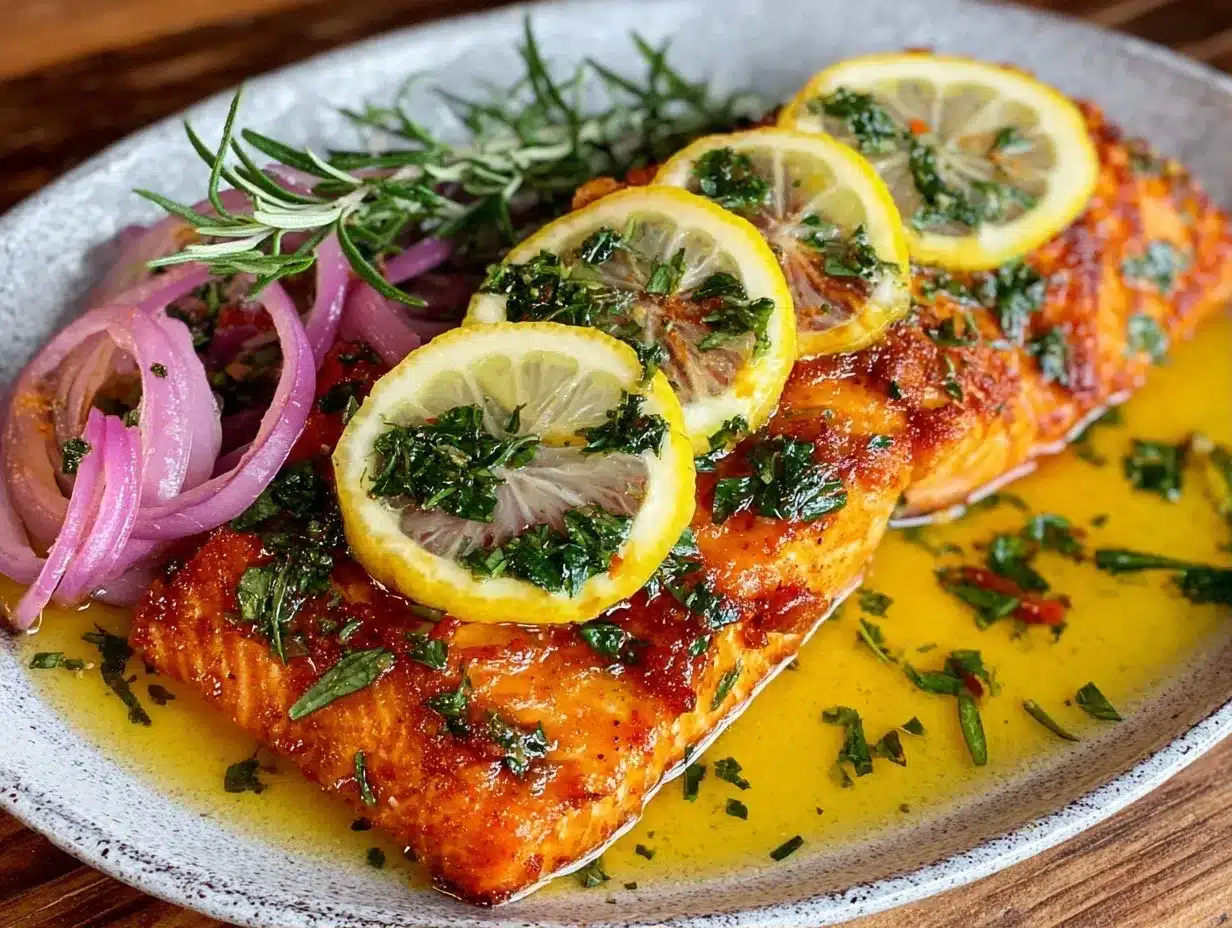
Garlic (4-5 cloves, minced / about 2 tablespoons) — Yes, five cloves. This is a garlic-forward sauce, and you want that punch. Fresh garlic only. Do not use jarred garlic. It has a metallic taste that ruins the brightness of the lemon. Mince it finely so it cooks quickly and doesn’t burn.
Fresh lemon juice (3 tablespoons / 45ml) — Squeeze it yourself. Bottled lemon juice tastes flat and preservative-heavy. You need that sharp, bright acidity to cut through the richness of the salmon. If you’re making this on a busy day, juice the lemon into a small bowl first so you don’t miss a spot.
Lemon zest (1 teaspoon / 5g) — This is where the real lemon flavor lives. The oils in the peel are more aromatic than the juice. Use a microplane or fine grater. Avoid the white pith—it’s bitter. I zest the lemon before I juice it to make cleanup easier.
Fresh parsley (2 tablespoons, chopped / 5g) — Flat-leaf parsley is my choice because it has a cleaner, grassier flavor than curly parsley. It adds freshness and color. If you don’t have parsley, fresh dill or basil works, but parsley is the classic Mediterranean choice.
Optional: Red pepper flakes (¼ teaspoon) — If you like a little kick, add this. It adds warmth without overwhelming the delicate fish. I usually skip it on weeknights but add it when I’m hosting.
Pro Tip: I always keep a small jar of dried oregano in my pantry. If I’m out of fresh herbs, I use 1 teaspoon of dried oregano. It’s not quite the same, but it’s still delicious and saves the night.
Equipment Needed
You don’t need fancy equipment for this. Here’s what I actually use, and what you can substitute if you don’t have it.
Large skillet (10-12 inch) — I use a stainless steel skillet because it gives a nice sear. Cast iron works great too, but be careful with the acid in the lemon—it can react with unseasoned cast iron. Non-stick is fine if you’re worried about sticking, but you won’t get the same crispy skin. I prefer the crust that stainless steel gives.
Microplane or zester — For getting that lemon zest. A regular grater works, but a microplane makes it easier to get fine zest without the bitter pith. I keep mine on the counter because I use it for everything.
Spatula — A thin, flexible spatula is best for flipping the salmon without breaking it. I have a cheap silicone one from the dollar store that works perfectly. Metal spatulas can scratch non-stick pans, so be mindful of your cookware.
Small bowl — For mixing the sauce ingredients. I usually just whisk them together in a small ramekin or bowl while the salmon cooks. It keeps the process organized.
Knife and cutting board — Standard stuff. Make sure your knife is sharp. Dull knives slip and make mincing garlic painful. I learned this the hard way years ago.
Tongs — Optional, but helpful for handling the fillets. I usually use my spatula, but tongs give you more control if the fillets are delicate.
That’s it. No blenders, no food processors, no weird gadgets. Just basic kitchen tools you probably already own.
How to Make It: Step-by-Step
Alright, let’s make this! I’m walking you through exactly how I do it, including the little tricks I’ve picked up over the years. This Mediterranean salmon with garlic lemon herb sauce is so simple that you’ll wonder why you ever complicated your dinners.
Step 1: Prep the Salmon (5 minutes)
Pat the salmon fillets dry with paper towels. This is crucial. Moisture is the enemy of a good sear. If the fish is wet, it steams instead of frying. Season both sides generously with salt and pepper. If your fillets have skin, make sure to season the skin side too. Set them aside on a plate.
Step 2: Heat the Pan (2 minutes)
Place your large skillet over medium-high heat. Add the olive oil and let it heat up until it shimmers. You’ll know it’s ready when you can see tiny ripples in the oil. Don’t wait until it’s smoking—that means it’s too hot. You want it hot, but not burning.
Step 3: Sear the Salmon (4-5 minutes)
Place the salmon fillets in the pan, skin-side down if they have skin. Press down gently with your spatula for the first 10 seconds to prevent the skin from curling. Let it cook undisturbed. This is the hardest part—resist the urge to check it! You’ll hear a steady sizzle. After 4 minutes, check the bottom. It should be golden brown and crispy. If it sticks, it’s not ready. Give it another minute.
Step 4: Flip and Finish (3-4 minutes)
Flip the fillets carefully. Cook for another 3-4 minutes on the second side. The salmon is done when it’s opaque and flakes easily with a fork. The internal temperature should reach 145°F (63°C), but I like to pull it off at 135°F (57°C) because it will continue to cook while you make the sauce. Remove the salmon to a plate and tent loosely with foil. Don’t worry if it looks a little undercooked in the middle—that’s actually perfect.
Step 5: Make the Sauce (2 minutes)
Reduce the heat to medium-low. In the same pan, add the minced garlic. Stir it constantly for about 30 seconds until it’s fragrant. Do not let it brown! Browned garlic is bitter. Immediately add the lemon juice, lemon zest, and red pepper flakes (if using). It will bubble up vigorously—this is normal. Let it simmer for 1 minute to reduce slightly.
Step 6: Combine and Serve (1 minute)
Remove the pan from the heat. Stir in the chopped fresh parsley. Pour the sauce over the salmon fillets. The residual heat will finish cooking the garlic and meld the flavors. Serve immediately with the sauce spooned over the top. The contrast of the hot, crispy fish and the bright, tangy sauce is incredible.
Total Time: About 15 minutes (5 minutes prep, 10 minutes cooking). It’s faster than ordering takeout.
Expert Tips & Tricks
Here’s everything I’ve learned from making this dozens of times. These tips will save you from my early mistakes and ensure your salmon is perfect every time.
Pat Dry, Always
I can’t stress this enough. Wet salmon = steamed salmon. Use paper towels to get every bit of moisture off the surface. It sounds like a tiny step, but it makes the difference between a soggy fillet and a crispy, restaurant-quality sear. I learned this when I first started cooking salmon and kept getting mushy skin.
Don’t Move the Fish
When you put the salmon in the pan, set a timer for 4 minutes and don’t touch it. The fish will release from the pan naturally when the crust forms. If you try to flip it too early, it will stick and tear. Be patient. Trust the process.
Garlic Burns Fast
Garlic goes from fragrant to burnt in about 10 seconds. Once you add the garlic, keep it moving. If you see it starting to turn dark, remove the pan from the heat immediately and add the lemon juice. The acid stops the cooking and saves the sauce. I’ve ruined batches by being too slow with the garlic.
Residual Cooking
Salmon continues to cook after it’s out of the pan. Pull it off when it’s still slightly translucent in the very center. It will finish cooking on the plate. Overcooked salmon is dry and unpleasant. Undercooked salmon is safe to eat at medium-rare, and it’s much juicier.
Room Temperature Lemon
If you take your lemon out of the fridge 10 minutes before cooking, it yields more juice. Cold lemons are tighter. I usually leave mine on the counter while I prep the fish. It’s a small trick, but it helps.
Variations & Substitutions
Once you’ve nailed the basic version, here’s how you can mix it up. I’ve tried all of these, and they all work well.
Dill & Cucumber Version
Swap the parsley for fresh dill. Add diced cucumber to the sauce right before serving. This gives it a Greek salad vibe. It’s refreshing and light. I make this version in the summer when it’s hot outside.
Caperni Style
Add 1 tablespoon of capers to the sauce along with the garlic. The salty brine pairs beautifully with the lemon. It’s a classic combination. I love the burst of saltiness it adds.
Butter Boost
Stir in 1 tablespoon of cold butter at the very end of the sauce. It makes the sauce richer and glossier. It’s a nice touch if you’re serving guests. It feels more indulgent.
Herb Swaps
No parsley? Try basil, cilantro, or chives. Basil makes it more Italian, cilantro makes it more Tex-Mex (surprisingly good), and chives add a mild onion flavor. Fresh herbs are best, but dried oregano works in a pinch.
White Wine Splash
Add 2 tablespoons of dry white wine (like Sauvignon Blanc) along with the lemon juice. Let it reduce for 30 seconds before adding the herbs. It adds depth and complexity. I use this version when I’m feeling fancy.
Dietary Modifications:
- Gluten-Free: This recipe is naturally gluten-free. Just make sure your olive oil and lemon juice are pure.
- Dairy-Free: It’s already dairy-free. No butter or cream needed.
- Paleo/Whole30: This fits perfectly. Just ensure your olive oil is compliant.
Serving & Storage
How to Serve:
I usually serve this straight from the skillet. It looks rustic and stays warm. But here are other ways I’ve enjoyed it:
Side Dishes:
- Fluffy quinoa or couscous (to soak up the sauce)
- Roasted asparagus or broccoli
- A simple arugula salad with lemon vinaigrette
- Crusty bread (for dipping in the sauce—don’t skip this)
Wine Pairing:
Not a wine expert, but my wine-snob friend says a crisp Pinot Grigio or a dry Sauvignon Blanc works great. The acidity in the wine matches the lemon in the sauce.
Storage Instructions:
Refrigerator: Store leftovers in an airtight container for up to 2 days. The salmon will absorb the sauce, which is actually delicious the next day.
Reheating: Gently reheat in a skillet over low heat with a splash of water or broth. Do not microwave—it will dry out the fish. I usually just eat it cold or room temperature the next day, and it’s still good.
Freezing: I don’t recommend freezing this. The texture of the salmon changes when frozen and thawed. It’s best fresh.
Nutrition Information
I’m not a nutritionist, but here’s the breakdown if you’re tracking. This is per serving (1 fillet with sauce).
| Nutrient | Amount |
|---|---|
| Calories | 320 |
| Protein | 34g |
| Carbs | 2g |
| Fat | 18g |
| Saturated Fat | 3g |
| Cholesterol | 85mg |
| Sodium | 280mg |
What’s Good:
- High in protein and omega-3s
- Low carb and keto-friendly
- Rich in healthy fats from olive oil
What to Know:
This is a nutrient-dense meal. The salmon provides substantial protein, and the olive oil adds healthy monounsaturated fats. It’s not a diet food, but it’s wholesome and satisfying. When I want to make it lighter, I use less oil, but I usually don’t bother. The health benefits of salmon are worth the calories.
Final Thoughts
So that’s my go-to Mediterranean salmon with garlic lemon herb sauce! I’ve probably talked your ear off at this point, but when you make a recipe this often, you have a lot to say about it.
This has saved weeknight dinners more times than I can count. It’s my answer to “what’s for dinner” when I’m tired, don’t want takeout, and still want something that tastes really good. My kids are happy, my husband’s happy, and I’m happy because I’m not stressed about cooking.
Make it yours! Try different herbs, add some capers, or serve it over different grains. The best recipes are the ones you adapt to your family’s tastes. If you make this, drop a comment and let me know what you think! I love hearing how recipes turn out in your kitchen. And if something doesn’t work, tell me that too—I’m here to help troubleshoot.
Happy cooking! And I hope your kitchen smells half as good as mine does right now.
Frequently Asked Questions
Can I use frozen salmon?
Yes, but you need to thaw it completely first. Pat it dry thoroughly before cooking. Frozen salmon often has more moisture, so you might need to cook it a minute longer. Fresh salmon is always better, but frozen works in a pinch.
Why did my salmon stick to the pan?
Usually, this means the pan wasn’t hot enough when you added the fish, or you tried to flip it too soon. Make sure your oil is shimmering before adding the salmon, and don’t touch it for at least 4 minutes. The fish will release naturally when the crust forms.
Can I bake this instead of pan-searing?
You can! Bake at 400°F (200°C) for 12-15 minutes. Make the sauce while it bakes, then pour it over. Pan-searing gives you a nicer texture, but baking is easier if you don’t want to watch the pan. Both methods work well with this 5-ingredient garlic lemon herb sauce.
What other fish can I use?
This recipe works great with trout, halibut, or cod. Just adjust the cooking time based on thickness. Thinner fillets cook faster. The sauce is versatile enough to pair with any mild white fish or salmon.
Can I make this ahead for a dinner party?
Prep the sauce ingredients ahead of time. Chop the herbs, zest the lemon, and mince the garlic. Store them in small containers in the fridge. When you’re ready to cook, just sear the salmon and whisk the sauce together. It takes 5 minutes to finish. This makes it perfect for entertaining.
Is this similar to other recipes on your site?
It’s definitely in the same vein as my end-of-summer grilled salmon with smoky herb marinade, but this pan-seared version is quicker and uses a different flavor profile. If you like that smoky version, you’ll love this bright and tangy one. I also have a Labor Day grilled shrimp skewers with 5-ingredient smoky garlic butter that uses a similar quick-sauce technique. Both are great for summer dinners.
Pin This Recipe!
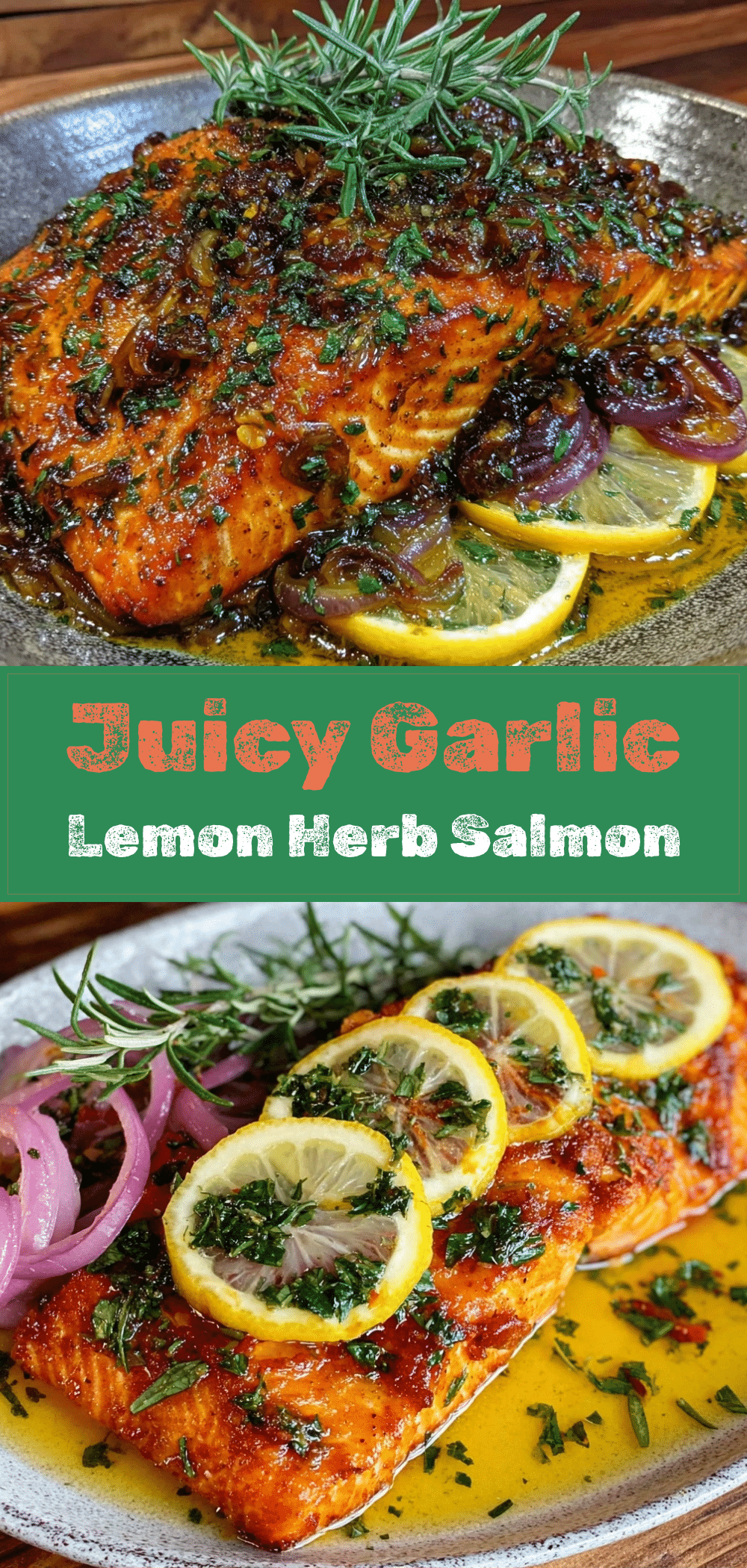
Mediterranean Salmon: 5-Ingredient Garlic Lemon Herb Sauce
- Total Time: 15 minutes
- Yield: 4 servings 1x
Description
A simple, beginner-proof weeknight dinner featuring pan-seared salmon topped with a bright, tangy garlic lemon herb sauce. Ready in under 20 minutes with just five ingredients.
Ingredients
- 4 salmon fillets (about 6 oz each / 170g each), skin-on or skinless
- 2 tablespoons extra virgin olive oil
- Salt and black pepper (to taste, approx. ½ teaspoon salt per fillet)
- 4–5 cloves garlic, minced
- 3 tablespoons fresh lemon juice
- 1 teaspoon lemon zest
- 2 tablespoons fresh parsley, chopped
- Optional: ¼ teaspoon red pepper flakes
Instructions
- Pat salmon fillets dry with paper towels and season both sides generously with salt and pepper.
- Heat a large skillet over medium-high heat and add olive oil until it shimmers.
- Place salmon in the pan skin-side down (if applicable). Press gently for 10 seconds to prevent curling. Cook undisturbed for 4 minutes until golden and crispy.
- Flip fillets and cook for another 3-4 minutes until opaque and flaking easily. Remove salmon to a plate and tent with foil.
- Reduce heat to medium-low. Add minced garlic to the same pan and stir constantly for 30 seconds until fragrant (do not brown).
- Add lemon juice, lemon zest, and red pepper flakes (if using). Simmer for 1 minute.
- Remove pan from heat and stir in chopped parsley.
- Pour the sauce over the salmon and serve immediately.
Notes
Pat the salmon dry thoroughly to ensure a good sear. Do not move the fish while it cooks to allow the crust to form. Garlic burns quickly, so keep it moving. Salmon continues to cook after removal from heat; pull it off at 135°F (57°C) for medium doneness. For best results, use fresh garlic and freshly squeezed lemon juice.
- Prep Time: 5 minutes
- Cook Time: 10 minutes
- Category: Main Course
- Cuisine: Mediterranean
Nutrition
- Serving Size: 1 fillet with sauce
- Calories: 320
- Sodium: 280
- Fat: 18
- Saturated Fat: 3
- Carbohydrates: 2
- Protein: 34
Keywords: salmon, garlic lemon herb sauce, weeknight dinner, one-pan meal, healthy seafood, gluten-free, dairy-free, keto-friendly, easy recipe