There is a specific kind of panic that sets in when you stare into your refrigerator at 6:30 PM on a Tuesday. You’re hungry, you know you shouldn’t order takeout (again), and the contents of your fridge are a sad mix of wilting spinach and half a lemon. This is exactly where I was last month. I didn’t want to cook a complicated meal. I didn’t want to wash three different pans. I just wanted something that tasted like I cared, but required almost zero mental energy.
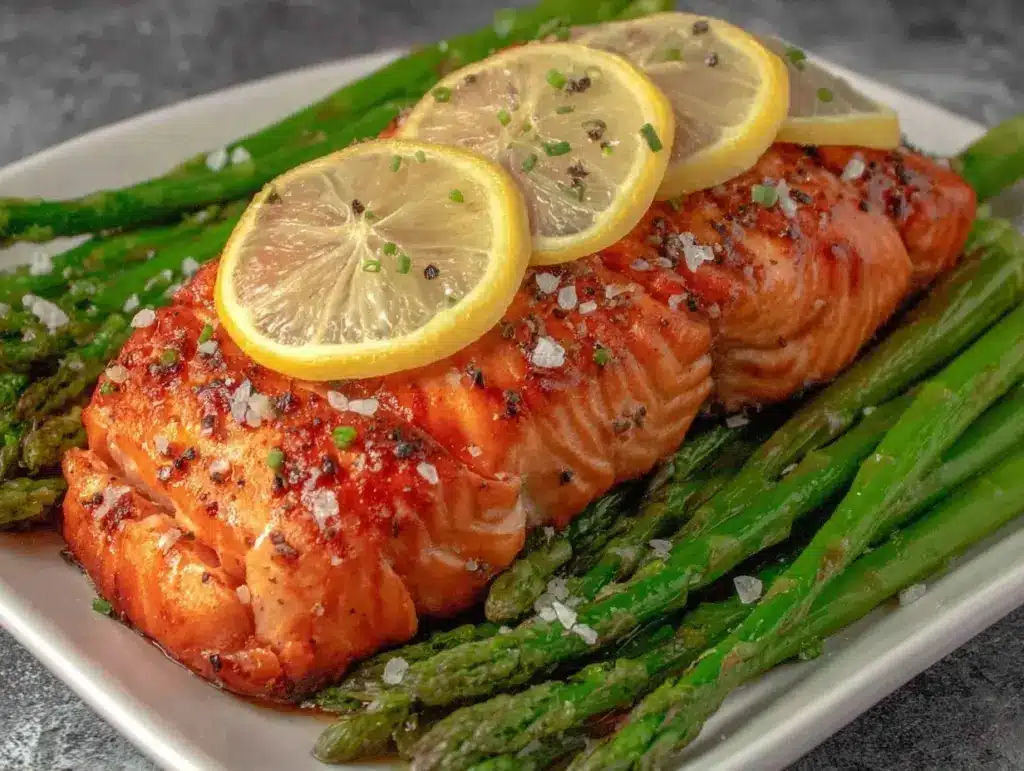
So I threw together what I now call my “I Can’t Mess This Up” dinner. It’s healthy baked salmon with roasted asparagus and lemon. I’ve made it so many times that I can probably do it in my sleep, eyes closed, while folding laundry. And the best part? It’s genuinely good. The salmon comes out flaky and tender, the asparagus gets slightly crispy edges, and the whole thing is brightened up with fresh lemon. It’s the kind of meal that makes you feel like a competent cook without actually testing your skills.
I’ve been making this healthy baked salmon with roasted asparagus and lemon for about six months now. It’s become my anchor recipe. When I’m tired, when I’m busy, or when I just want to eat something that actually makes me feel good, this is the go-to. It’s simple, it’s healthy, and it’s incredibly forgiving. If you’re looking for a dinner that won’t stress you out but will still impress your family (or yourself), you need to try this.
Why You’ll Love This Recipe
This isn’t just another fish dinner. It’s the recipe that turned me away from takeout menus and back into my kitchen. Here is why healthy baked salmon with roasted asparagus and lemon has earned a permanent spot in my weekly rotation:
- One Pan Wonder — Seriously, one baking sheet. That’s it. You chop the asparagus, season the salmon, put them on the same sheet, and bake. Cleanup is a breeze because you literally just throw the pan in the dishwasher. I love easy dinners for this reason alone.
- Impossible to Overcook (Mostly) — Salmon is surprisingly forgiving. As long as you don’t walk away and go watch a movie for an hour, it’s hard to ruin. If it’s slightly underdone, it’s still good. If it’s slightly overdone, it’s still edible. It’s a beginner-proof protein.
- Lightning Fast — From start to finish, this takes about 20 minutes. The prep is minimal, and the oven does the heavy lifting. It’s perfect for when you want a hot meal ASAP but don’t want to stand over a stove.
- Actually Healthy — This is packed with omega-3s, protein, and fiber. It’s not a diet meal that tastes like sadness. It’s rich, flavorful, and satisfying. You feel good eating it because you know it’s nourishing your body.
- Minimal Ingredients — You probably have everything on hand. Salmon, asparagus, lemon, olive oil, garlic, salt, pepper. No weird spices you’ll only use once. It’s pantry-friendly and stress-free.
This is the meal I make when I want to feel like I’m eating well without the fuss. It’s reliable, delicious, and honestly, just works every single time.
Ingredients You’ll Need
The beauty of this healthy baked salmon with roasted asparagus and lemon is that it doesn’t require a trip to the store. It uses simple, fresh ingredients that work together beautifully. Here is what you need:
For the Salmon
Salmon Fillets (1.5 lbs / 680g) — I buy wild-caught Atlantic or sockeye when I can, but farmed is fine too. Look for fillets that are roughly the same thickness so they cook evenly. If they’re super thick, you might need a minute or two longer in the oven.
Olive Oil (2 tablespoons) — Use extra virgin for the best flavor. It helps the seasoning stick and keeps the salmon moist.
Garlic (3 cloves, minced) — Fresh garlic is non-negotiable here. It adds that savory depth that makes the fish taste restaurant-quality. I use a microplane to mince it so it blends right into the oil.
Lemon (1 large) — You’ll use half for the juice and half for slices. The acidity cuts through the richness of the salmon perfectly. Don’t skip the juice!
Dijon Mustard (1 tablespoon) — This is the secret weapon. It adds a tangy, savory note that pairs amazing with fish. It won’t make the salmon taste like mustard; it just adds complexity.
Seasoning — 1 teaspoon salt and ½ teaspoon black pepper. Simple. Clean. Effective.
For the Asparagus
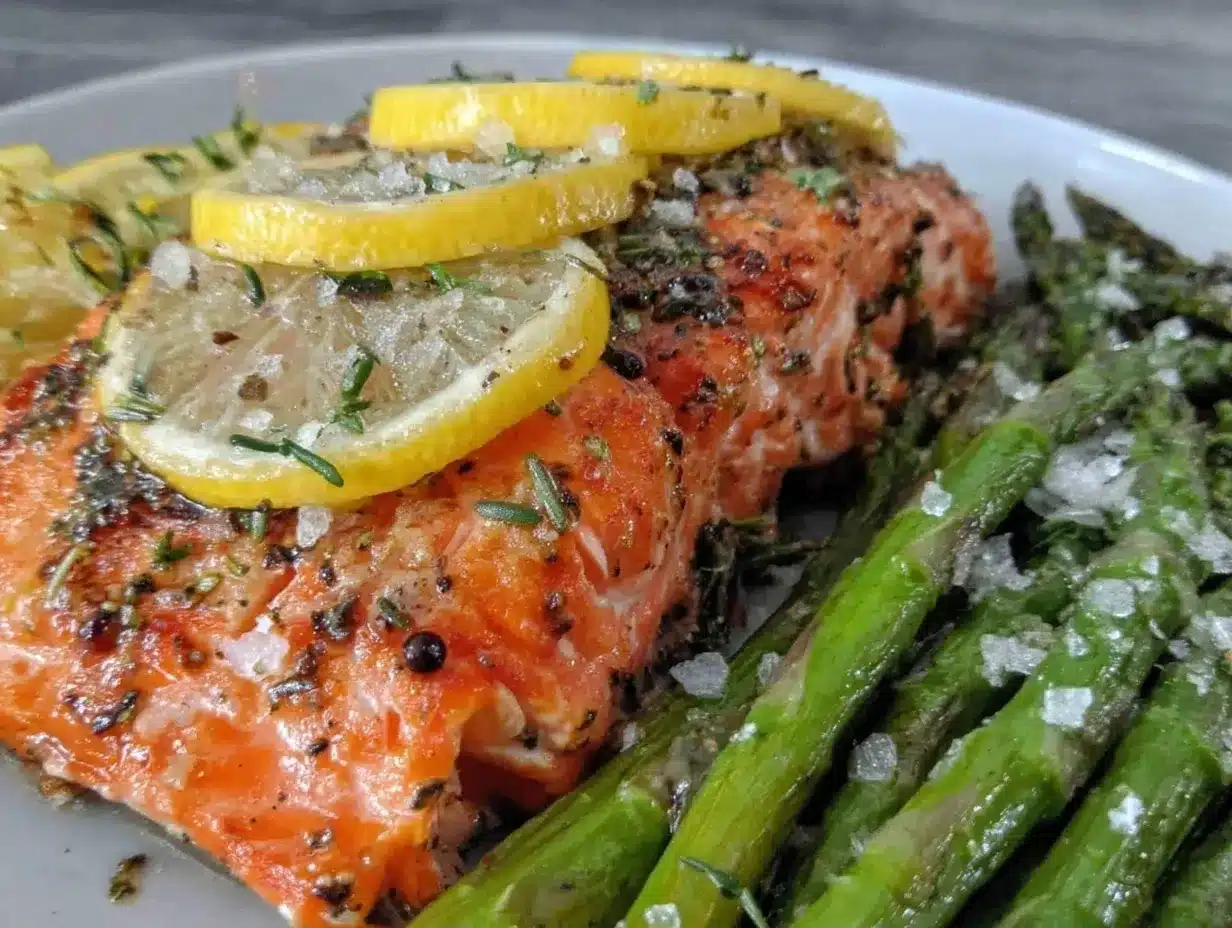
Asparagus Spears (1 bunch, about 1 lb / 450g) — Look for spears that are bright green and firm. Avoid the ones that are woody or limp. If they’re thick, snap off the bottom inch. If they’re thin, you can leave them whole.
Olive Oil (1 tablespoon) — Just enough to coat the spears so they roast instead of steam.
Garlic Powder (½ teaspoon) — Since we’re using fresh garlic on the salmon, garlic powder works well on the asparagus for an even flavor distribution.
Red Pepper Flakes (¼ teaspoon, optional) — A little heat adds nice contrast to the lemon and fish. I always add a pinch.
Optional: Parmesan Cheese — If you want to make this feel more like a treat, sprinkle a little grated Parmesan on the asparagus before baking. It gets crispy and delicious.
Equipment Needed
You don’t need anything fancy for this. Here is what I actually use:
Large Baking Sheet — I use a standard rimmed baking sheet. Make sure it’s big enough to fit the salmon and asparagus in a single layer. Crowding the pan leads to steaming, not roasting, which means soggy asparagus. I hate soggy asparagus.
Parchment Paper or Foil — Line your baking sheet for easy cleanup. I prefer parchment paper because nothing sticks, and I don’t have to scrub my pan. It’s worth the extra 30 seconds.
Small Bowl — For mixing the salmon glaze.
Sharp Knife — For trimming the asparagus and slicing the lemon.
How to Make It: Step-by-Step
Alright, let’s make this healthy baked salmon with roasted asparagus and lemon. I’m walking you through exactly how I do it, including the little tricks that keep it foolproof.
Step 1: Prep Your Oven and Pan (5 minutes)
Preheat your oven to 400°F (200°C). This is a hot enough temperature to roast the asparagus quickly while cooking the salmon gently. Line your baking sheet with parchment paper. It’s a small step that makes cleanup a dream.
Step 2: Prep the Asparagus
Wash the asparagus and pat it dry. Take a handful of spears and bend them. The asparagus will naturally snap at the point where the woody part ends and the tender part begins. Discard the woody ends. If you have thick spears, you can halve them diagonally for easier eating. Toss the trimmed asparagus with 1 tablespoon olive oil, garlic powder, salt, pepper, and red pepper flakes. Spread them out on one side of the baking sheet.
Step 3: Prep the Salmon
Pat the salmon fillets dry with paper towels. This sounds like a minor detail, but drying the fish helps the seasoning stick and prevents it from steaming. Place the fillets on the other side of the baking sheet, leaving some space between them.
Step 4: Make the Glaze
In a small bowl, whisk together the 2 tablespoons olive oil, minced fresh garlic, juice of half a lemon, Dijon mustard, salt, and pepper. It should look like a creamy, pale yellow sauce. Spoon this mixture over the salmon fillets, making sure to cover the top evenly.
Step 5: Add the Lemon
Take the other half of the lemon and slice it into thin rounds. Lay a few slices on top of each salmon fillet. This infuses the fish with citrus flavor as it bakes and looks beautiful when you serve it.
Step 6: Bake
Place the baking sheet in the preheated oven. Bake for 12-15 minutes. The exact time depends on the thickness of your salmon. A good rule of thumb: the fish is done when it flakes easily with a fork and is opaque throughout. If you’re unsure, insert a fork into the thickest part and twist gently. If it separates into flakes, it’s ready.
Step 7: Serve
Remove from the oven. Squeeze any remaining lemon juice over the fish and asparagus for a final burst of freshness. Serve immediately. This healthy baked salmon with roasted asparagus and lemon is best enjoyed hot, straight from the oven.
Expert Tips & Tricks
Here’s everything I’ve learned from making this dozens of times. These tips will save you from common mistakes.
Don’t Crowd the Pan — If your salmon and asparagus are packed too tightly, they’ll steam instead of roast. You want air circulation. If you have a small pan, use two sheets or cook in batches. Better to cook two batches than have soggy food.
Check Early — Salmon cooks fast. I check mine at 12 minutes. If it’s flaking, pull it. It continues to cook slightly from residual heat, so it’s better to undercook by a minute than overcook.
Use Fresh Lemon — Bottled lemon juice just doesn’t cut it here. The fresh acidity is what makes this healthy baked salmon with roasted asparagus and lemon taste bright and clean. Buy fresh lemons.
Trim the Asparagus Properly — Nobody likes a woody bite. Always snap or cut off the bottom 1-2 inches. It makes a huge difference in texture.
Leftover Hack — If you have leftover salmon, flake it and add it to a salad. It’s amazing cold with a vinaigrette.
Variations & Substitutions
Once you’ve nailed the basic version, here’s how you can mix it up. I’ve tried all of these.
Herb-Crusted — Mix chopped dill or parsley into the olive oil glaze. Dill and salmon are best friends.
Honey-Garlic — Add 1 tablespoon of honey to the glaze for a sweeter, sticky coating. Great if you have kids.
Asparagus Swap — Broccoli or green beans work just as well. Toss them with the same seasoning and roast on the same sheet.
Gluten-Free — This recipe is naturally gluten-free. Just check your Dijon mustard to be sure.
Dairy-Free — This is naturally dairy-free. Skip the optional Parmesan if you’re avoiding dairy.
Serving & Storage
How to Serve: I usually serve this with quinoa or brown rice to soak up the juices. A simple green salad with lemon vinaigrette is also perfect. The meal is light but satisfying.
Storage: Store leftovers in an airtight container in the fridge for up to 3 days. The salmon holds up well, though the texture changes slightly. It’s still good cold or reheated gently.
Reheating: Reheat in the oven at 350°F for 10 minutes, or in the microwave with a splash of water to keep it moist. Avoid the microwave if you can—it can make the fish rubbery.
Freezing: I don’t recommend freezing this. The asparagus gets mushy when thawed. Make it fresh.
Nutrition Information
I’m not a nutritionist, but here’s the breakdown if you’re tracking.
Per Serving (based on 4 servings):
- Calories: 320
- Protein: 30g
- Carbs: 8g
- Fiber: 3g
- Sugar: 2g
- Fat: 18g
- Saturated Fat: 3g
- Cholesterol: 75mg
- Sodium: 400mg
This is a high-protein, low-carb meal that’s rich in healthy fats. It’s nutrient-dense and keeps you full. It’s the kind of dinner that fuels your body without weighing you down.
Final Thoughts
So that’s my go-to healthy baked salmon with roasted asparagus and lemon. It’s simple, it’s healthy, and it’s delicious. I’ve made it so many times that I don’t even need the recipe anymore. It’s become my “if you can only make one thing, make this” dinner.
This recipe has saved me on nights when I didn’t want to think. It’s foolproof, forgiving, and always turns out well. I hope it becomes a staple in your kitchen too. Make it yours! Add more lemon, swap the veggies, or try a different seasoning. The best recipes are the ones you adapt to your taste.
If you make this, drop a comment and let me know what you think! I love hearing how recipes turn out in your kitchen. And if something doesn’t work, tell me that too—I’m here to help.
Happy cooking! And I hope your kitchen smells half as good as mine does right now.
Frequently Asked Questions
Can I use frozen salmon?
You can, but it’s better to use fresh if possible. If you must use frozen, thaw it completely in the fridge overnight and pat it very dry. Frozen salmon releases more water, which can affect the texture. Fresh is always best for this healthy baked salmon with roasted asparagus and lemon.
How do I know when the salmon is done?
The easiest way is the fork test. Insert a fork into the thickest part and twist gently. If the fish flakes apart easily and is opaque (not translucent), it’s done. The internal temperature should be 145°F (63°C), but I pull it at 140°F because it continues to cook.
Can I roast the asparagus and salmon separately?
Yes! If you prefer different cooking times, you can. Asparagus might need 15-20 minutes, while salmon needs 12-15. You can roast the asparagus for 5 minutes first, then add the salmon to the same pan. But honestly, doing it all together is easier and tastes great.
What if I don’t have Dijon mustard?
Substitute with yellow mustard, whole grain mustard, or even a little soy sauce for umami. The mustard is mostly for flavor complexity, so any tangy condiment works. You can also skip it, but the glaze won’t be as rich.
Can I make this in an air fryer?
Yes! Cook at 400°F for 8-10 minutes. Check early because air fryers cook faster. You’ll need to cook the asparagus and salmon in batches or use a small air fryer basket. The results are similar, with slightly crispier edges.
Is this recipe kid-friendly?
Generally, yes! Kids who like fish usually love this because the lemon and garlic mask any “fishy” taste. If your kids are picky, try the honey-garlic variation. It’s sweeter and more appealing to younger palates.
Can I meal prep this?
Absolutely. This is great for meal prep. Cook it on Sunday, store in containers, and eat it throughout the week. It reheats well (gently) and makes for a quick, healthy lunch. I often make double the salmon for this reason.
Pin This Recipe!
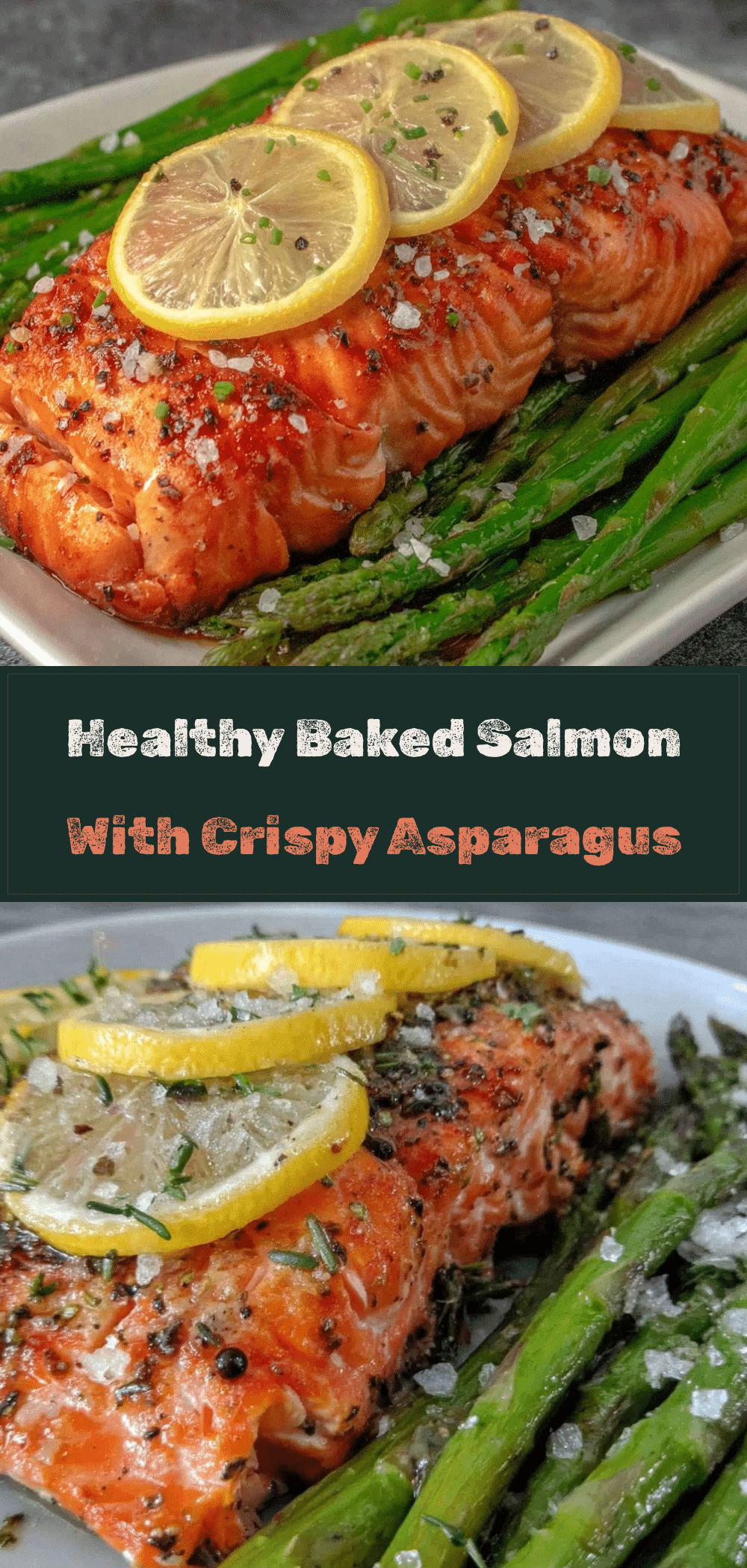

Healthy Baked Salmon with Roasted Asparagus
- Total Time: 20 minutes
- Yield: 4 servings 1x
Description
A simple, one-pan dinner featuring flaky baked salmon with a lemon-garlic Dijon glaze and roasted asparagus. This forgiving recipe is ready in about 20 minutes and requires minimal cleanup.
Ingredients
- 1.5 lbs salmon fillets
- 1 bunch asparagus spears (about 1 lb)
- 3 tablespoons olive oil (divided)
- 3 cloves garlic, minced
- 1 large lemon (half juiced, half sliced)
- 1 tablespoon Dijon mustard
- 1 teaspoon salt (divided)
- 0.5 teaspoon black pepper (divided)
- 0.5 teaspoon garlic powder
- 0.25 teaspoon red pepper flakes (optional)
- Grated Parmesan cheese (optional)
Instructions
- Preheat oven to 400°F (200°C). Line a large baking sheet with parchment paper.
- Trim the woody ends from the asparagus spears. Toss with 1 tablespoon olive oil, garlic powder, 0.5 teaspoon salt, 0.25 teaspoon pepper, and red pepper flakes. Spread on one side of the baking sheet.
- Pat salmon fillets dry with paper towels and place on the other side of the baking sheet.
- In a small bowl, whisk together 2 tablespoons olive oil, minced garlic, juice of half a lemon, Dijon mustard, 0.5 teaspoon salt, and 0.25 teaspoon pepper.
- Spoon the glaze over the salmon fillets and top with lemon slices.
- Bake for 12-15 minutes, or until the salmon flakes easily with a fork and is opaque throughout.
- Remove from oven, squeeze remaining lemon juice over the dish, and serve immediately.
Notes
Do not crowd the pan to ensure roasting instead of steaming. Check salmon early as it continues to cook from residual heat. For best results, use fresh lemon juice and trim the woody ends of the asparagus.
- Prep Time: 5 minutes
- Cook Time: 15 minutes
- Category: Main Course
- Cuisine: American
Nutrition
- Serving Size: 1 fillet and asparag
- Calories: 320
- Sugar: 2
- Sodium: 400
- Fat: 18
- Saturated Fat: 3
- Carbohydrates: 8
- Fiber: 3
- Protein: 30
Keywords: healthy salmon, baked salmon, roasted asparagus, one pan dinner, quick meals, gluten-free, dairy-free, omega-3